Debt Relief Facebook Ads in 2026: Funnels, Trackers, and What the Data Shows

Share:
Debt relief does not get talked about much in affiliate and media buying circles. It is not as flashy as ecom, not as controversial as dating or iGaming.
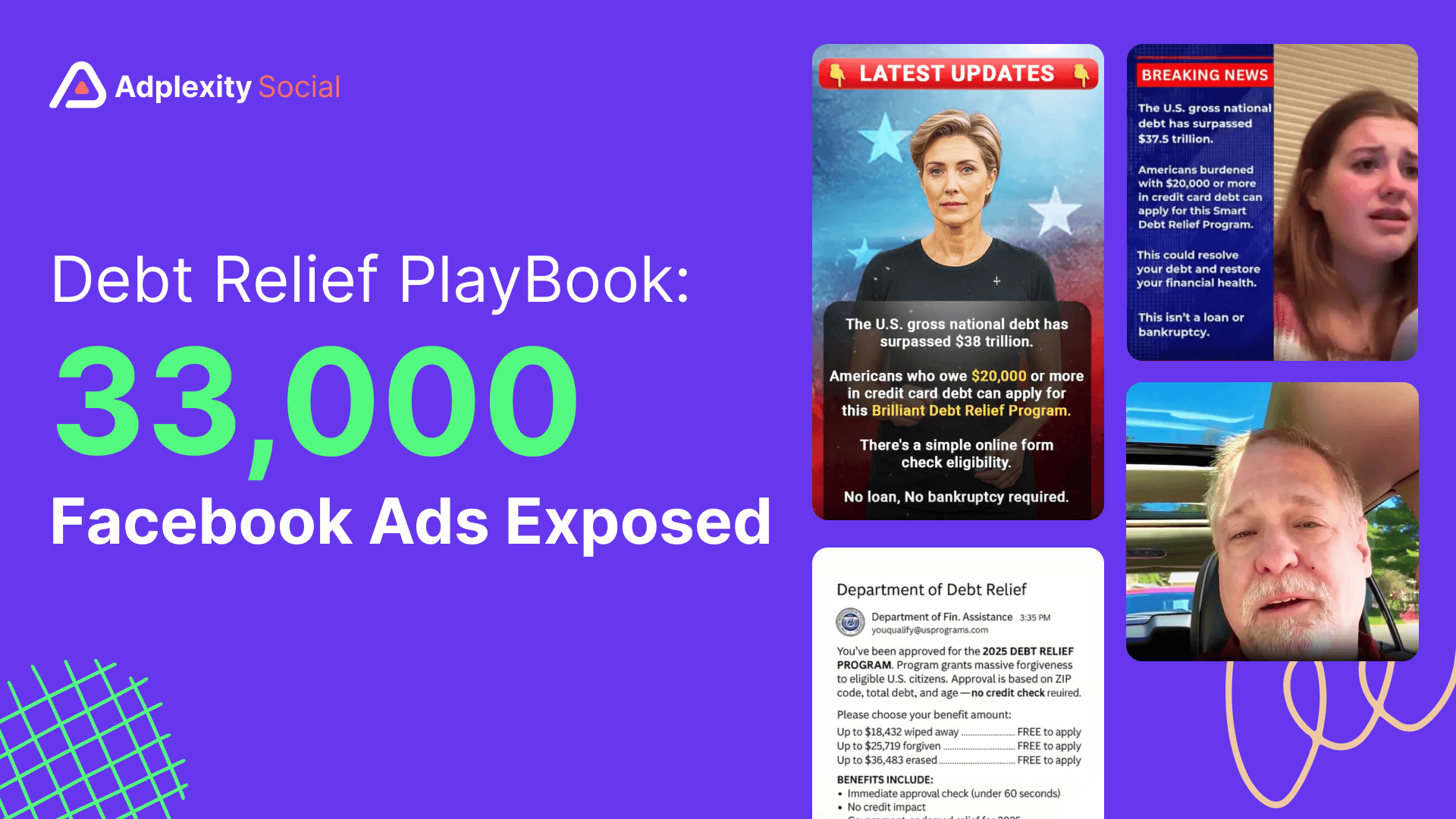
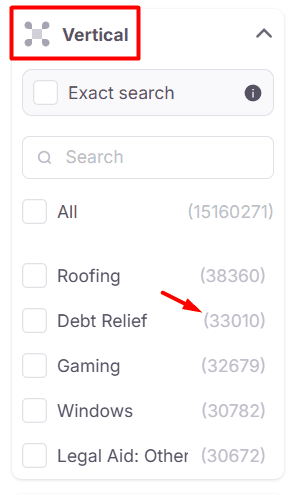
But pull it up in an ad intelligence tool, and you will find one of the most tactically varied niches running on Meta right now: advertorials, quiz funnels, Typeform pages, fake government letters, pay-per-call flows, lead gen hybrids. 33,200 ads indexed in the last 30 days alone.
This article walks through what we found when we ran a deep dive on the debt relief vertical using AdPlexity Social's vertical filter. If you are in lead gen, pay-per-call, or just looking for a niche to study for funnel inspiration, there is a lot here.
Key takeaways: Debt relief facebook ads are split almost evenly between lead gen and pay-per-call, with significant affiliate activity running through trackers like RedTrack, Voluum, and Clickflare. Funnel formats are surprisingly diverse: no single approach is dominating. And the redirect chain data reveals which offers are actually at the end of these funnels, which is where the real intelligence is.
Watch the full tutorial on YouTube: https://www.youtube.com/watch?v=0YbfO0Wdemk
33,000 Ads in 30 Days, and Most People Are Not Watching This Niche
The first thing that stands out when you filter by the debt relief vertical is the sheer volume of active advertising. 33,200 ads in the past 30 days, with around 50% of them still active at the time of this analysis.
That is not a dead niche being propped up by a few big players. That is a consistently competitive space with real money flowing through it.
For context: debt relief is primarily a US market. The geographic distribution is heavily concentrated: almost everything is in English, targeting American consumers who are carrying significant personal debt and looking for structured repayment solutions.
The offer side is dominated by a handful of large companies, but the affiliate layer running traffic to those offers is diverse and surprisingly creative.
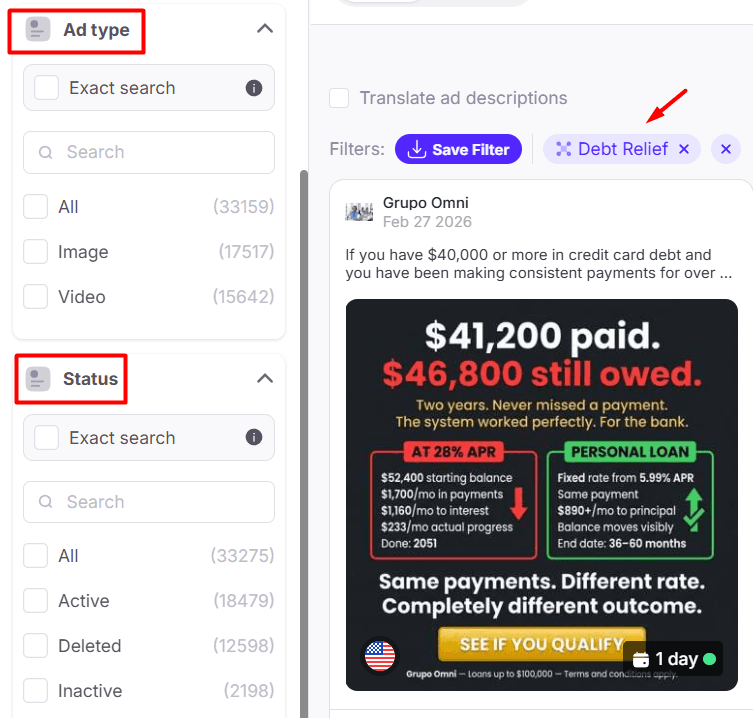
The ad format is split almost exactly 50/50 between images and videos. That is actually unusual: most niches skew heavily one way or the other.
It suggests there is no clear consensus on what is working best creatively, which is either a sign of a niche still figuring itself out or one where both formats are genuinely competitive, depending on the funnel type.
The Two Worlds Inside Debt Relief: Lead Gen vs. Pay Per Call
This is probably the most important thing to understand about this niche before you do anything else with the data. Debt relief on Meta is effectively two different businesses running in parallel.
On one side, you have lead gen: funnels designed to collect contact information (email, phone, or both) and pass that lead to a debt relief company or broker.
On the other side, you have pay-per-call: funnels whose entire purpose is to get a qualified prospect on the phone with a debt relief agent, with the advertiser getting paid per connected call.
The clearest way to see this split in the data is through the technology filter. Filter by Ringba, one of the most widely used pay-per-call tracking platforms, and you get a significant cluster of campaigns built around phone conversion.
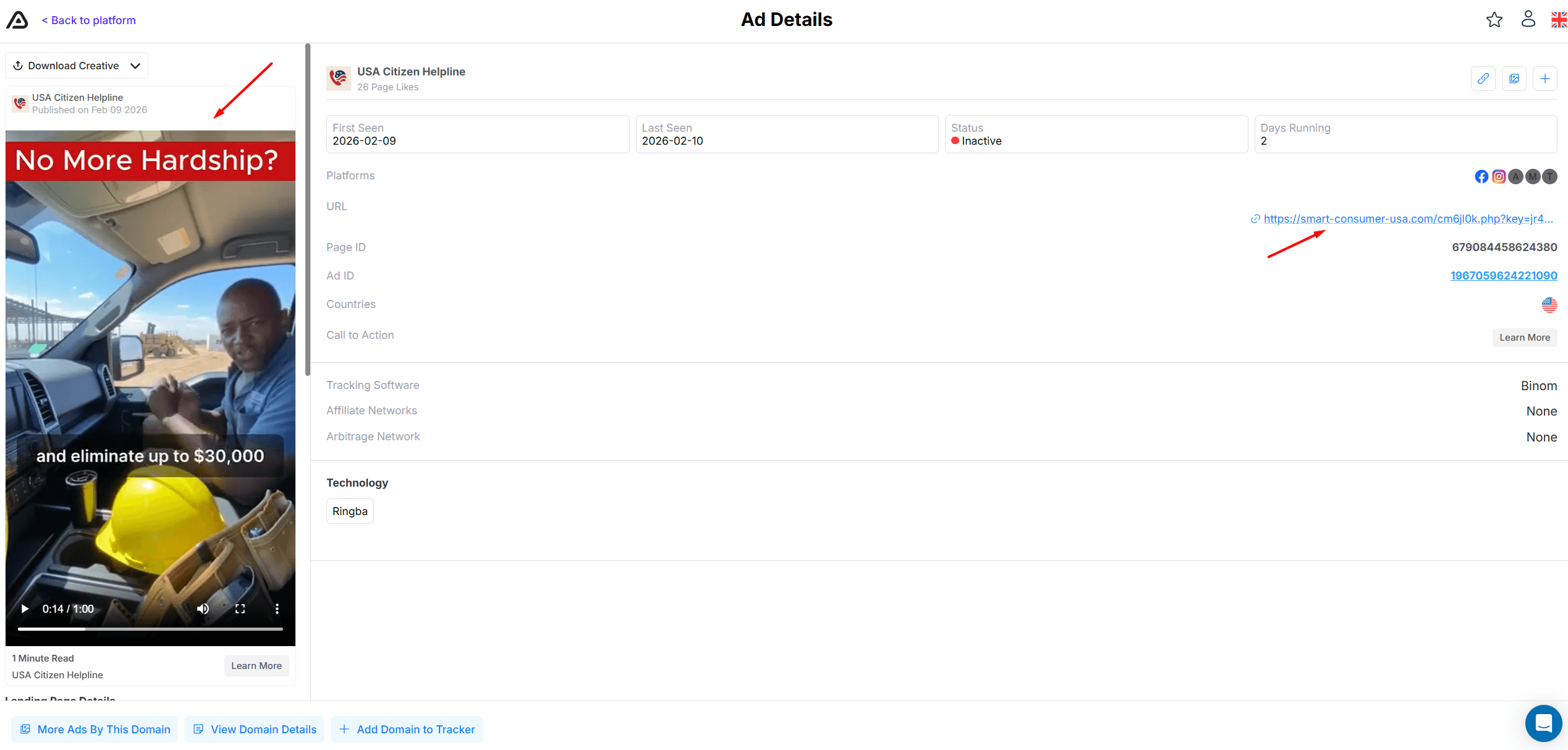
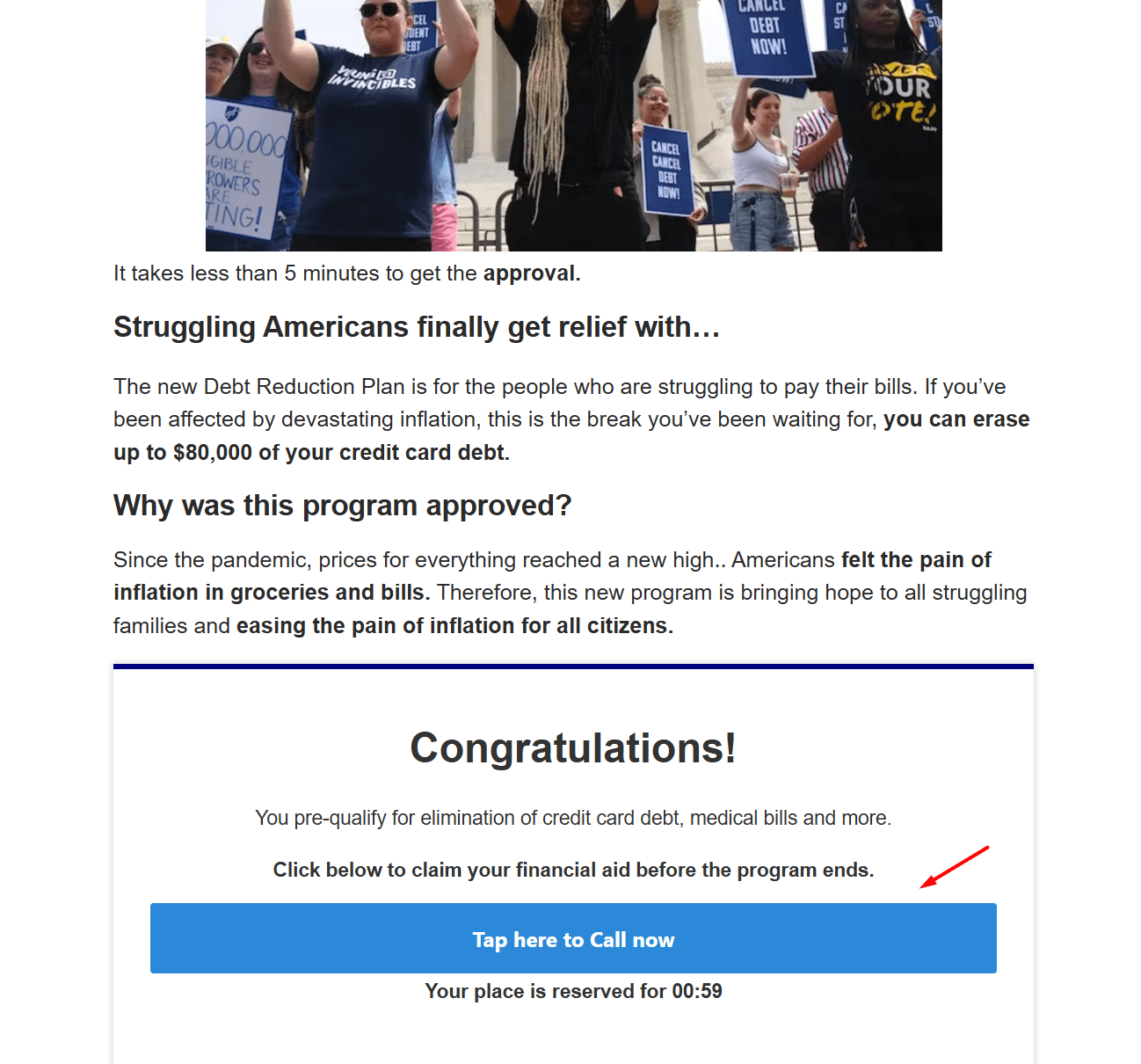
These funnels typically follow a predictable pattern: an advertorial or quiz that qualifies the prospect, followed by a prominent phone number to call. smart-consumer-usa.com/ is a good example here: they were running a clear advertorial-to-phone-call structure that is textbook pay-per-call.
Ad details and video creative
Pay per call landing page
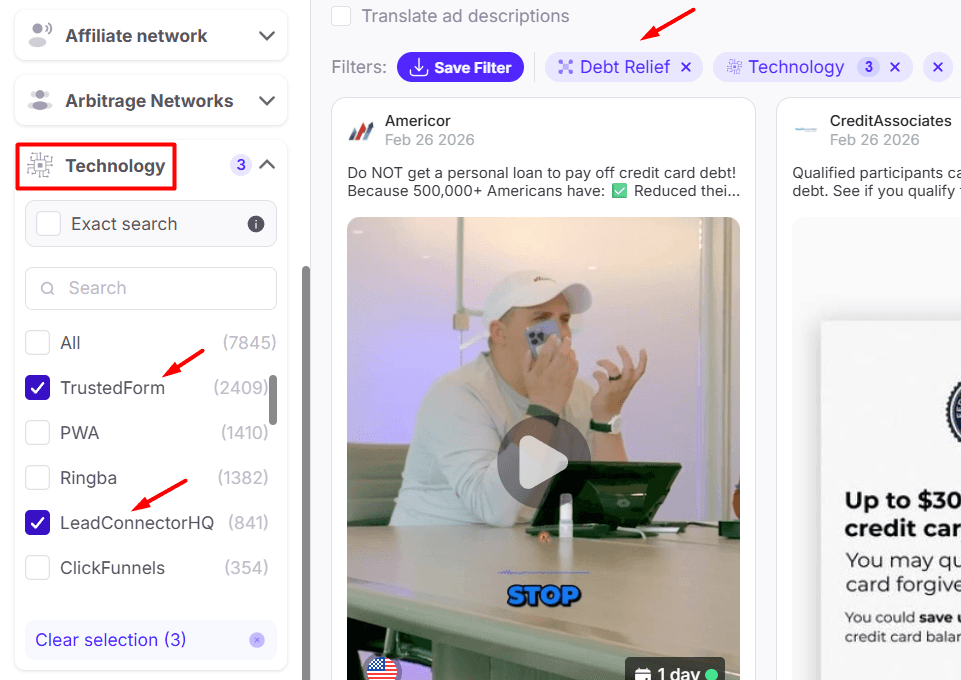
Filter instead for TrustedForm, LeadConnectorHQ, or Jornaya, and you are looking at the lead gen side: forms, quizzes, and multi-step flows designed to collect data rather than drive a call. The funnel logic is different, the creative is different, and the economics are different.
Ad details and video creative
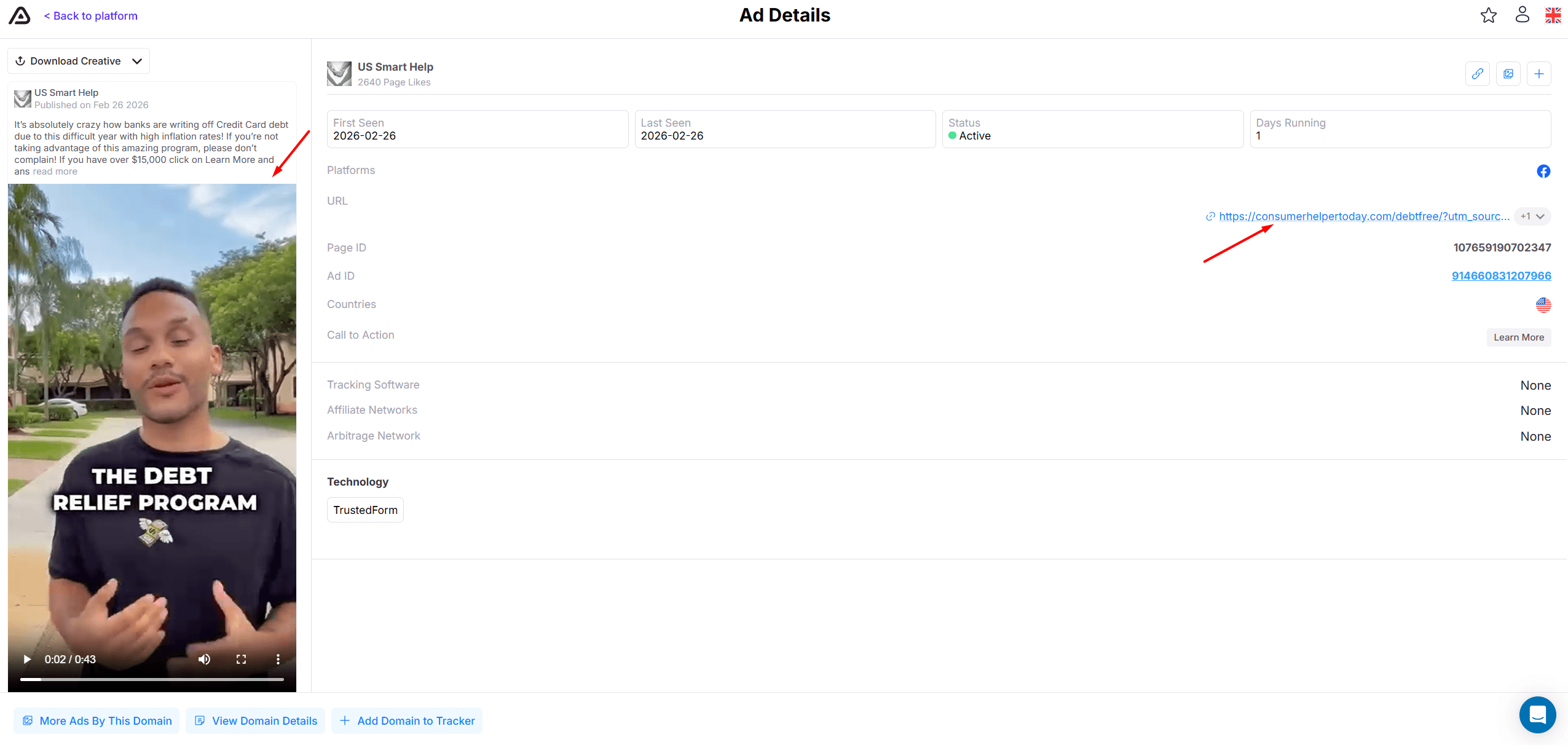
Lead gen landing page
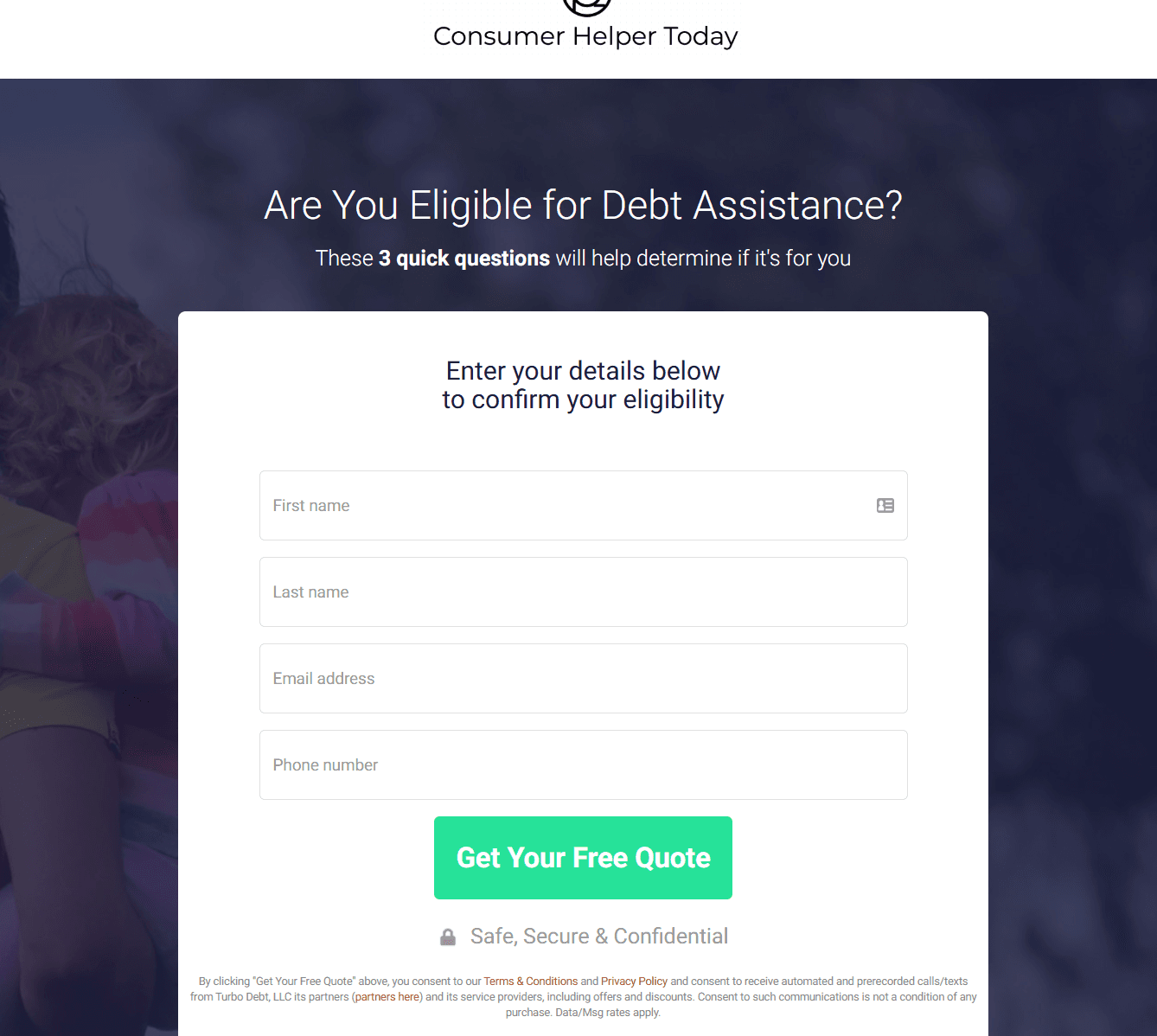
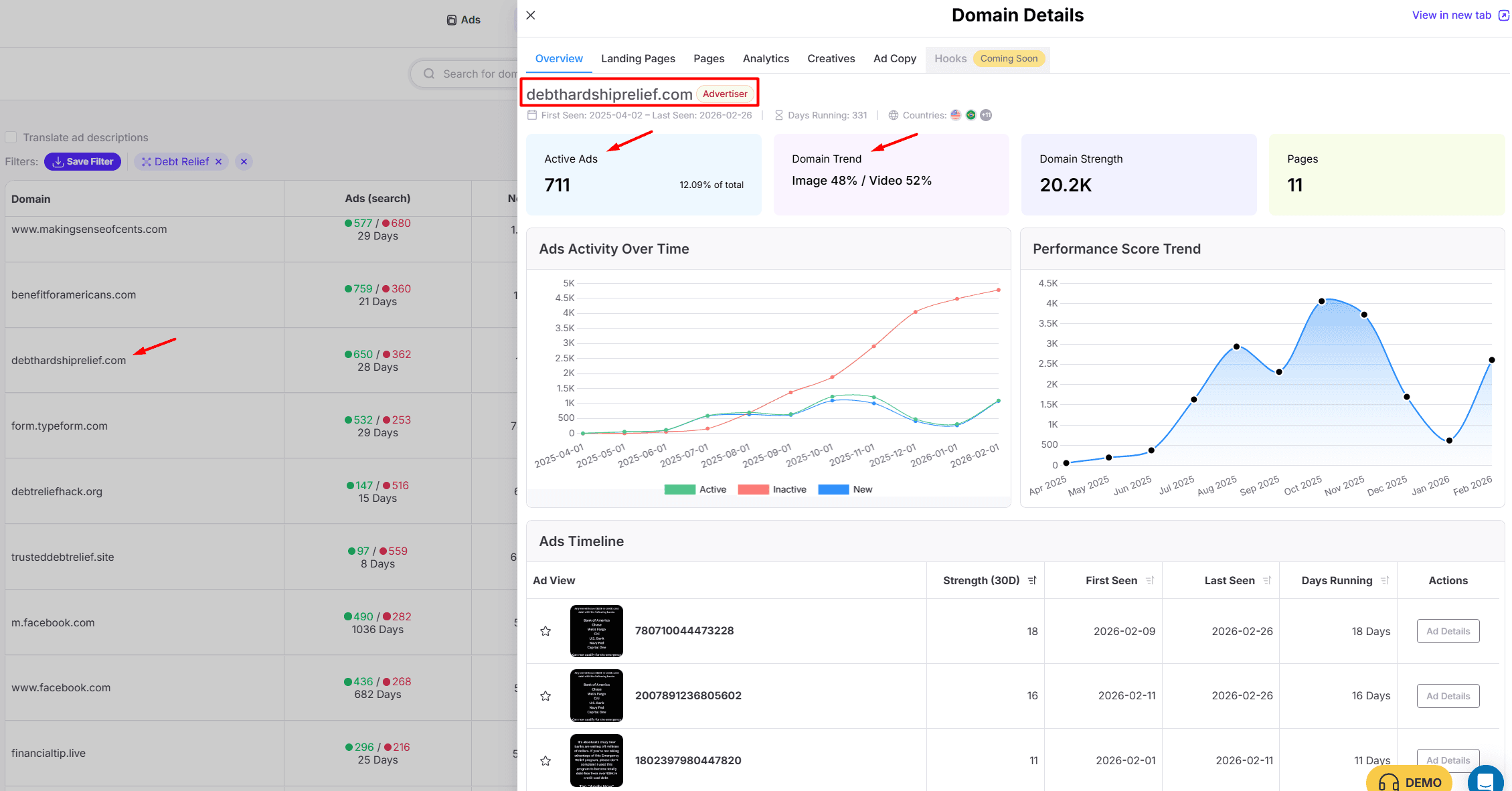
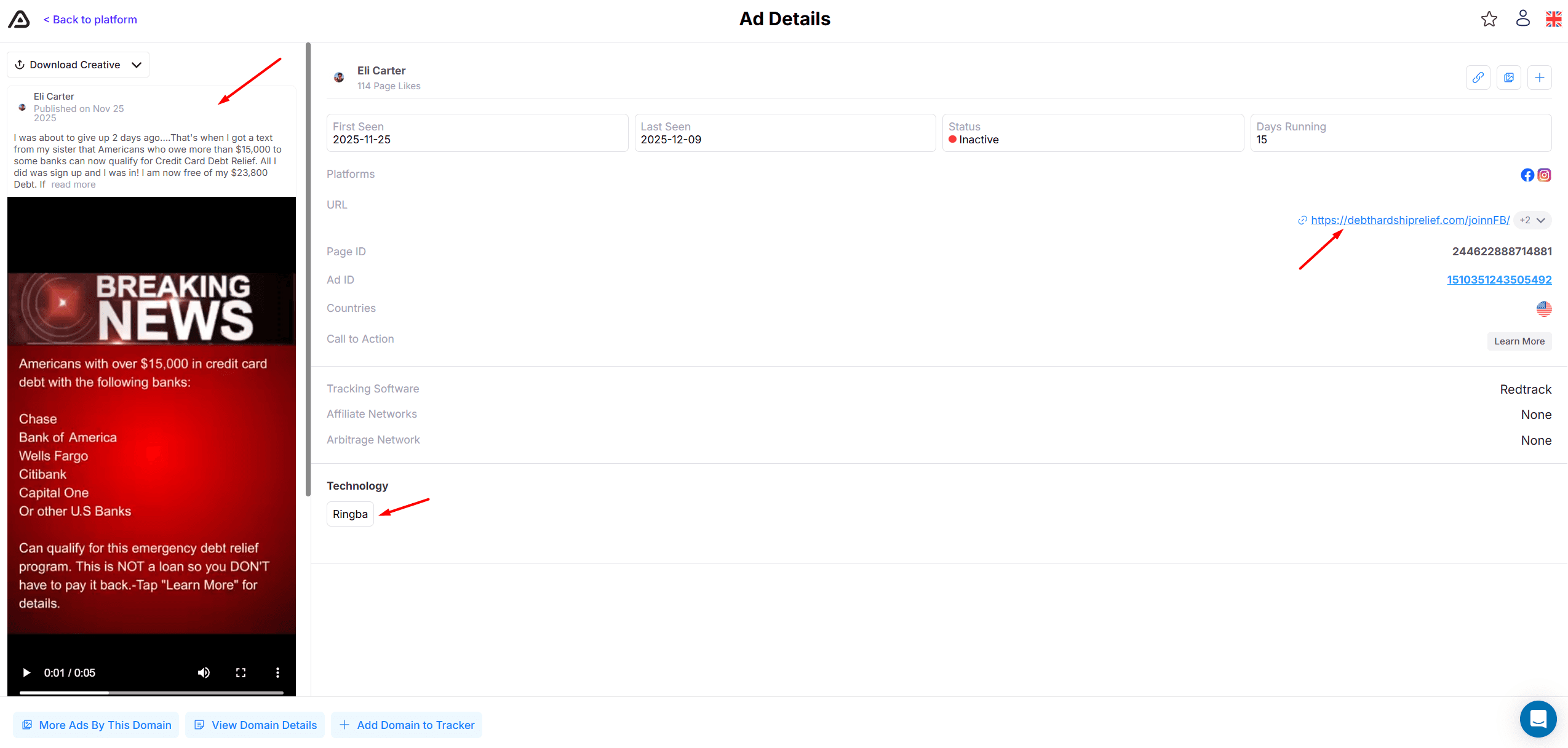
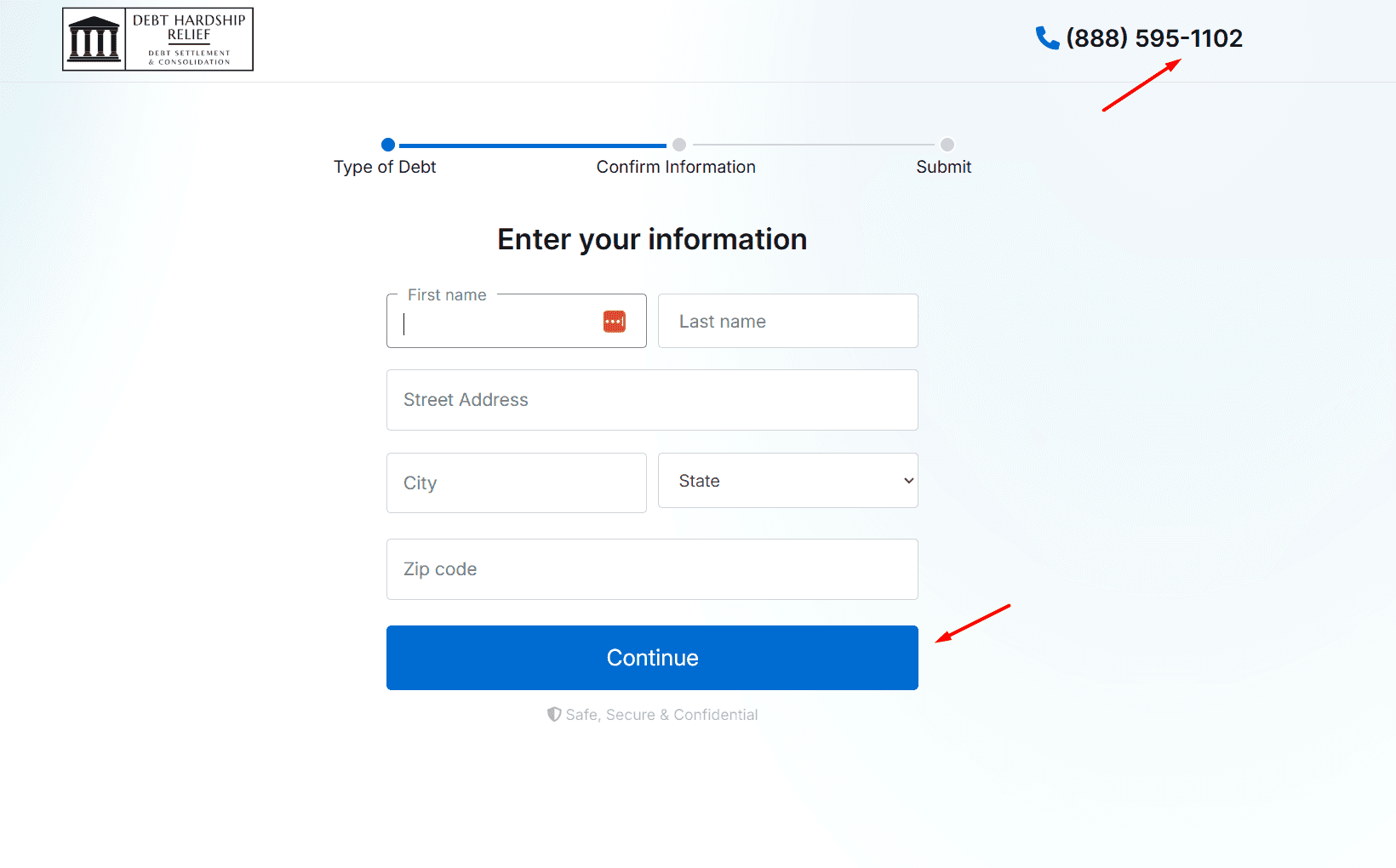
What is interesting is that some players are running both. We saw several domains with hybrid setups: a landing page that prominently features a phone number but also collects email, covering both bases.
It is probably not the most optimized approach for either model, but it tells you the advertisers are hedging or testing what converts better for their traffic.
debthardshiprelief.com - Domain details
Ad details and video creative
Hybrid landing page
This is where debt relief gets genuinely interesting as a niche to study. The funnel diversity here is wider than you would expect from a financial vertical.
Advertorials are the most common format. These are long-form articles styled to look like editorial content, often mimicking news sites or government announcements, that walk the reader through the debt relief "opportunity" before presenting a CTA.
They work well because they pre-qualify intent and handle objections before the prospect ever hits a form or phone number.
Several of the top domains in this space are running advertorial-first funnels, including some running hundreds of ads on a single creative.
Quiz funnels are the second major format. The logic here is qualification: "Do you qualify for debt relief?" walks the user through a series of questions about their debt amount, type, and financial situation, then presents them with a personalized result that transitions into either an email capture or a phone call.
These tend to feel less aggressive than a direct offer, which probably helps with compliance and ad account longevity.
One format that genuinely surprised us: a Typeform-based flow showing up with 754 ads behind a single campaign.
Typeform is not a tool you typically associate with direct response advertising. It is more of a B2B survey tool. But someone figured out that its clean, conversational interface works well for the qualification step in a debt relief funnel.
The user goes through a flow, leaves their details at the end, and gets routed accordingly. It is the first time we have seen Typeform used at this scale in a performance marketing context.
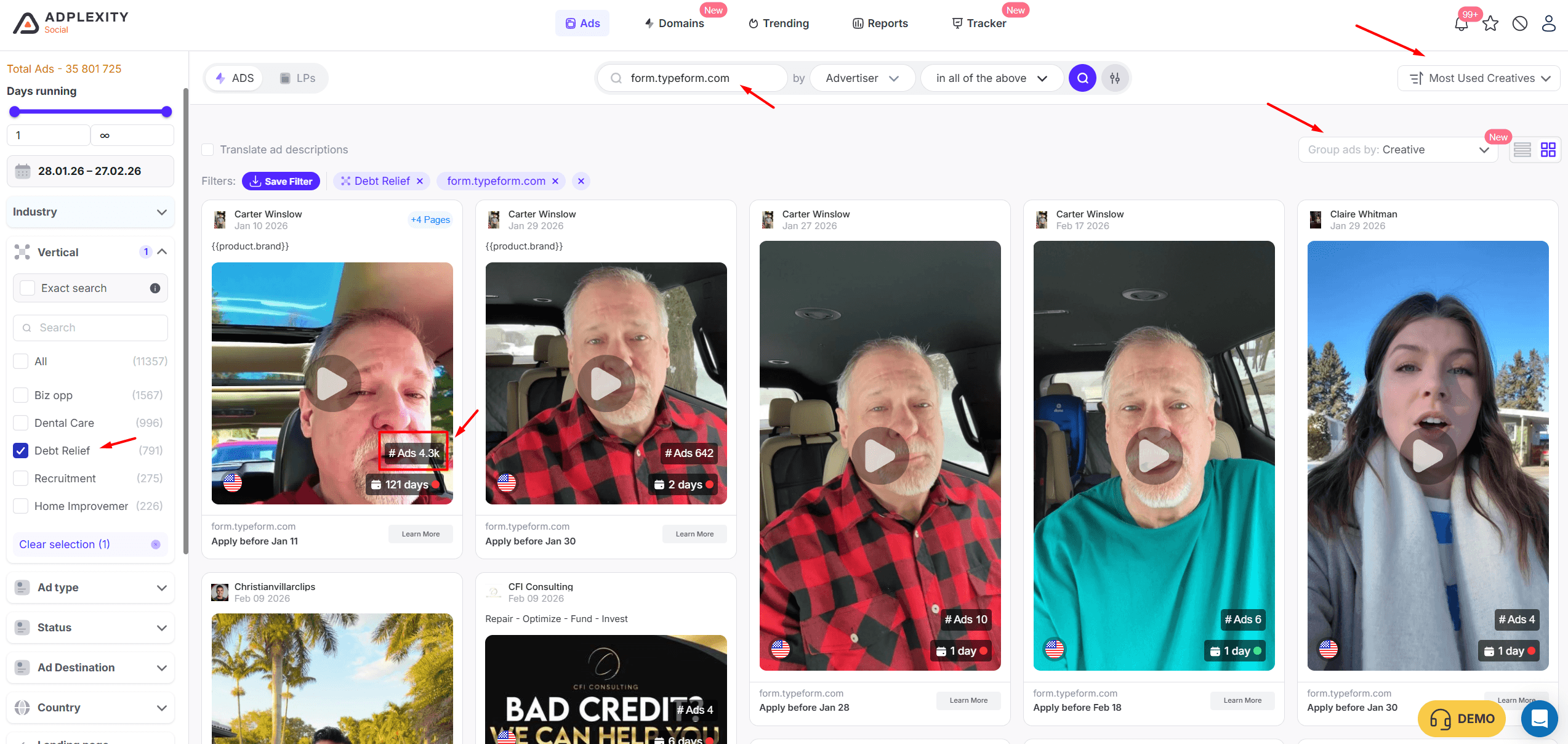
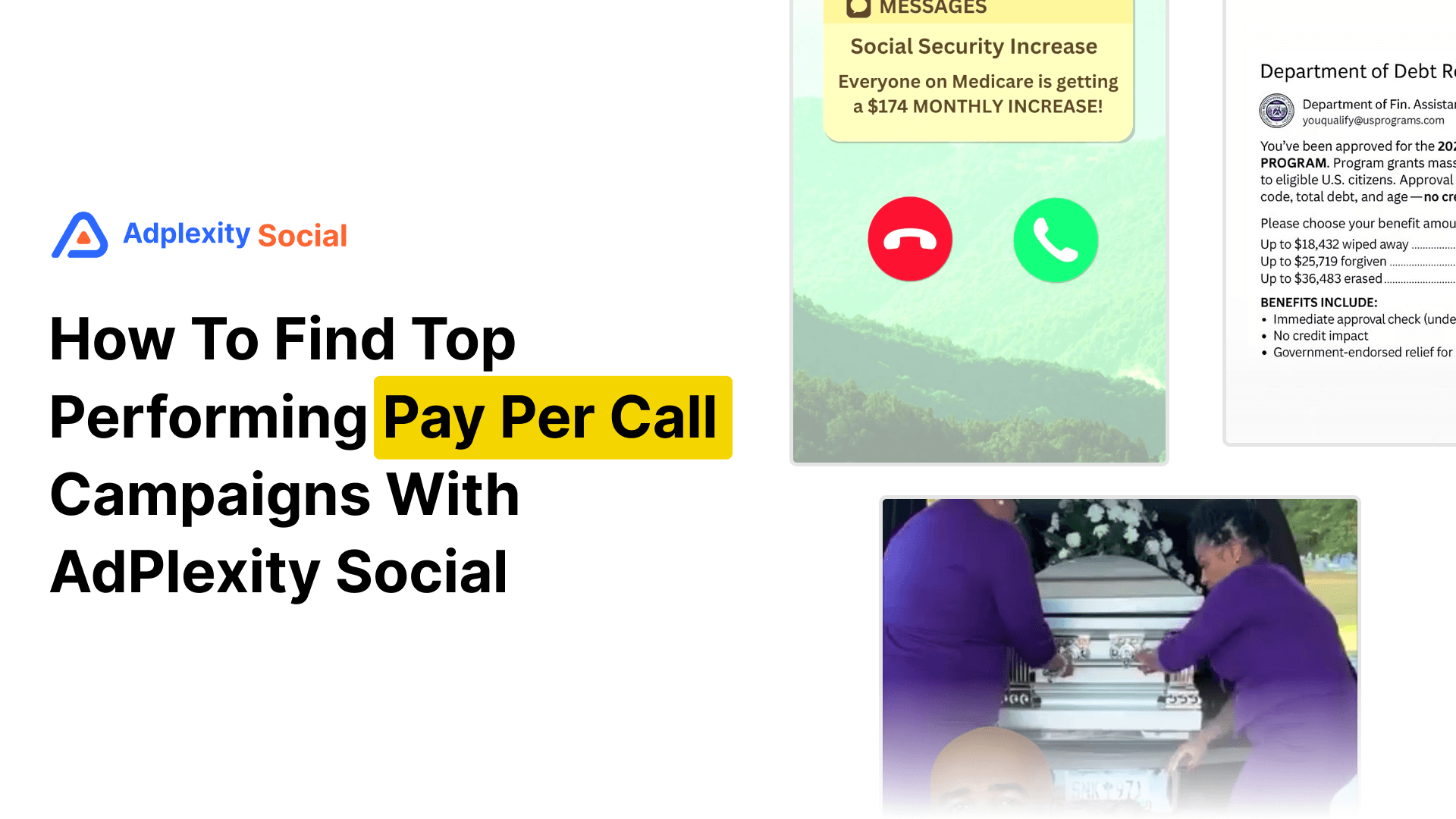
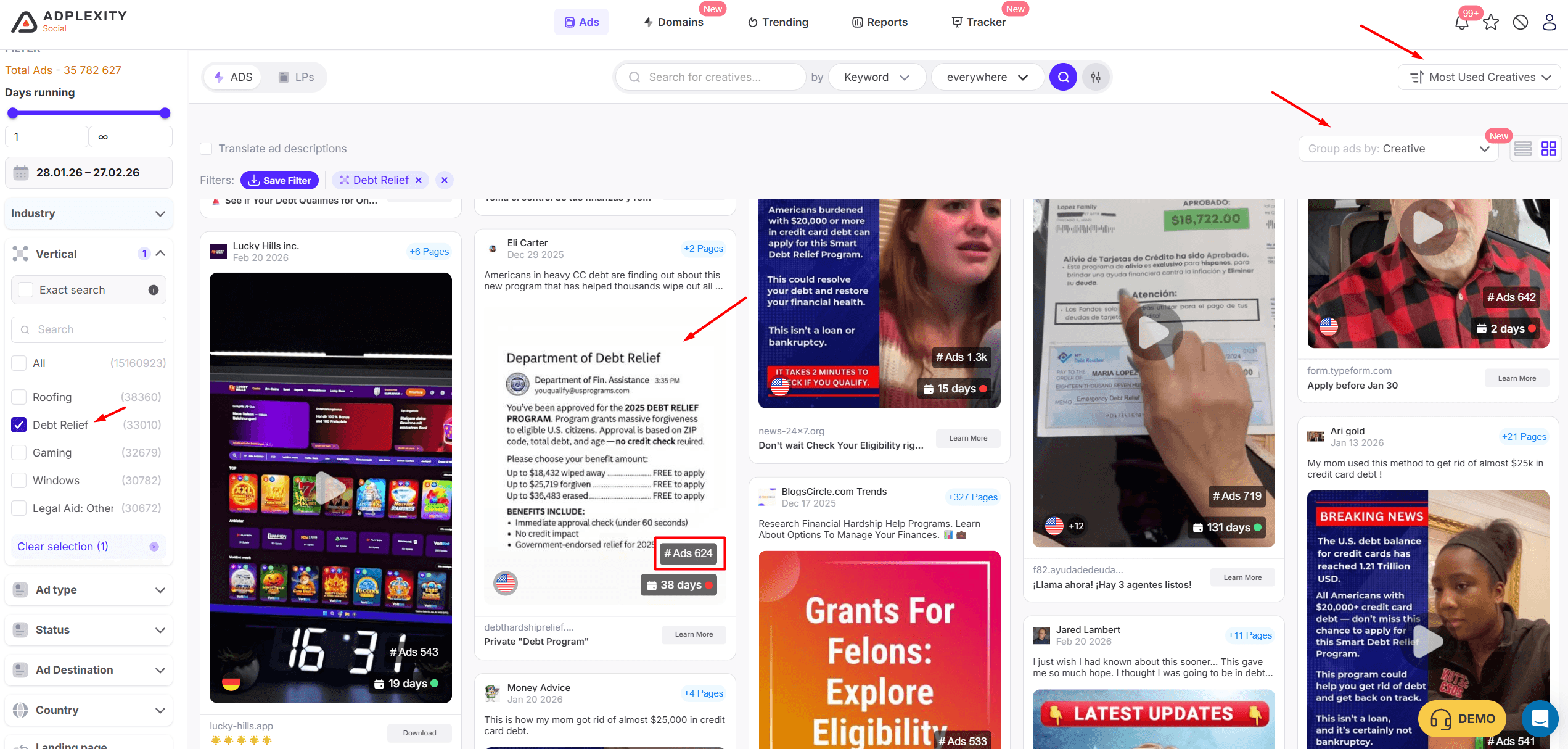
Then there are the fake government letter creatives: images designed to look like official correspondence from a financial authority, announcing that the recipient may qualify for a debt relief program.
These were running at a significant scale. One creative styled to look like a Department of Finance notice had 624 ads running behind it at the time of analysis. Whether or not this approach survives long-term from a compliance standpoint is a separate question, but the volume tells you it is currently converting.
Following the Redirect Chain: Where Do These Funnels Actually End Up?
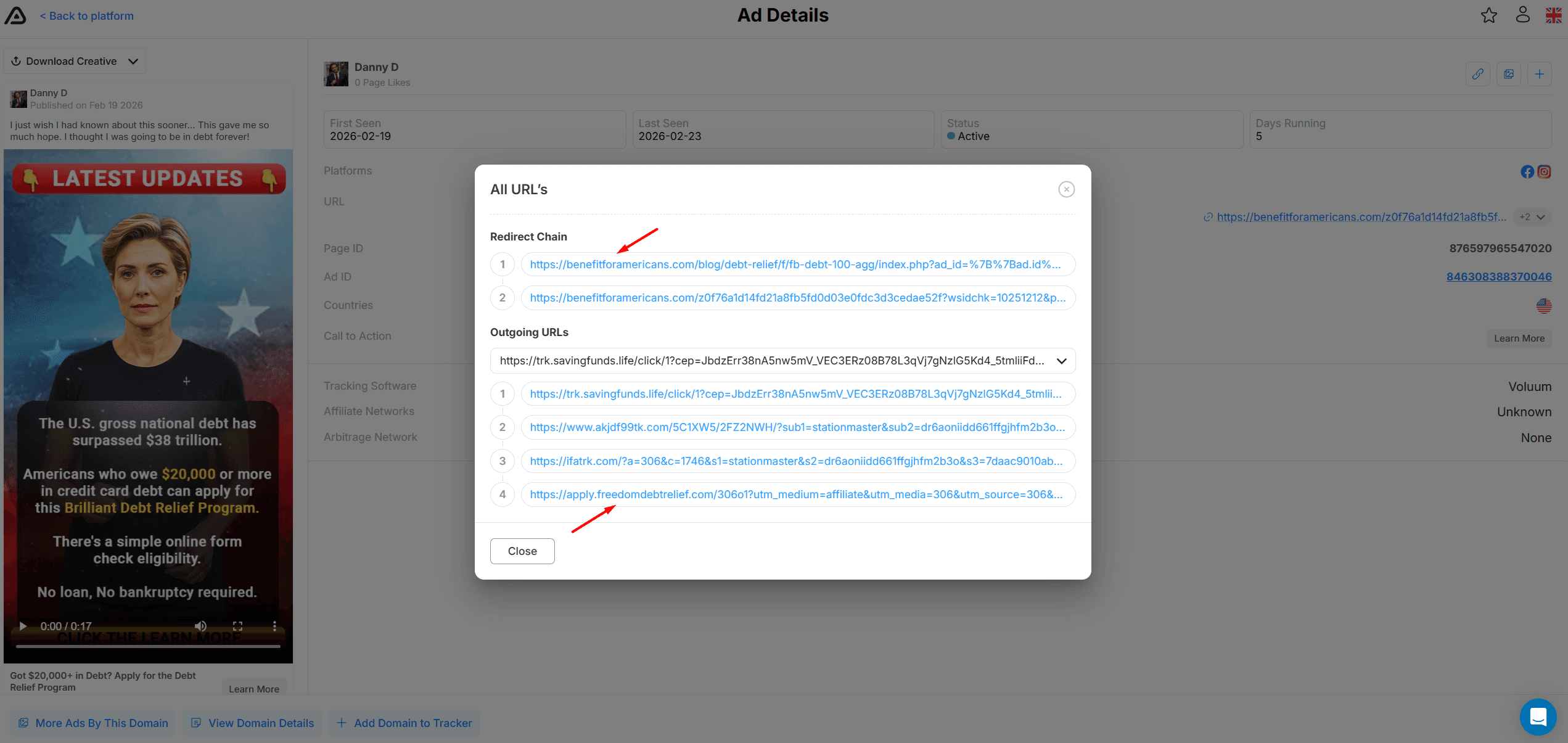
One of the most useful things you can do with debt relief research, or any niche research, is follow the redirect chain to its final destination. The pre-lander or landing page is often a front; what you actually care about is which offer is at the end of the funnel.
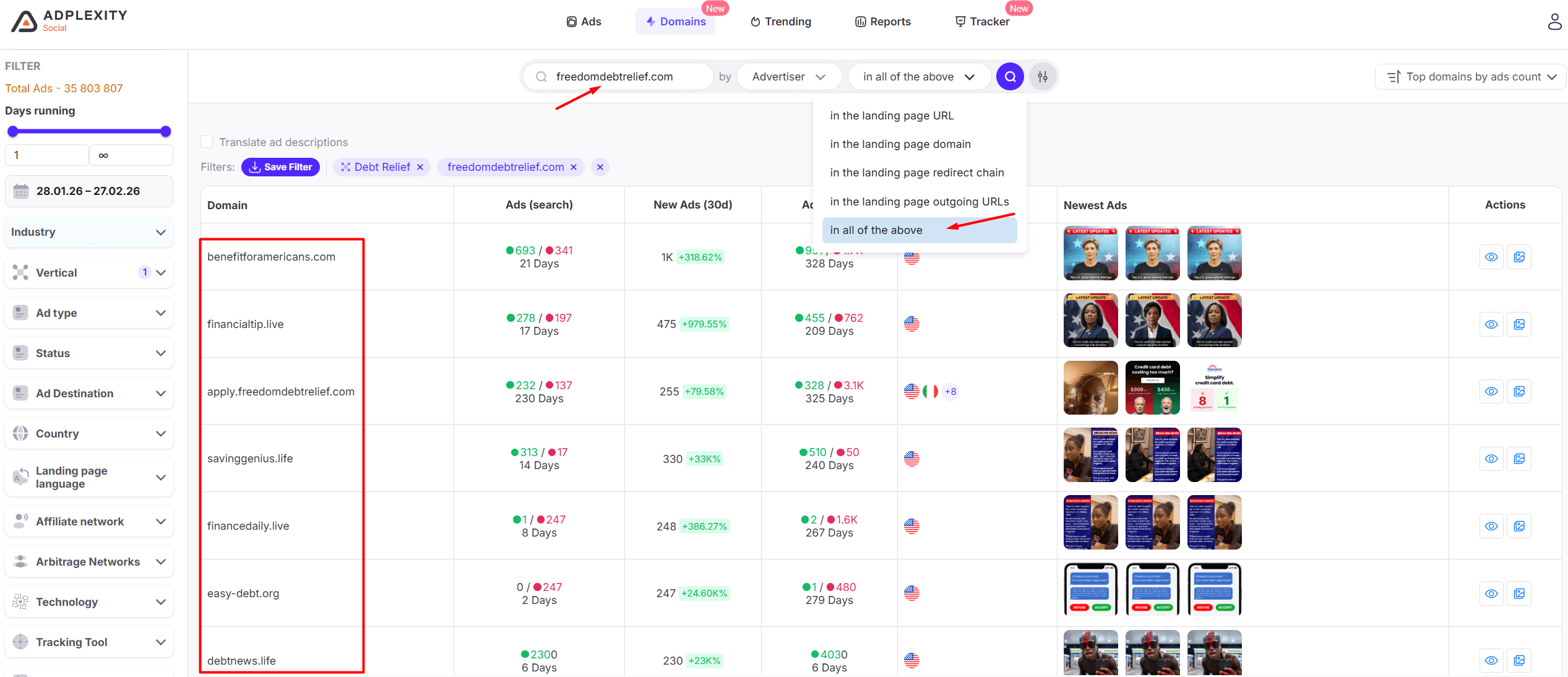
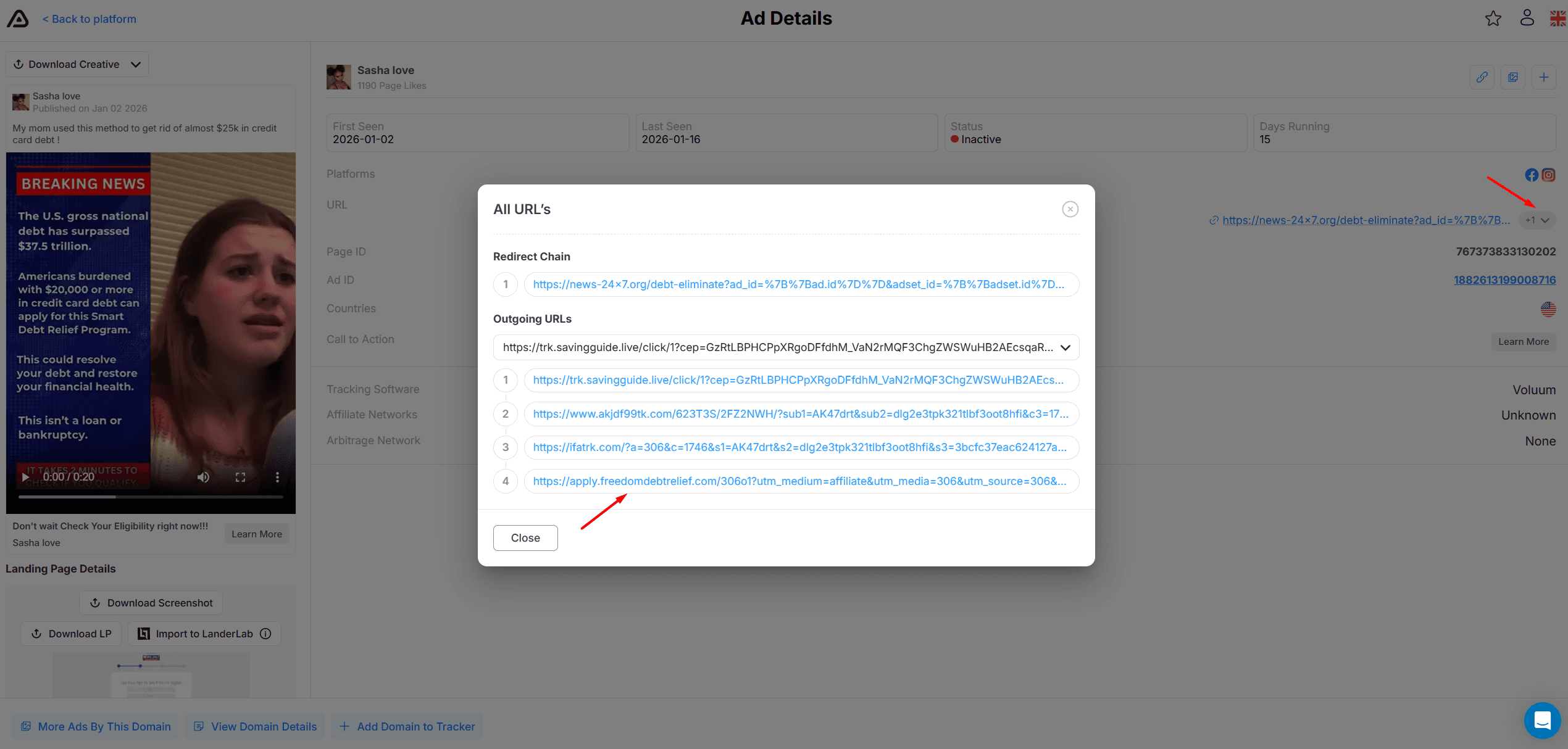
In debt relief, a significant portion of the affiliate traffic we analyzed ends up at Freedom Debt Relief, one of the largest and most established companies in the space. Multiple domains with completely different creatives and funnel styles all redirected to the same final offer page. Benefit for Americans (693 ads), financialtip.life (278 ads), and several others all trace back to Freedom Debt Relief's application page.
Domains that are linking to freedomdebtrelief.com
Redirect chain example (benefitforamericans.com - LP linking to apply.freedomdebtrelief.com - offer page)
This is actually a useful signal beyond just knowing who the big offers are. If you are entering this niche as an affiliate, seeing multiple domains independently converging on the same offer suggests it is probably converting well enough to attract serious affiliates, not just one or two testing the waters.
It also tells you something about the competition: if you want to run traffic to Freedom Debt Relief, you are going up against advertisers running hundreds of ads each.
That said, Freedom Debt Relief is not the only destination. Americor Debt Relief had 95 active ads pointing to it. There are other offers in the space. The redirect chain research just helps you map the market quickly rather than guessing.
The Tracker Data: More Affiliate Activity Than It Looks
One thing that is easy to miss in debt relief is how much affiliate traffic is running under what looks like direct advertiser activity. The tracker data makes this visible.
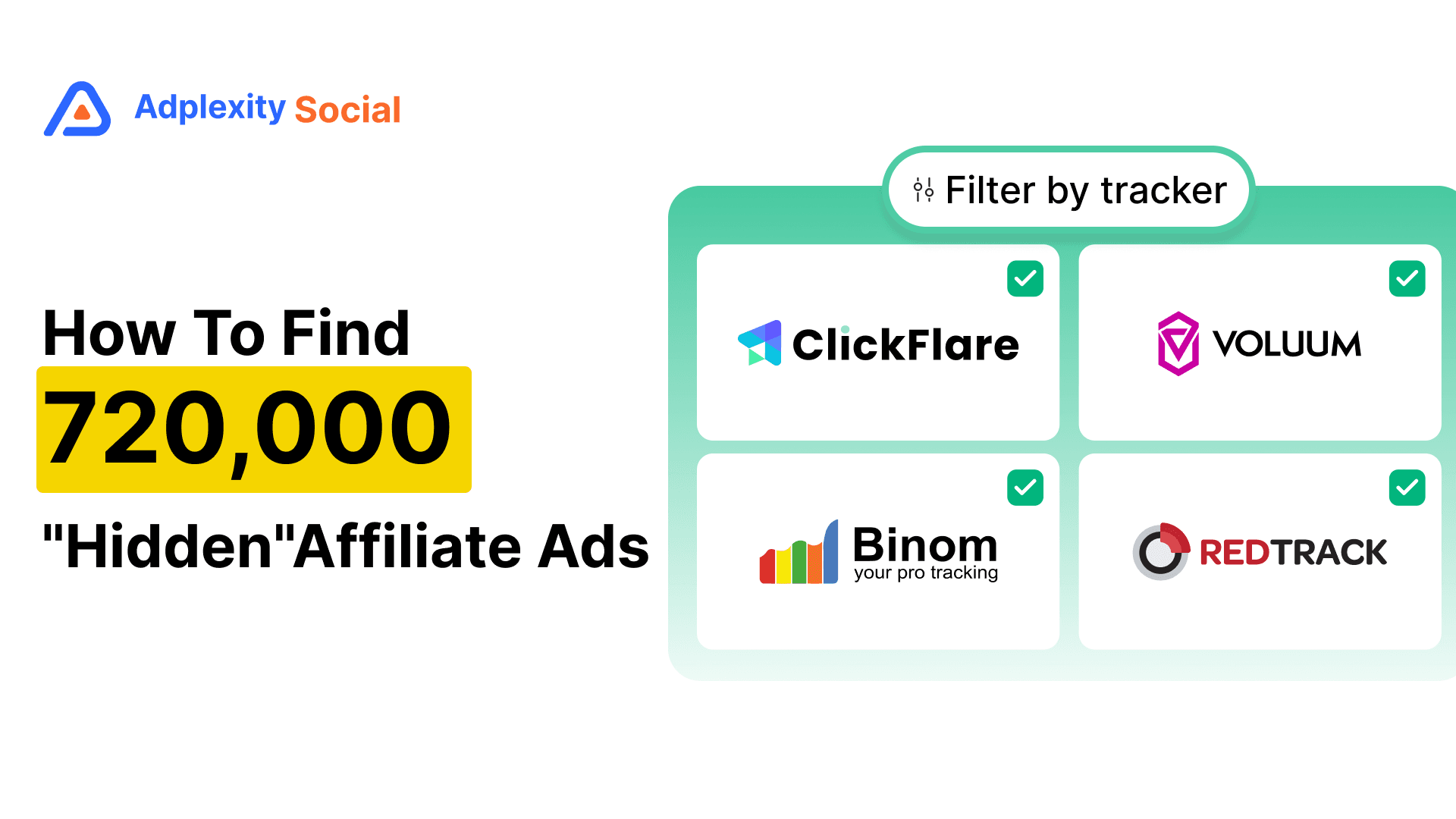
Across the 33,000 ads in the vertical, we identified over 5,000 ads running on RedTrack, 4,300 on Voluum, and 2,000 on Clickflare, meaning more than 10,000 ads were using one of these three performance marketing trackers.
RedTrack, Voluum, and Clickflare are affiliate and media buyer tools, not something a brand like Freedom Debt Relief runs internally. That is a significant affiliate layer running traffic in this niche.
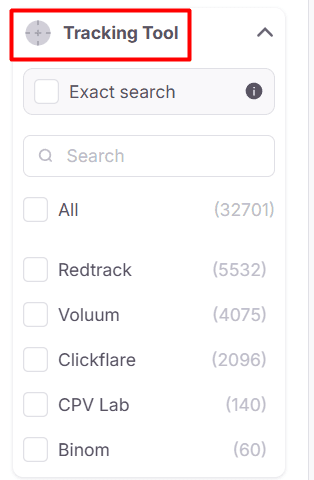
What this means practically: if you are considering entering debt relief as an affiliate, the competition is real, but it is also visible.
You can see what trackers your competitors are using, which domains they are sending traffic from, and what funnels they have built. That is a research advantage most niches do not give you as clearly.
How to Research This Niche Yourself
The workflow that generated everything above takes about 5 minutes once you know what you are doing.
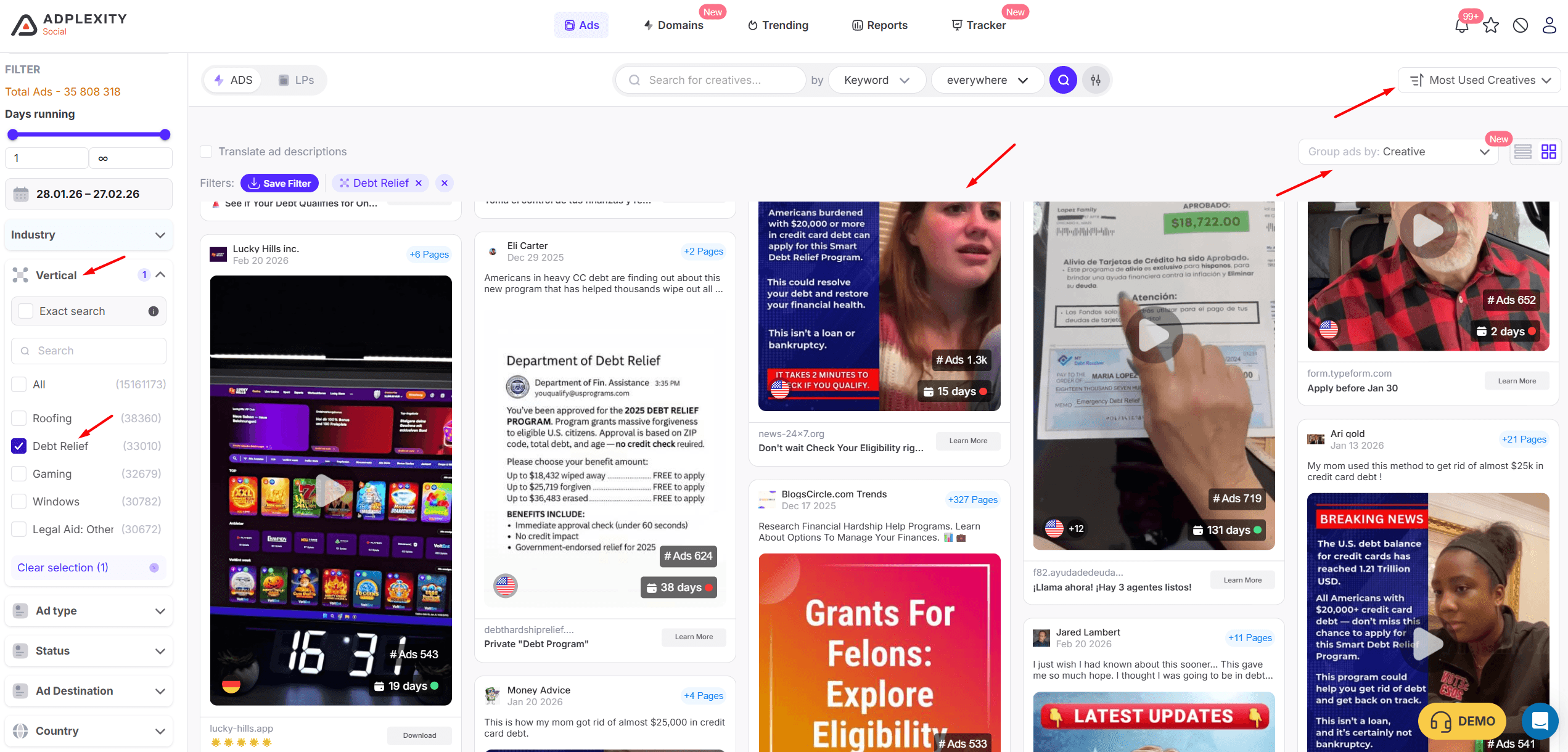
Start with the vertical filter: select debt relief and sort by most used creatives. This immediately surfaces the ads with the most deployment behind them, which is the closest proxy for "working creative" that exists in ad intelligence.
From there, click into any ad and check the landing page and redirect chain. You are looking for the final destination URL to identify which offers are receiving the most traffic.
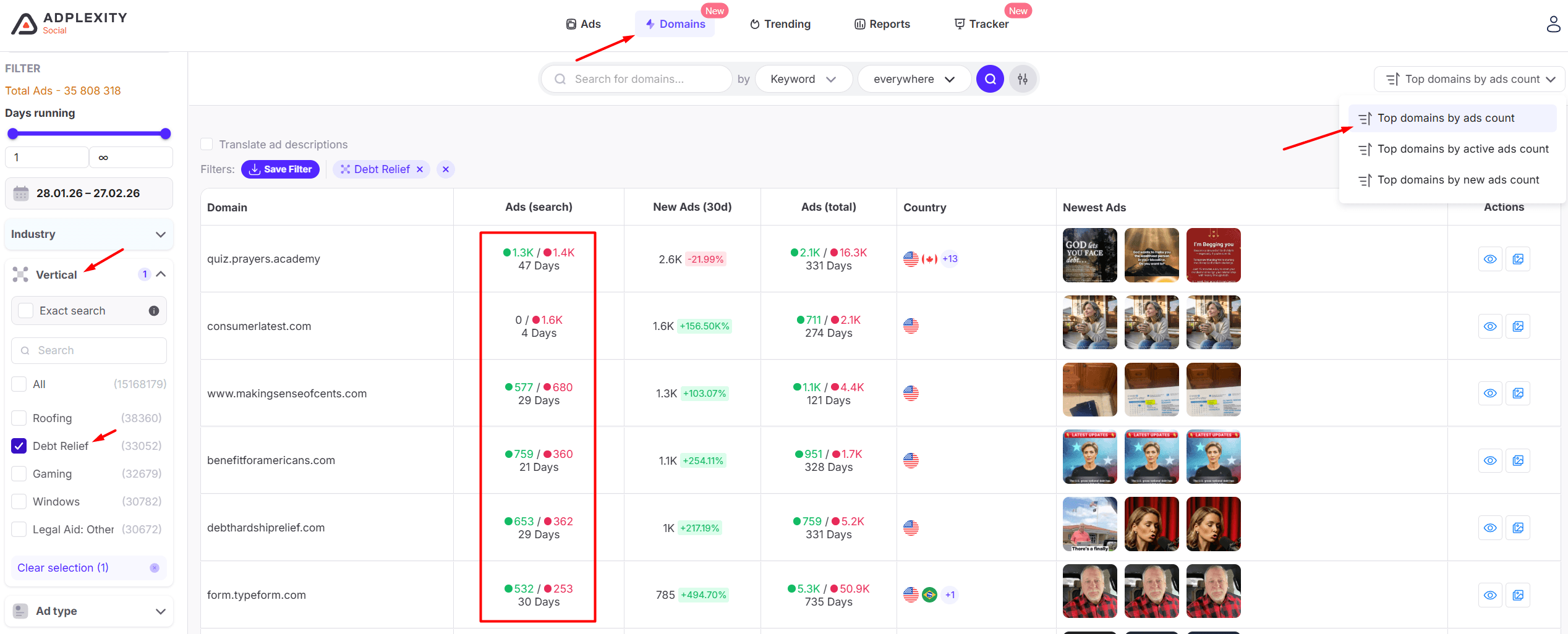
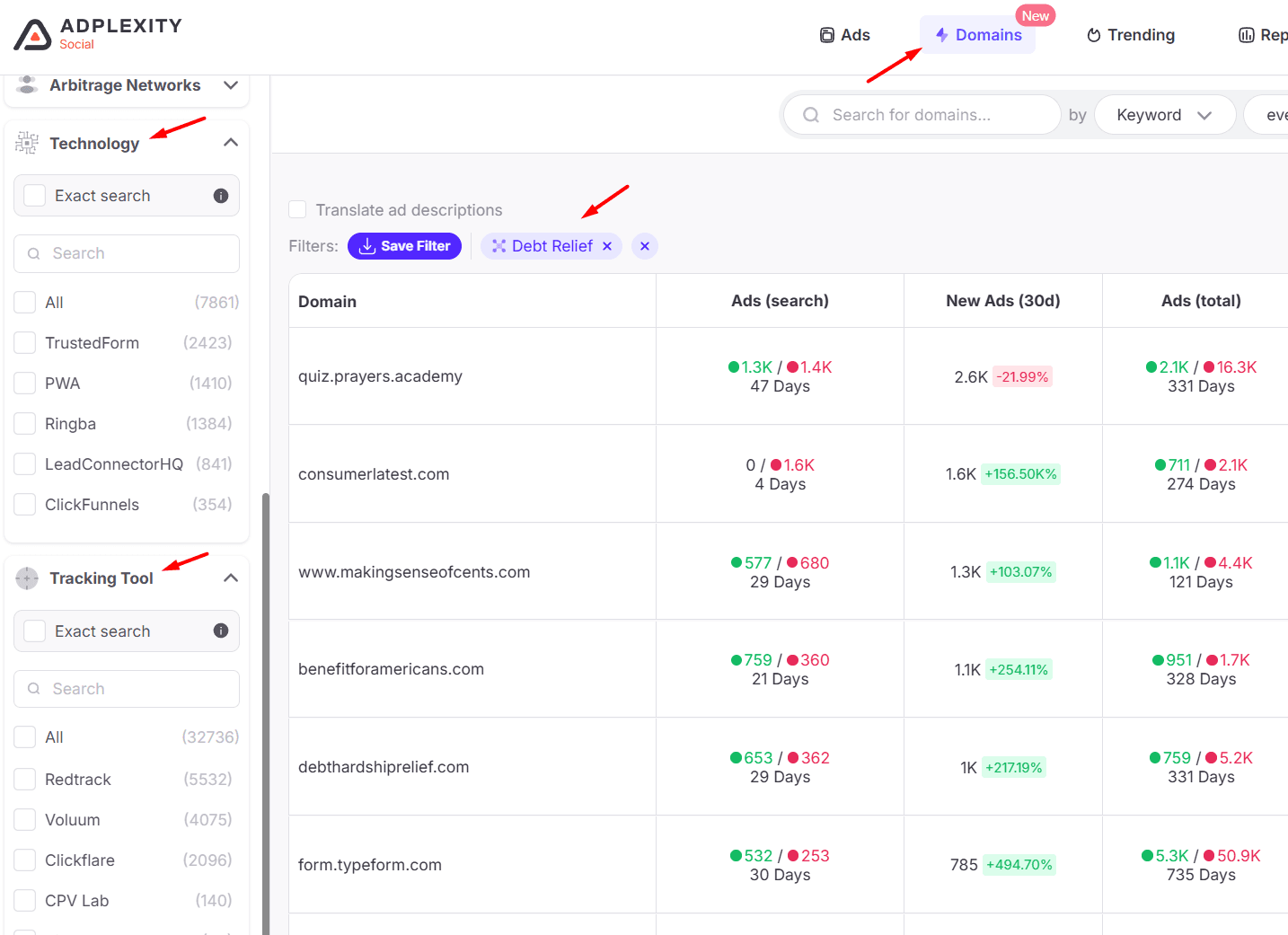
Then switch to the domain dimension view, filtered to debt relief. Sort by ad count to see which domains are most active.
Click into any domain that looks interesting, and you get the full picture: active ad count, creative inventory, landing pages, and redirect chain.
For the specific example of identifying which affiliates are running to a particular offer, search for the offer domain directly: you will see every pre-lander and affiliate domain that links through to it.
Finally, use the technology filter to segment by business model. Ringba tells you who is running pay-per-call. TrustedForm and LeadConnectorHQ point to lead gen.
The tracker filters (RedTrack, Voluum, Clickflare) isolate affiliate activity from direct brand advertising.
What This Niche Actually Teaches You
Debt relief is worth studying even if you never run a single campaign in it. The funnel variety on display (advertorials, quizzes, Typeform flows, hybrid pay-per-call/lead gen setups) is a masterclass in how experienced performance marketers adapt their approach to a regulated, high-intent vertical.
The fact that 33,000 ads ran in a single month tells you the economics work. The fact that they are running across four or five completely different funnel formats tells you nobody has found a single dominant approach yet.
For someone entering the space, that is actually an opportunity.
If you want to explore the debt relief vertical, or any other niche, AdPlexity Social gives you the full picture.
🚀 If you are serious about: uncovering the strongest campaigns,
tracking real, revenue-driving funnels, and dissecting the exact angles top marketers are using right now…
Then AdPlexity Social is hands-down the #1 tool you should be using
Discover Winning Meta Ads
Similar Blogs