
Which Landing Page Builder Is Winning on Facebook Ads in 2026?
Share:

Key Takeaways: Most analyses of landing page builders focus on features and pricing. This one looks at actual ad data: specifically, which builders are showing up behind real Meta campaigns, in which verticals, and what the funnels actually look like. LanderLab.io dominates lead gen and affiliate traffic. LeadPages turns up heavily in coaching and certain affiliate networks like DigiStore. And the way you research this is not by googling. It is by filtering directly by tech stack and watching the redirect chains.
Watch the full tutorial on YouTube:
Most comparisons of landing page builders are written by people who have never run a profitable Meta campaign. They focus on drag-and-drop editors, template libraries, and A/B testing features. Fine for a blog post. Useless if you are trying to understand what is actually working in the market right now.
So instead of benchmarking interfaces, we will look at what is running. Specifically: which builders are showing up behind real Meta ads, what kinds of funnels they are being used for, and what you can learn from the redirect chains those pages sit behind.
ClickFunnels gets its own dedicated breakdown. It operates at a different scale and has been covered separately. This post focuses on LanderLab.io and LeadPages, two builders that are doing a lot of quiet, profitable work across several key verticals.
How to Filter by Landing Page Technology
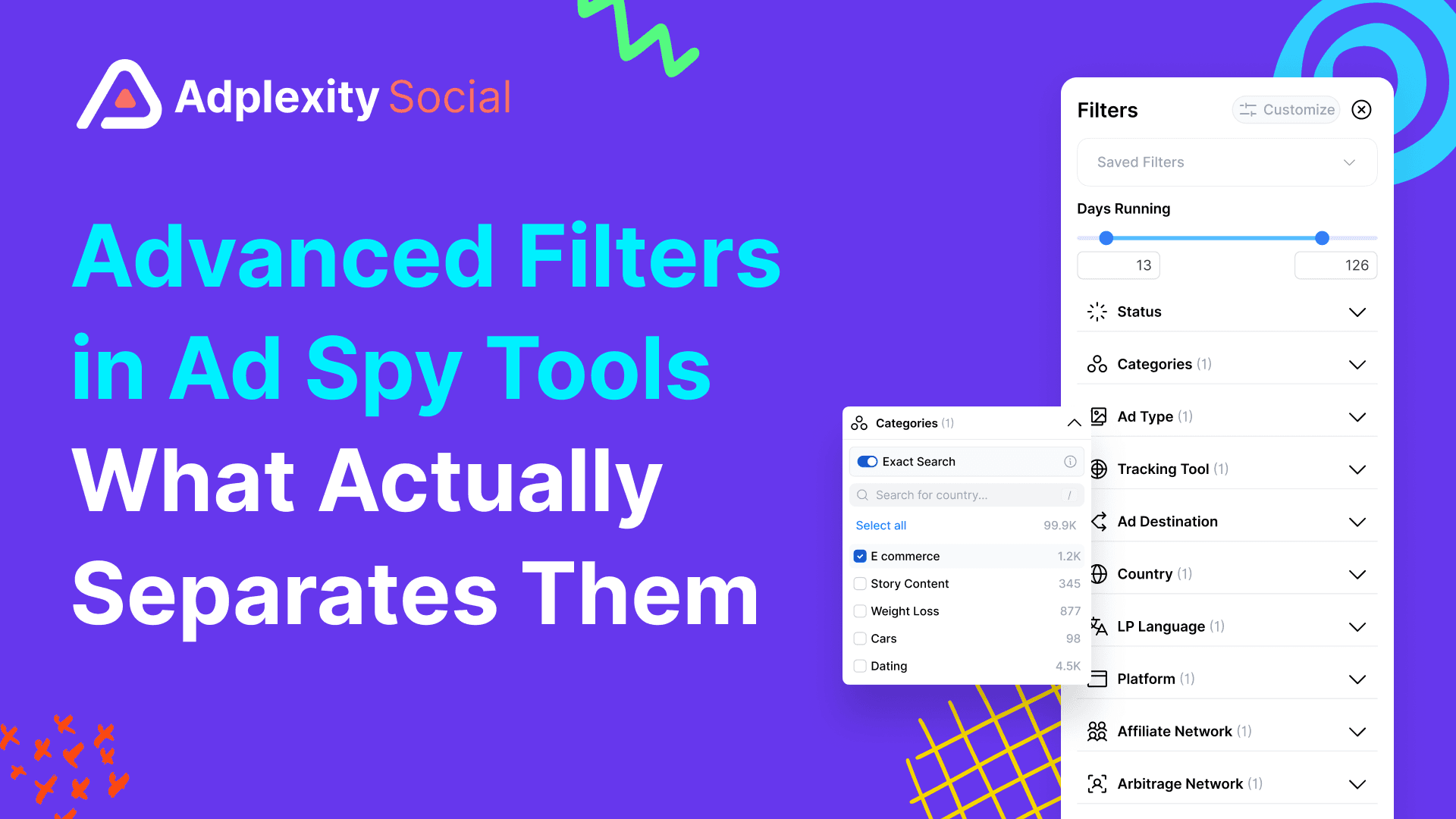
The starting point here is tech stack filtering. Rather than searching for ad copy keywords, you filter the ad database by the technology detected on the landing page itself.
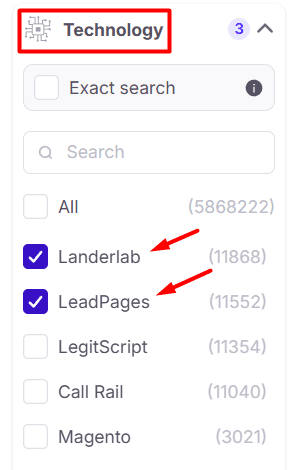
At the time of pulling this data, LanderLab was sitting at just under 11,000 indexed ads, LeadPages at just over 12,000. Funnelish had significantly fewer, not enough results to draw meaningful conclusions, so we will keep the focus on the top two.
What makes this filter powerful is that you can stack it. Want to see LanderLab ads specifically in the insurance vertical? Cross the tech stack filter with a vertical category filter, and you are looking at roughly 1,000 ads that match both. Health, supplements, home services: the vertical distribution cuts both ways, and the combinations get interesting fast.
LanderLab: The Lead Gen and Affiliate Workhorse
LanderLab is one of the more versatile builders in the performance marketing space right now, and that versatility shows in how many different funnel formats it is being used for.
The simple pre-lander. The most common use case is the qualifying pre-lander: a page with two or three questions that routes traffic based on the answer. A recent auto insurance example (running two days before this was written) is a good illustration. Clean page, minimal design, single question. The ad is an image, nothing fancy. But here is what you would not know just from looking at the landing page: clicking “yes” routes to one offer, clicking “no” routes to a different offer entirely.
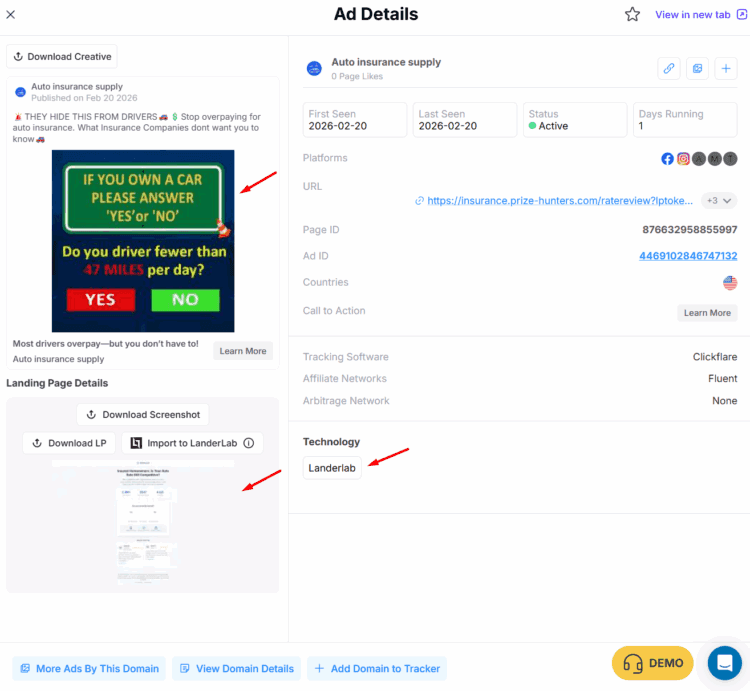

You only know that from the redirect chain. The “yes” path goes to a specific outgoing URL. The “no” path goes to a different one. That is not a poorly designed funnel. That is a deliberate monetization decision. They are capturing value from both the qualified and unqualified traffic segments. The redirect chain makes this readable in seconds.
This pattern, a simple pre-lander that branches based on user response, is one of the most common structures in lead gen and pay-per-call right now, and LanderLab is handling a lot of it.
Quiz funnels. The builder is also doing serious work in quiz-style flows, particularly in home services. A roofing campaign from the data set is a clean example: step-by-step questions about the property, moving the user through a qualification flow before presenting the offer. The combination of LanderLab’s quiz functionality with lead capture at the end is well-suited to high-intent home services verticals where you need to qualify before you spend.
Chatbot flows for pay-per-call. This one’s worth flagging separately because it is less obvious. LanderLab has native integrations with call tracking tools: Ringba and Retreaver specifically. That means affiliates and lead gen operators are building chat-style flows entirely within LanderLab that end with a phone call rather than a form submission. The “promo-usabenefit” domain in the data set is running 464 active ads using exactly this structure: a chat interface that qualifies the user and routes them to a phone number.
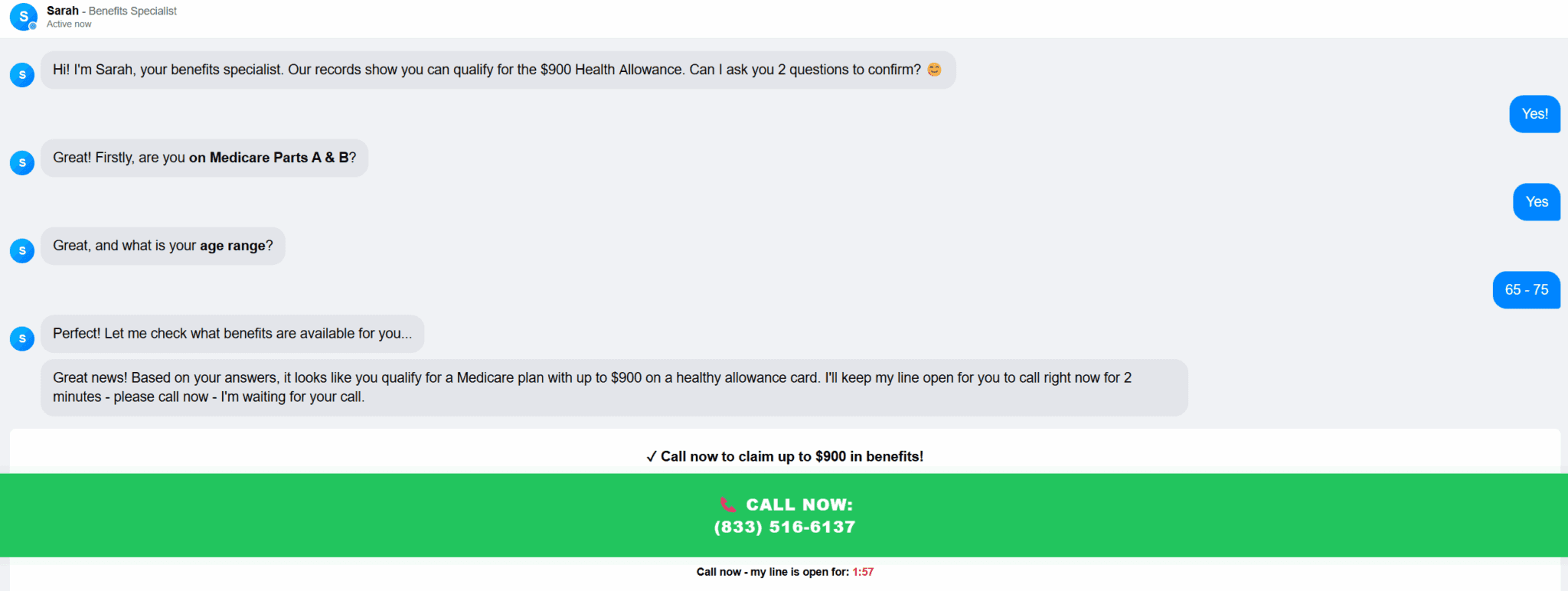
That is a significant footprint for a single domain. And it speaks to how LanderLab positions itself in the pay-per-call space, not just as a landing page builder, but as a complete flow builder for call-based monetization.
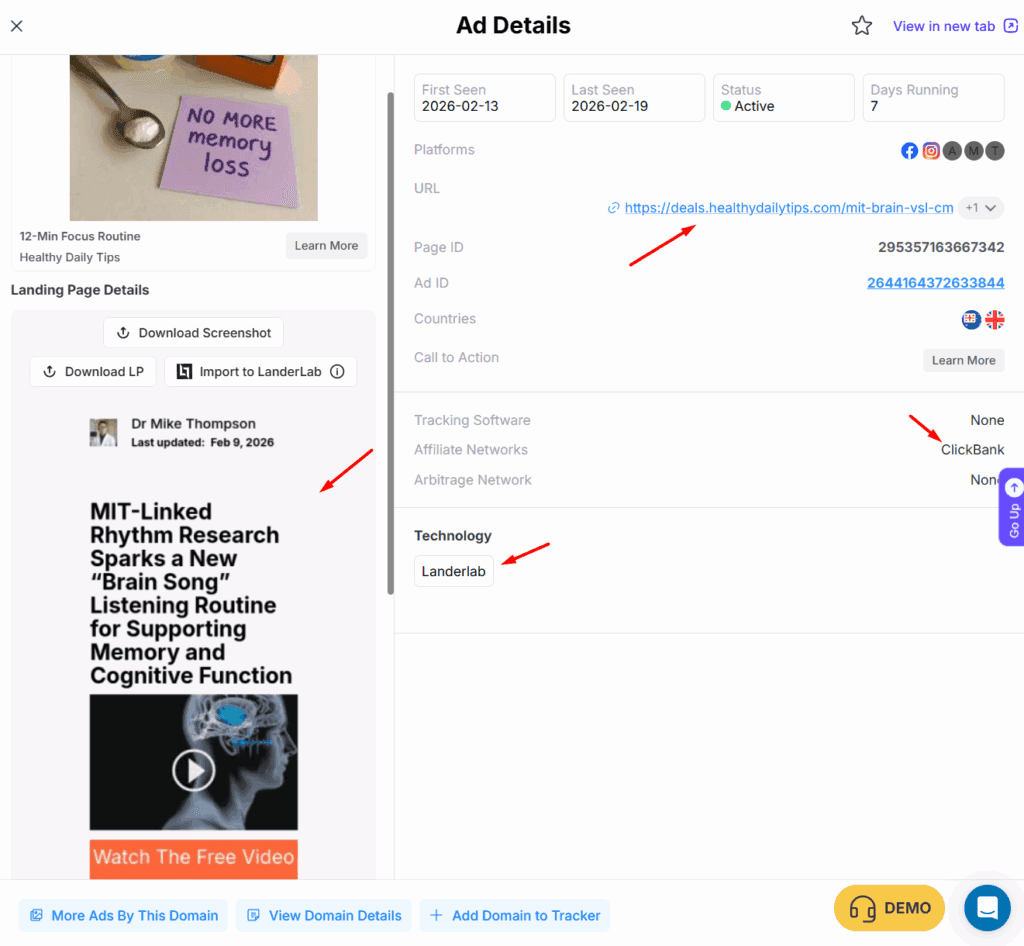
Affiliate pre-landers. ClickBank traffic is also flowing through LanderLab. An advertorial-style pre-lander pointing to a ClickBank offer shows up in the health and supplements data. The format is familiar: “5 reasons why” style content that warms the reader before sending them to the offer page. The redirect chain confirms the destination. Clickflare and Redtrack show up about evenly as the tracking tools layered on top.
LeadPages: The Coaching and Digital Product Play
LeadPages shows a different pattern. Where LanderLab turns up heavily in lead gen flows, affiliates, and pay-per-call, LeadPages appears to be the builder of choice for coaching businesses and certain affiliate networks, particularly DigiStore.
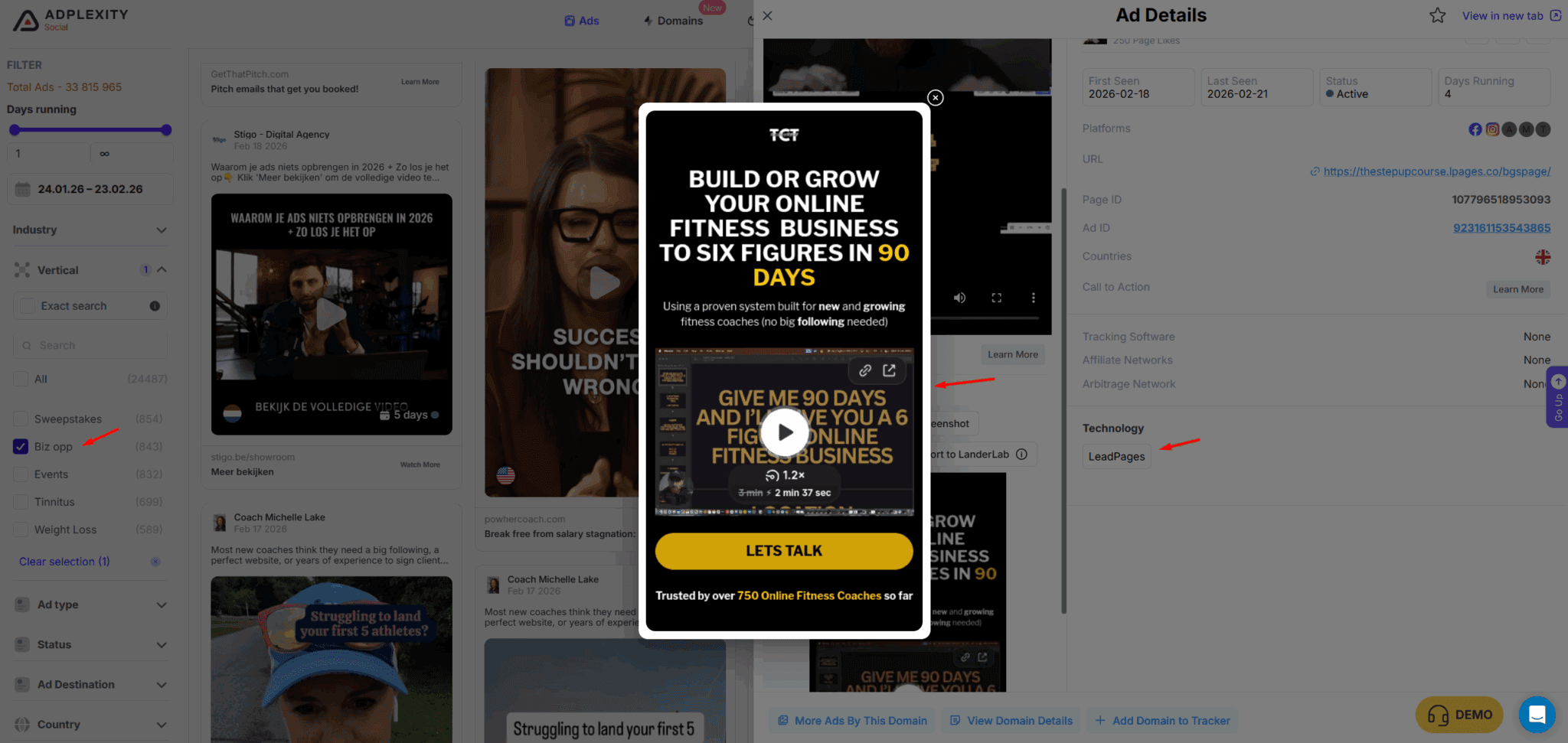
Coaching pages. Multiple coaching campaigns in the BizOp vertical are running on LeadPages: online fitness coaches, business coaching, that category. The pages themselves are fairly standard: headline, short value proposition, lead capture form. Not quiz flows, not chatbots. LeadPages suits this use case well because these advertisers are not running complex multi-path funnels. They want a clean, professional-looking capture page that converts.
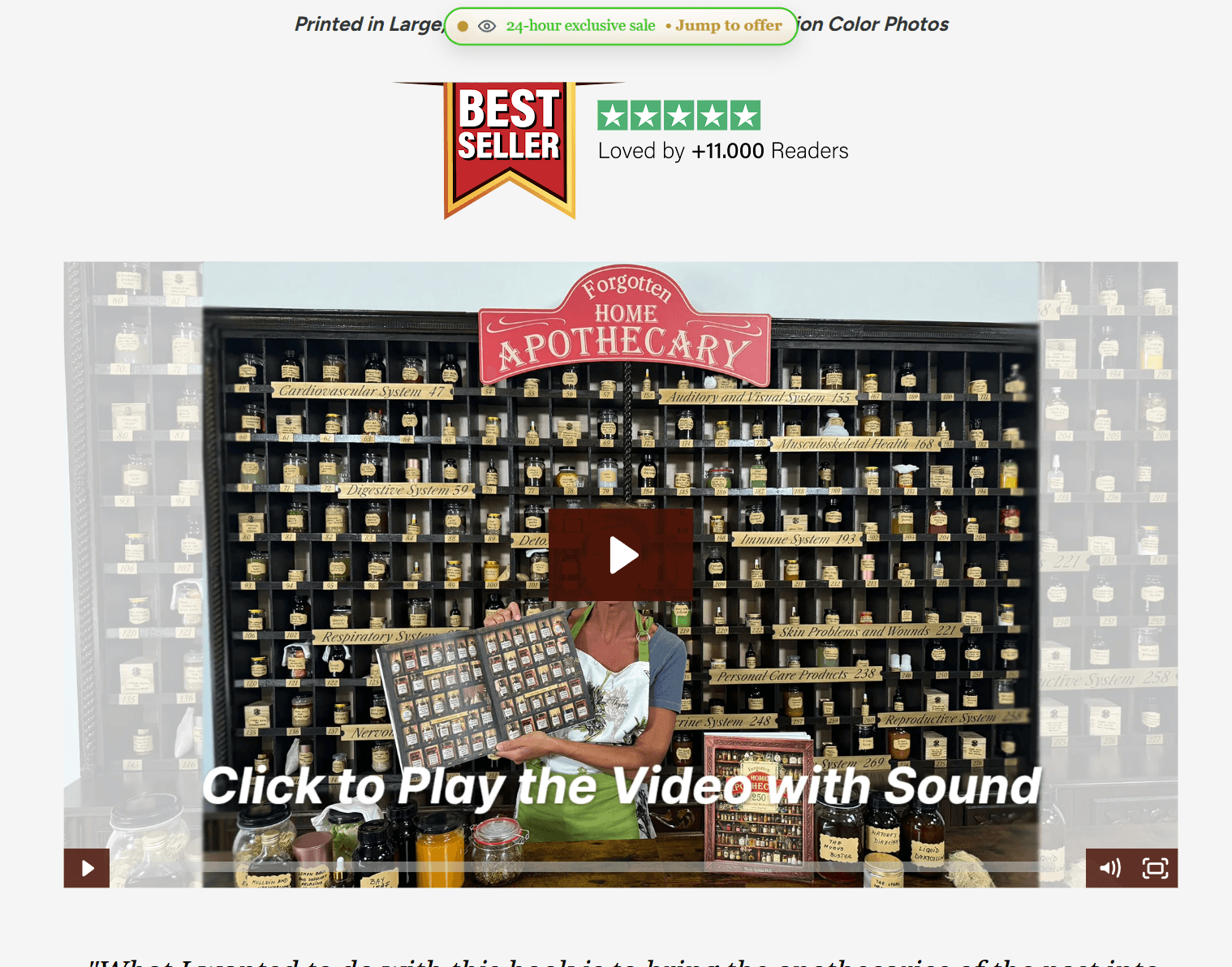
DigiStore affiliate offers. The DigiStore connection is one of the more interesting data points here. Several DigiStore offers, including health and digital products, are consistently using LeadPages for their offer pages. One example is “The Forgotten Home Apothecary,” a digital product that is routing traffic through an offer page built with LeadPages. The redirect chain makes the DigiStore connection visible: the checkout URL is in the chain, and that is how it gets tagged.
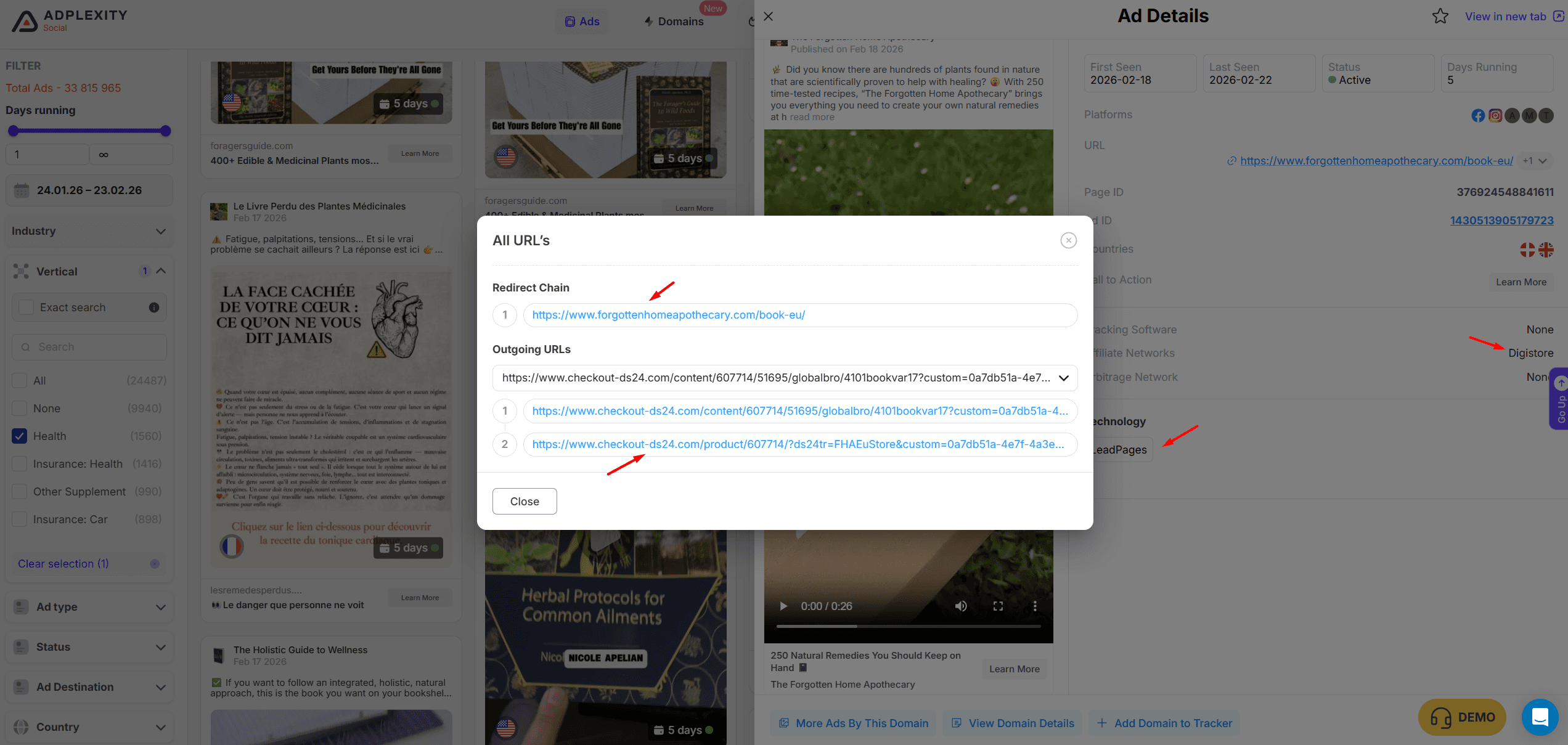
This matters if you are an affiliate or media buyer working in the digital product space. If LeadPages is the builder showing up consistently across DigiStore offers, that is a signal, both about the offers themselves and about what landing page infrastructure that network tends to favor.
Pre-lander to VSL. LeadPages is also being used as a pre-lander that routes to a VSL (video sales letter). The structure is exactly what you would expect: a page with a short hook and a CTA to “watch the video,” which then sends the user to the full offer page. The pre-lander does the qualification work; the VSL does the selling. Multiple health and supplement campaigns are running this structure.
Prelander

VSL

The Domain Dimension: A Different Research Angle
Beyond browsing individual ads, switching to the domain view reveals another layer. Instead of looking at ads one by one, you see which domains are running the most volume on a given technology.
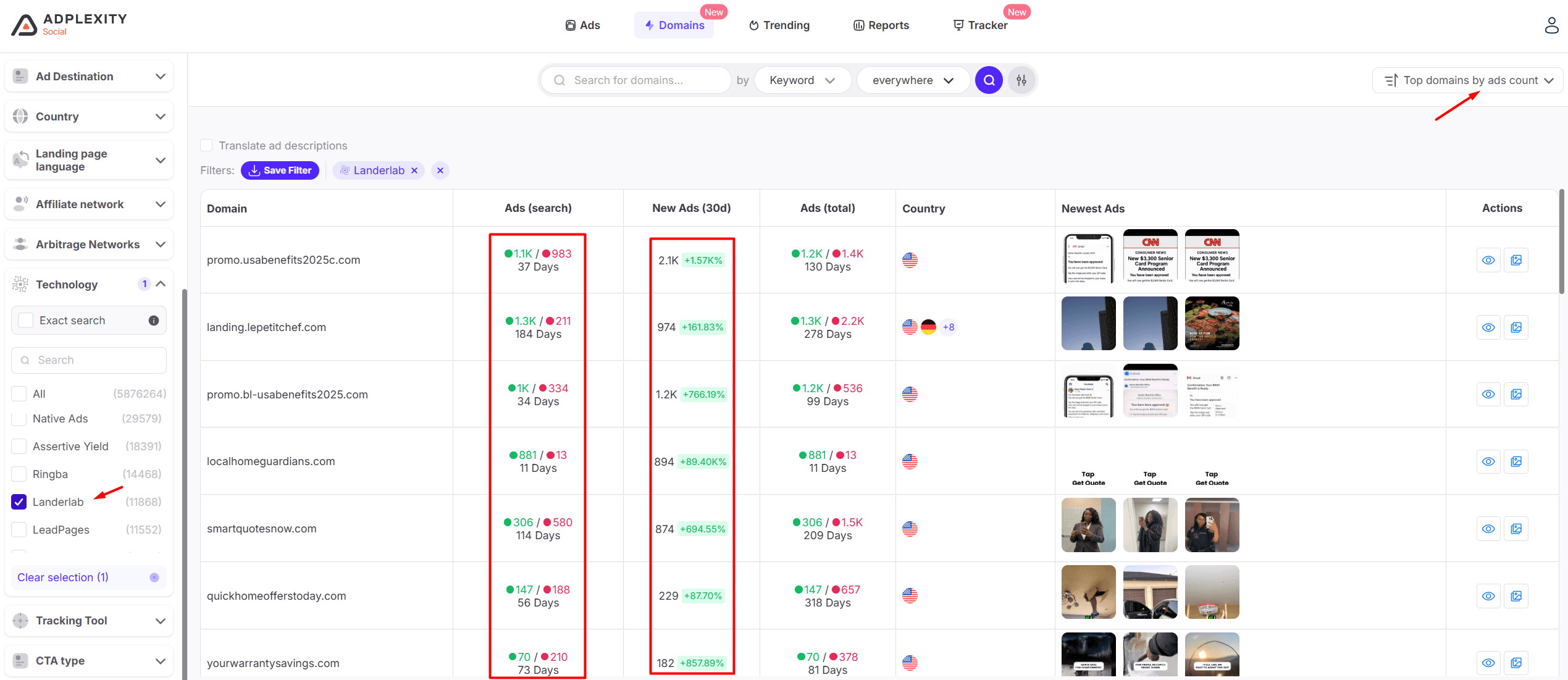
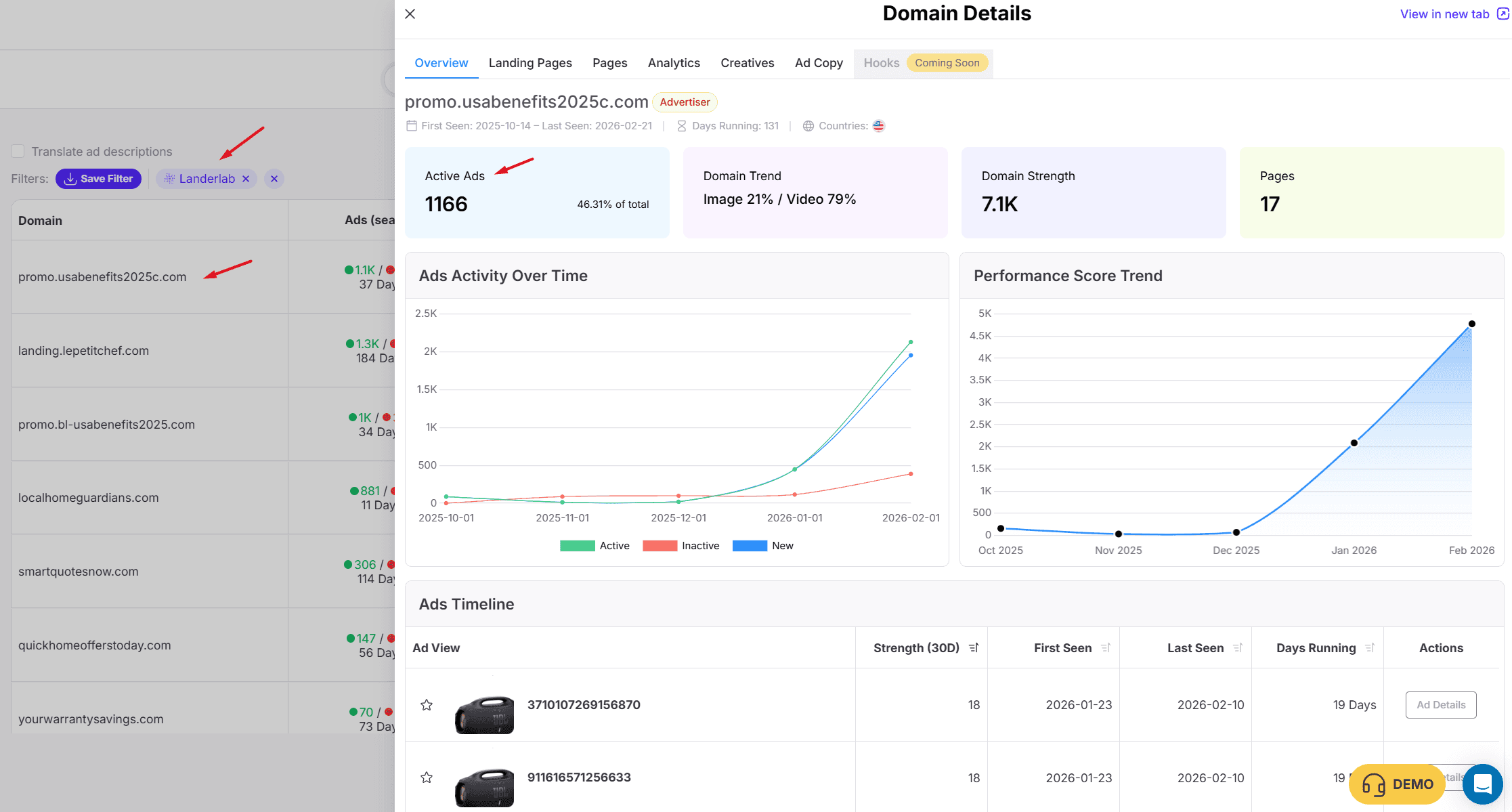
The standout example: a single domain with 1166 active ads all using LanderLab. That is not a casual test. That is an operation that is committed to a specific builder, a specific funnel format, and is scaling it. Finding that from the ad feed alone would take hours. From the domain dimension, it is the first result.
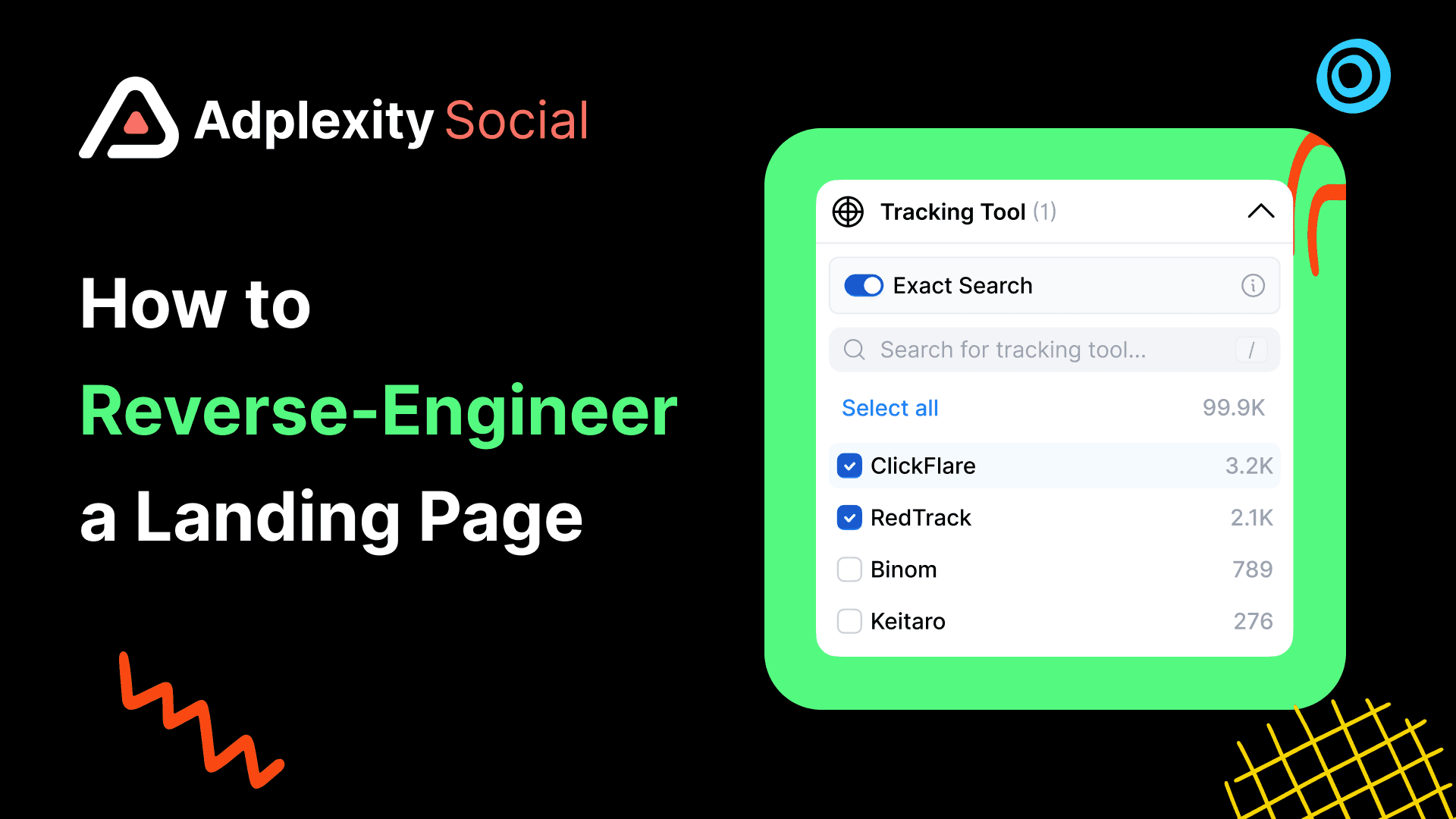
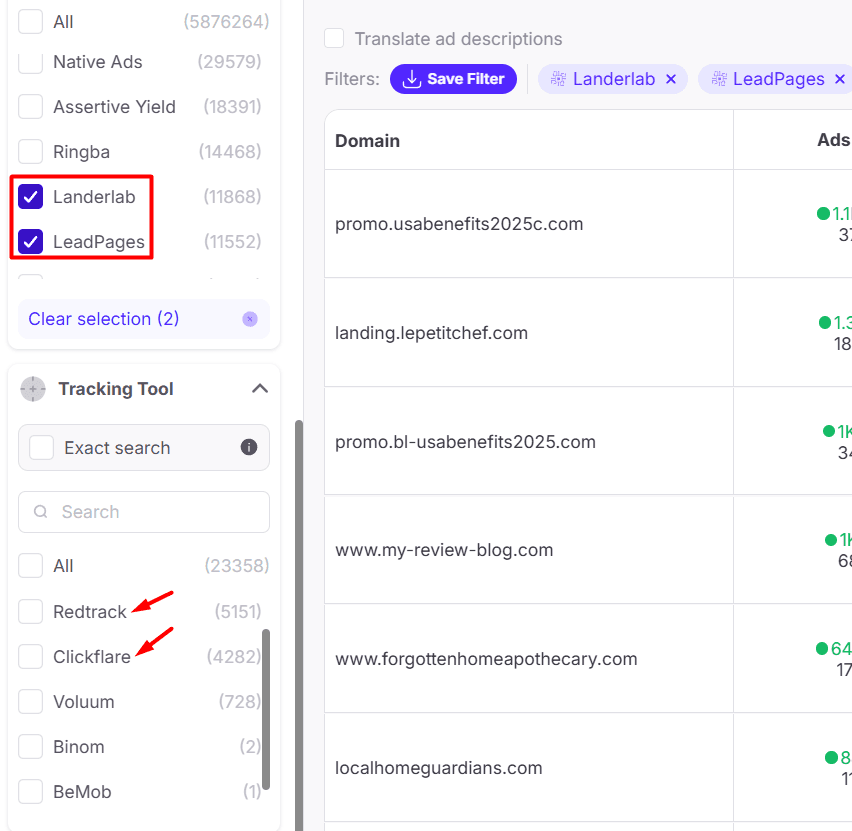
This is also where you can layer in tracking tool data. Clickflare and Redtrack show up in roughly equal distribution across LanderLab and Leadpages campaigns, which tells you something about the affiliate infrastructure behind a lot of this traffic. Filter for one or the other, and you narrow down which specific operators are running what.
What the Pattern Actually Tells You
After going through a meaningful sample of both builders, a few things become clear.
LanderLab is doing the heavy lifting in performance marketing: lead gen funnels, pay-per-call flows, ClickBank affiliate pre-landers, quiz-style qualification sequences. Its integrations with Ringba, Retreaver, and major tracking tools make it the natural choice for operators who are running at volume and need the funnel to do real work. It also offers a chatbot builder that is genuinely being used in production campaigns, not just as a feature demo.
LeadPages tends to show up in cleaner, less-complex setups. Coaching businesses prefer it. DigiStore offers seem to favor it. The pages are generally simpler: less branching logic, more straightforward capture. That is not a criticism; it fits the use case.
The vertical overlap is also real. Both builders appear across insurance, health, and home services. The choice of builder does not map neatly to a single vertical. It maps more to funnel complexity and operator type.
Finding This Yourself
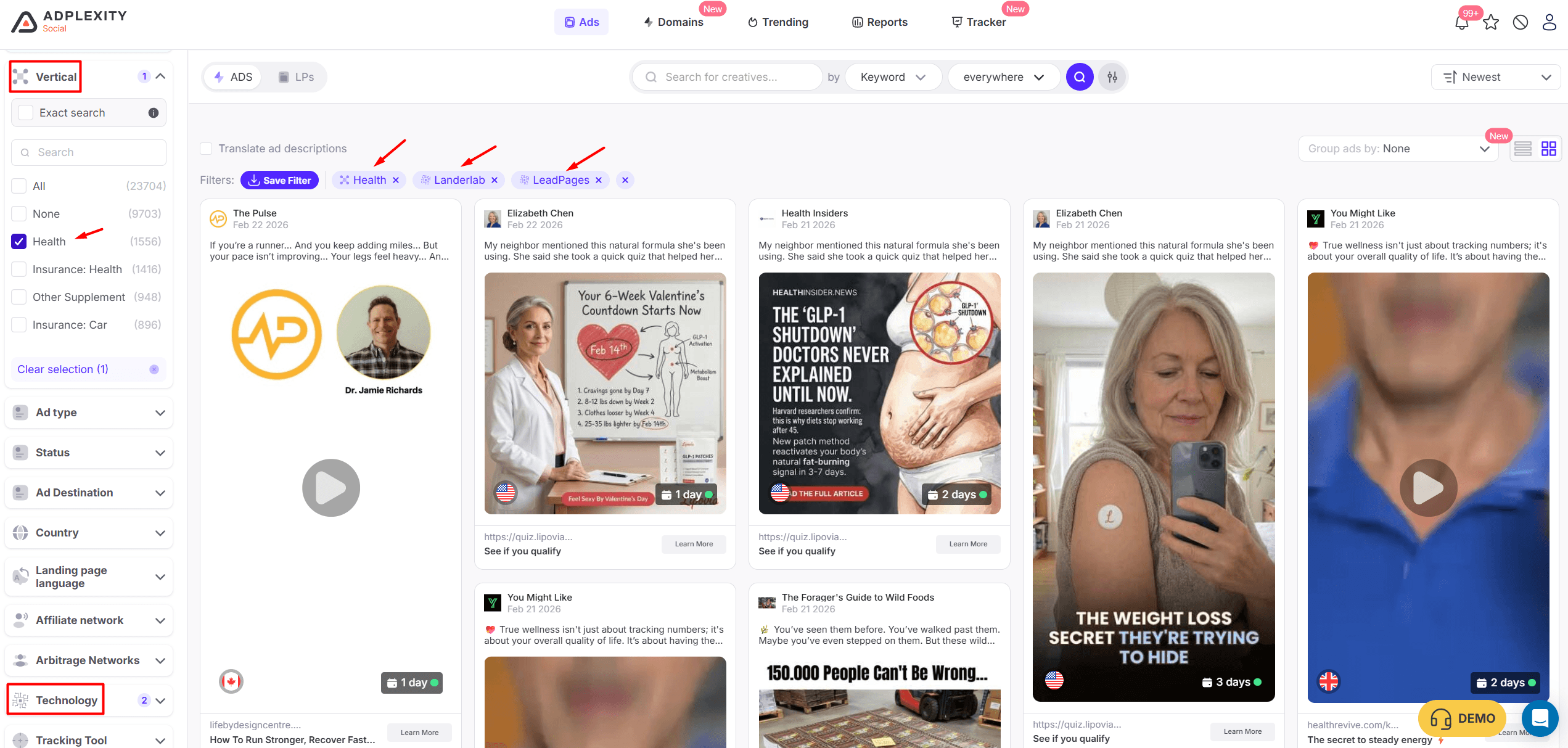
If you want to run this research on your own vertical, the workflow is straightforward. Start with the tech stack filter, select the builder you are researching, then cross it with a vertical filter to narrow the results. Browse the ads, click through to the landing pages, and check the redirect chain on anything that looks interesting. That is where the offer destination becomes visible.
Switching to the domain dimension is worth doing as a second pass. You will surface operators who are running at scale that you would never find by browsing ads one at a time.
AdPlexity Social indexes this across millions of Meta ads, visits, and indexes the landing pages themselves, and maps the full redirect chain, so the research that would take days of manual work compresses into something you can do in an afternoon. If you are not already using tech stack filtering as part of your competitive research, it is probably the highest-impact thing you are not doing.
If you are serious about: uncovering the strongest campaigns,
tracking real, revenue-driving funnels, and dissecting the exact angles top marketers are using right now…
Then AdPlexity Social is hands-down the #1 tool you should be using
Discover Winning Meta Ads
Similar Blogs