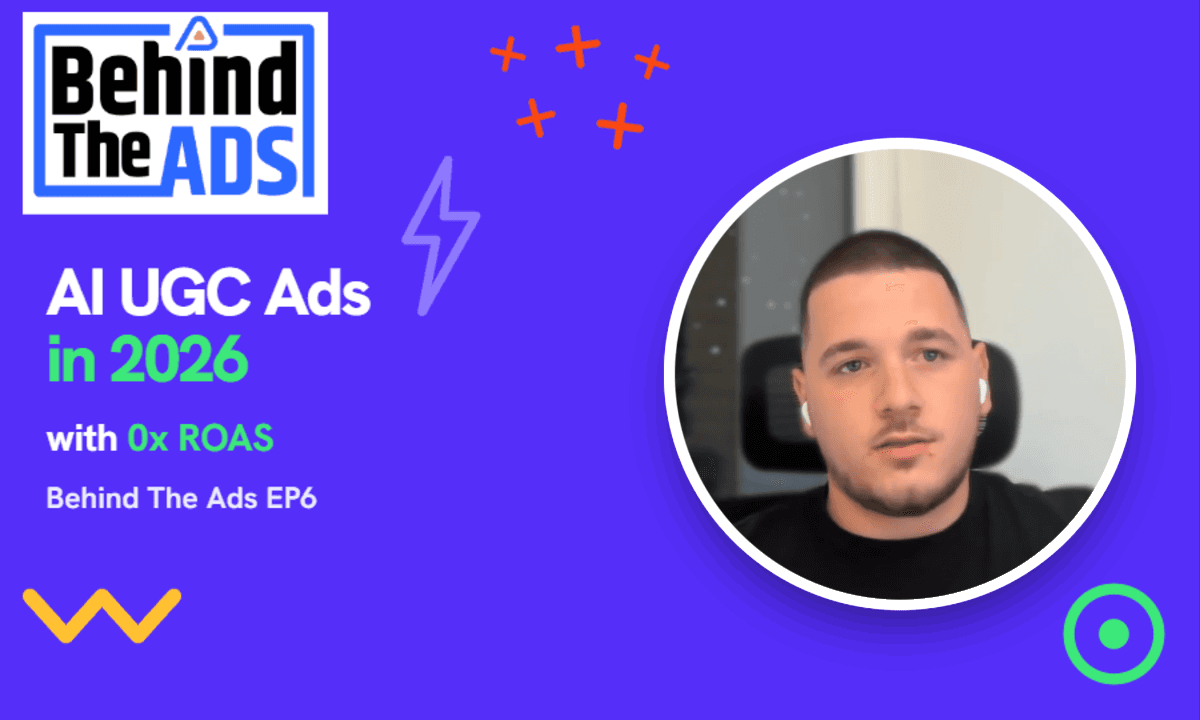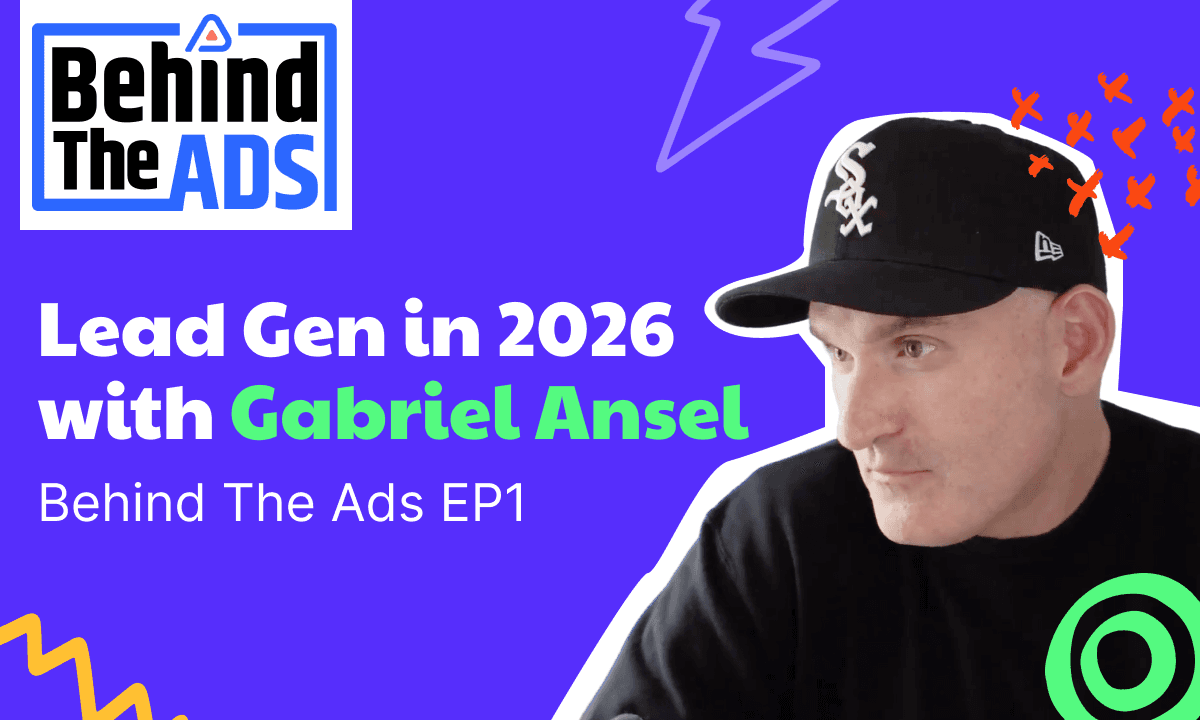
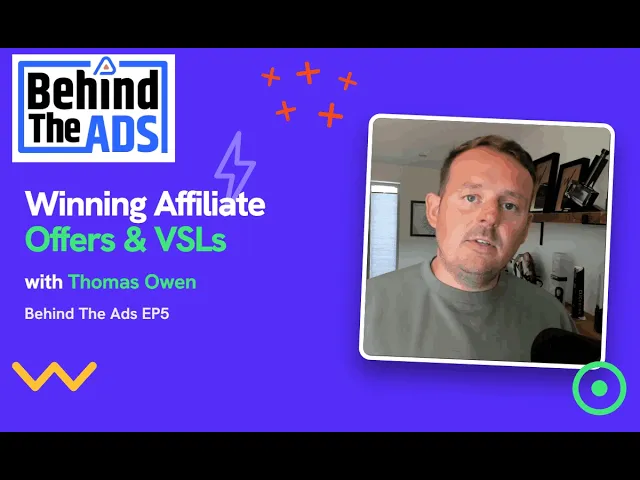
From Payouts to Partnerships: An Affiliate's Playbook for Winning VSL Offers With Thomas Owen
Share:

If you are an affiliate marketer looking for winning offers to promote on Facebook, here is how someone running an eight-figure business actually does it.
Thomas Owen has been an affiliate for six years. He spent his first six months in lead gen, got burned out fighting networks over payout caps, and moved into nutra offers right as COVID hit in March 2020. Five years later, he runs an eight-figure affiliate business, mostly through private and boutique offer relationships he has built directly with vendors, and teaches his approach inside his own community.
Key takeaways
Owen tests the same offer across multiple networks because the processor behind each one, not the checkout design, can shift conversion rate by two to three times. He thinks in joint ventures and long-term income rather than one-off campaigns, and still collects a weekly check from a deal he made two and a half years ago. He runs higher-risk verticals on Meta in a compliant way using multi-step quiz funnels, and he does not think a VSL needs a celebrity deepfake to convert. He uses AdPlexity Social's tracker filters and URL search to reverse-engineer offers pulling millions of monthly visits.
Watch the full episode here:
From Lead Gen Burnout to an Eight-Figure Affiliate Business
Owen's path into affiliate marketing started almost by accident. He was running lead gen campaigns for agency clients when a competing rep messaged one of his own Facebook pages offering to beat his payout. That conversation pushed him to go independent.
“So I went into lead gen as an affiliate maybe did six months or so and got really burned out by the cap. Just constantly fighting networks and reps trying to increase cap and be able to scale.”
Lead gen's payout ceilings pushed him toward nutra offers in March 2020. The next five years were built on ClickBank, BuyGoods, and MaxWeb, and he has since moved most of his volume into private, boutique offers he sources directly through vendor relationships, the kind of access that comes from years of track record rather than a network signup form.
How He Finds Offers Before They Get Crowded
Owen's community is built around finding what he calls “Blue Ocean” offers, meaning demand that has not yet attracted a wall of competing affiliates. His actual research process is less about keyword searching and more about pattern recognition inside a spy tool feed.
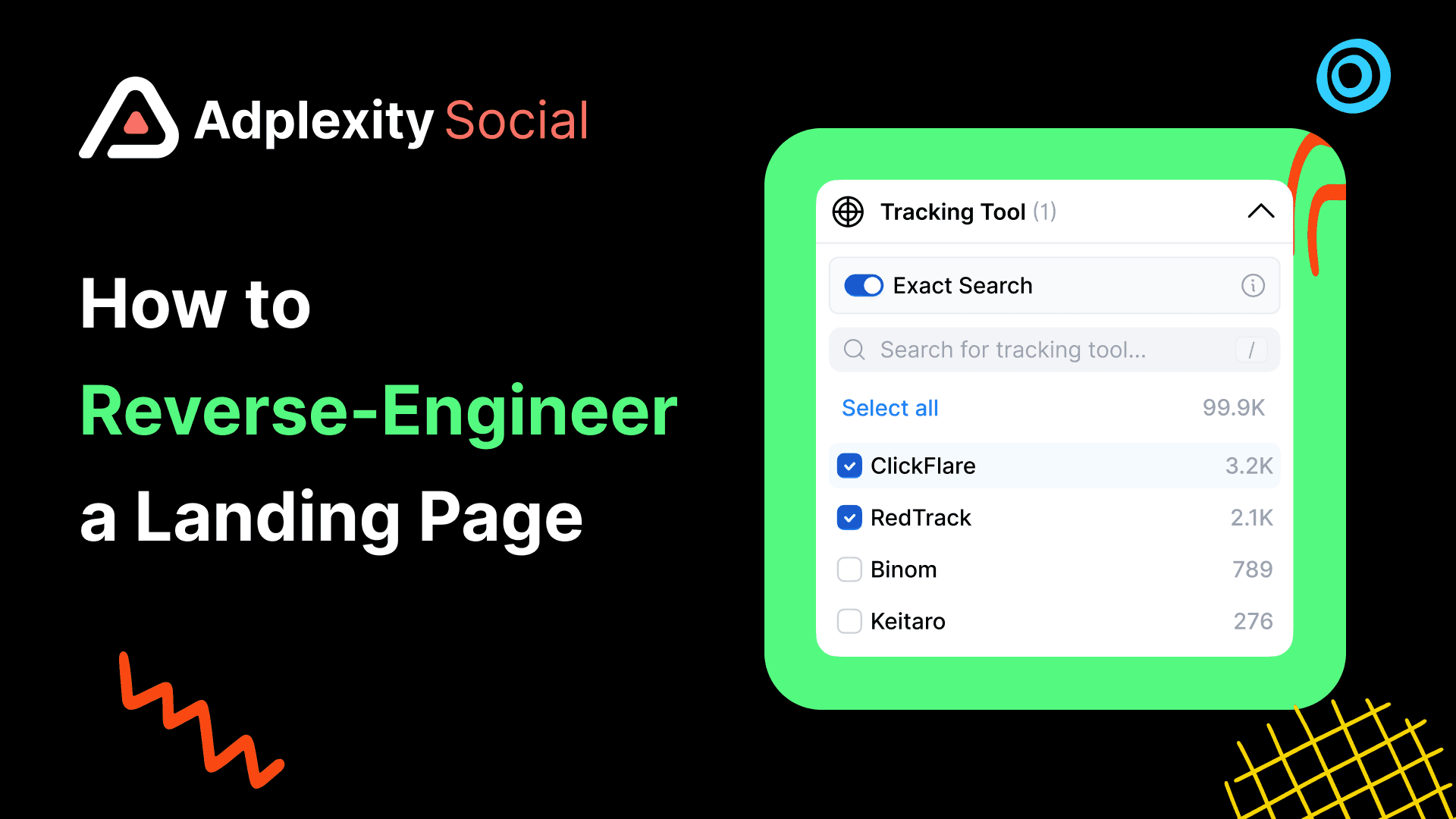
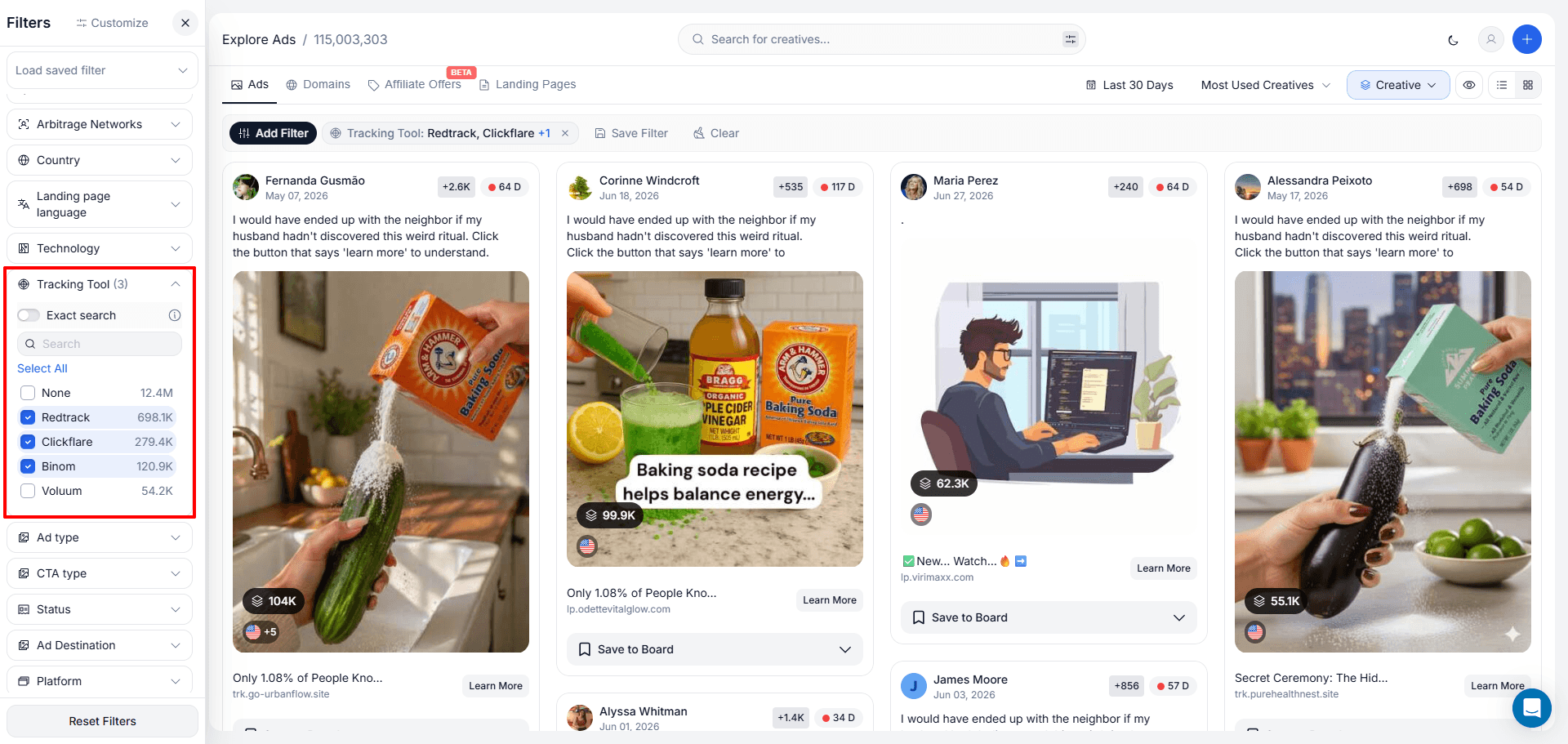
“I'm not looking for the exact keywords, or like most people would think, if I'm gonna run a weight loss offer, I'm looking at weight loss terms. I'm just going in and just scrolling like the immediate feed and maybe adding some filters, maybe adding RedTrack or ClickFlare, and just going through and seeing what catches my attention.”
He borrowed a trick from Russell Brunson's early ClickFunnels days: when an ad catches his eye, he runs the landing page domain through SimilarWeb. A sharp, recent traffic spike tells him the offer is new and still climbing, not already peaked. That matters more to him than “days running,” a metric he considers a false flag. Some affiliates deliberately leave losing ads live at a dollar a day just to confuse competitors watching their account.
“We would just leave all our losing ads on at like one dollar a day just to throw people off the scent. So like I could have ads that have been running for years, right? It doesn't mean that it's a winning ad. Just means that I want to keep people off my scent.”
The same skepticism applies to engagement metrics. Owen pointed out that likes and shares can be bought from social panels for pennies, which is exactly why AdPlexity Social does not surface engagement data as a signal in the first place.
Same Offer, Different Network, Different Payout
One habit Owen recommends to every affiliate: when the same offer runs on multiple networks, rotate between them and measure.
“I've seen huge differences in conversion rate. Almost like as much as two or three X conversion rate difference just from rotating the same offer but from different networks. So I would always be rotating to see which one converts best, which one, where's my highest EPC coming from.”
He was clear that the difference usually comes from the payment processor and mids behind each network, not the checkout page design. Two networks selling the identical offer can process transactions completely differently, and that alone can move conversion rate more than any landing page tweak would.
Why He Thinks in Joint Ventures, Not Just Campaigns
Most affiliates optimize one campaign at a time. Owen builds for two years out.
“A lot of affiliates and just people in general have very short-term vision. They don't look what's down the road. Where are you going to be two years from now? Are you still going to be running affiliate offers? Is this going to be your sole income stream?”
His answer was to start JVing directly with vendors instead of only running paid traffic for a payout. He partnered on a prostate supplement offer and a weight loss supplement offer, and both still pay him today.
“I JV'd on a prostate supplement offer. I JV'd on a weight loss supplement offer. And those offers still pay me to this day. We JV'd maybe two and a half years ago, and I still pick up checks every single week from that JV.”
He still does the work he actually likes, running traffic and optimizing ad accounts, but structures it as a partnership rather than a one-off arrangement, so the upside compounds instead of ending when the campaign does.
The Offer Red Flags That Make Him Walk Away
Owen judges an offer on two things before he ever writes a script: the strength of the sales mechanism and the ratio between cost to consumer and payout.
“If I'm looking at an offer that is, let's say at a cost to consumer of a hundred dollars and it's literally a four question quiz, checkout, that kind of thing would be a massive red flag. Another red flag for me is a cost to consumer to payout ratio. I'm very big on looking at offers that the cost to consumer is much lower than the payout.”
His preferred setup is a low ticket, high payout structure, where a ten dollar front end can pay out sixty or seventy dollars because the real money comes from rebills further down the funnel. He gave the inverse as a hard pass: a fifty dollar payout against a hundred and fifty dollar cost to consumer is not worth the media spend.
How He Runs Higher-Risk Verticals on Meta Compliantly
Some of Owen's most profitable verticals sit in categories that draw more scrutiny from Meta than a typical ecommerce or SaaS ad. His approach is not about hiding the landing page. He builds multi-step quiz funnels instead, sometimes eight or nine pages deep before the actual offer ever appears, giving the visitor room to self-select and warm up before they reach the sales page.
Behind that sits serious account infrastructure: multiple business managers, multiple ad accounts spread across them, and in some cases agency ad accounts specifically for his more sensitive campaigns. He treats the agency fee as insurance against the alternative, which is waking up to a shut-down account mid-scale with no backup in place.
“There's nothing worse than having a campaign that you're scaling and you're starting to hit maybe five figures a day, mid-five figures a day. You go to bed, you get up the next day, and you see that all traffic stopped. The ad account's been shut down and you had nothing else, no backups in place.”
Why He Killed the Dollar Nuke
Owen recently walked away from one of the most talked-about scaling tactics in performance marketing: the “dollar nuke,” which floods an ad account with dozens of one-dollar ad sets across multiple pages to force early signal.
“I was testing this method out and it did perform good for the first couple of days, but then it completely fell off. I kept the same ads. All I did was stop running dollar nukes and switched to a more consolidated campaign structure, and that just smoothed things out massively.”
His current testing structure starts with eight to twelve ads across two or three avatars, adding four to eight new ads a week based on spend. His kill rule is simple: an ad gets one to two times its payout in spend before he decides to cut it, hold it, or scale it. The scale signal itself has two conditions. Cost per acquisition needs to sit inside his target, and he wants to see Meta's system actively choosing to allocate budget to that specific ad inside a CBO campaign, rather than forcing spend through an ad set budget.
The Quiz Funnel Framework That Sets Up a VSL
Most of Owen's funnels lead with a multi-step quiz before the visitor ever reaches a VSL. The sequencing is deliberate.
“With question two, that's when we stick the knife in. So this is where we start to open up the pain point. Question three, I like to twist the knife, which kind of emphasizes the pain point a little more. And then question four and five is either presenting the desired outcome and then trying to get them to commit.”
Question one is designed to be a no-brainer, something like gender or age, purely to get a completion. Owen sees roughly an 85 percent completion rate on that first question when it carries zero friction, and every subsequent question is built to protect that momentum rather than introduce doubt.
Do VSLs Need Deep Fakes? His Take on the Exapure Effect
Owen does not build the VSL offers he runs, but he has strong opinions on what separates a winning one from a forgettable one, and he does not think a VSL needs a celebrity deep fake to convert, though he acknowledges they work, particularly with the 65-plus demographic that dominates the buyer pool for many of these offers.
“I don't believe you need it. I think you can still really create a very good VSL without the need of using celebs or deepfakes. And I think it all boils down to story.”
His example is Exapure, a weight loss offer that launched at the end of 2021 during a period when VSL formats had gone stale. Instead of opening with a dream outcome, the script opened with a nightmare, a heart attack at the top of a staircase. Owen estimates the offer crushed for the better part of five to six months before the format got copied into the ground, the same fatigue cycle every winning pattern eventually hits.
How He Actually Uses AdPlexity Social
Owen's day-to-day research process leans heavily on filtering by tracking tool rather than keyword.
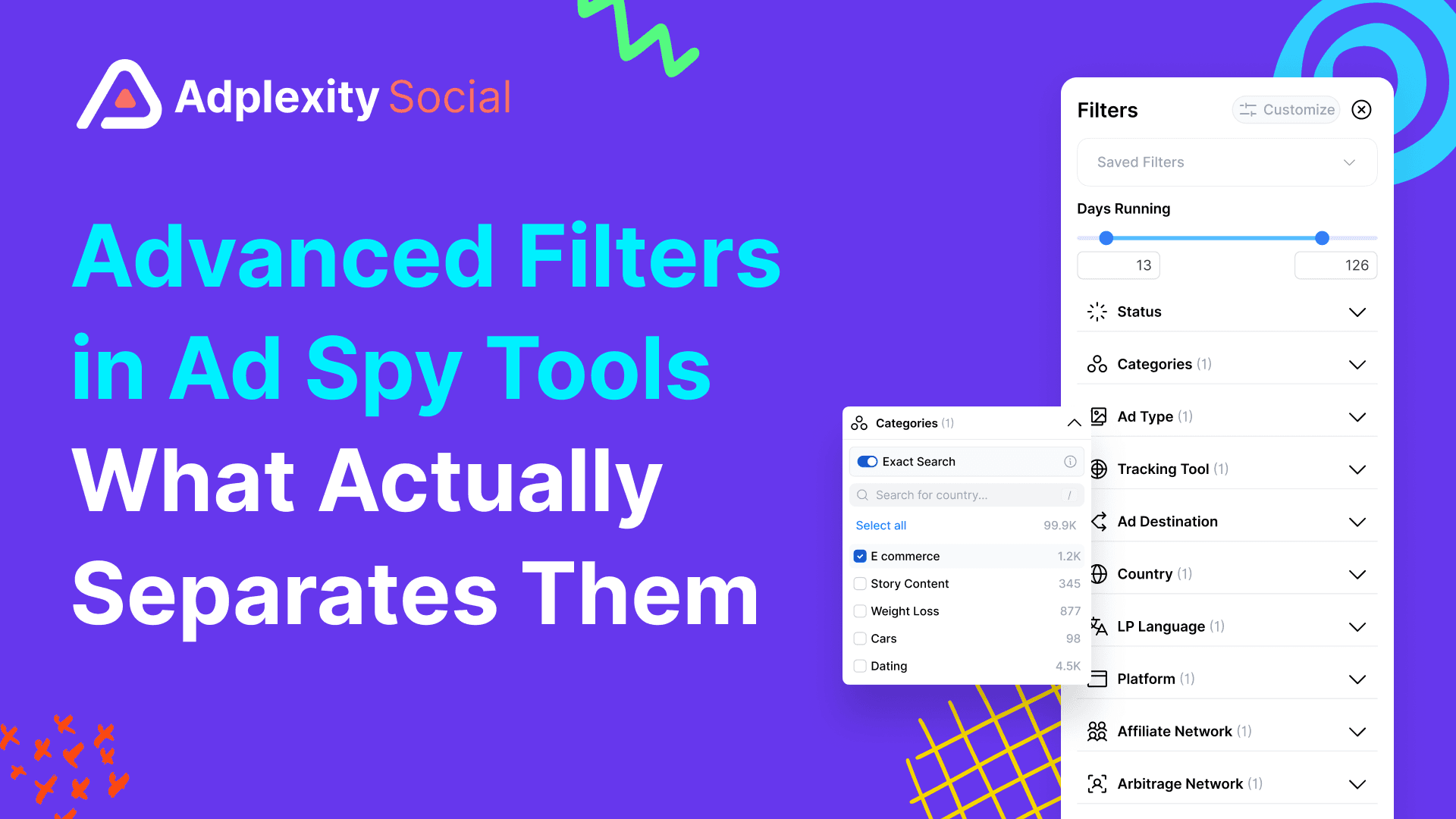
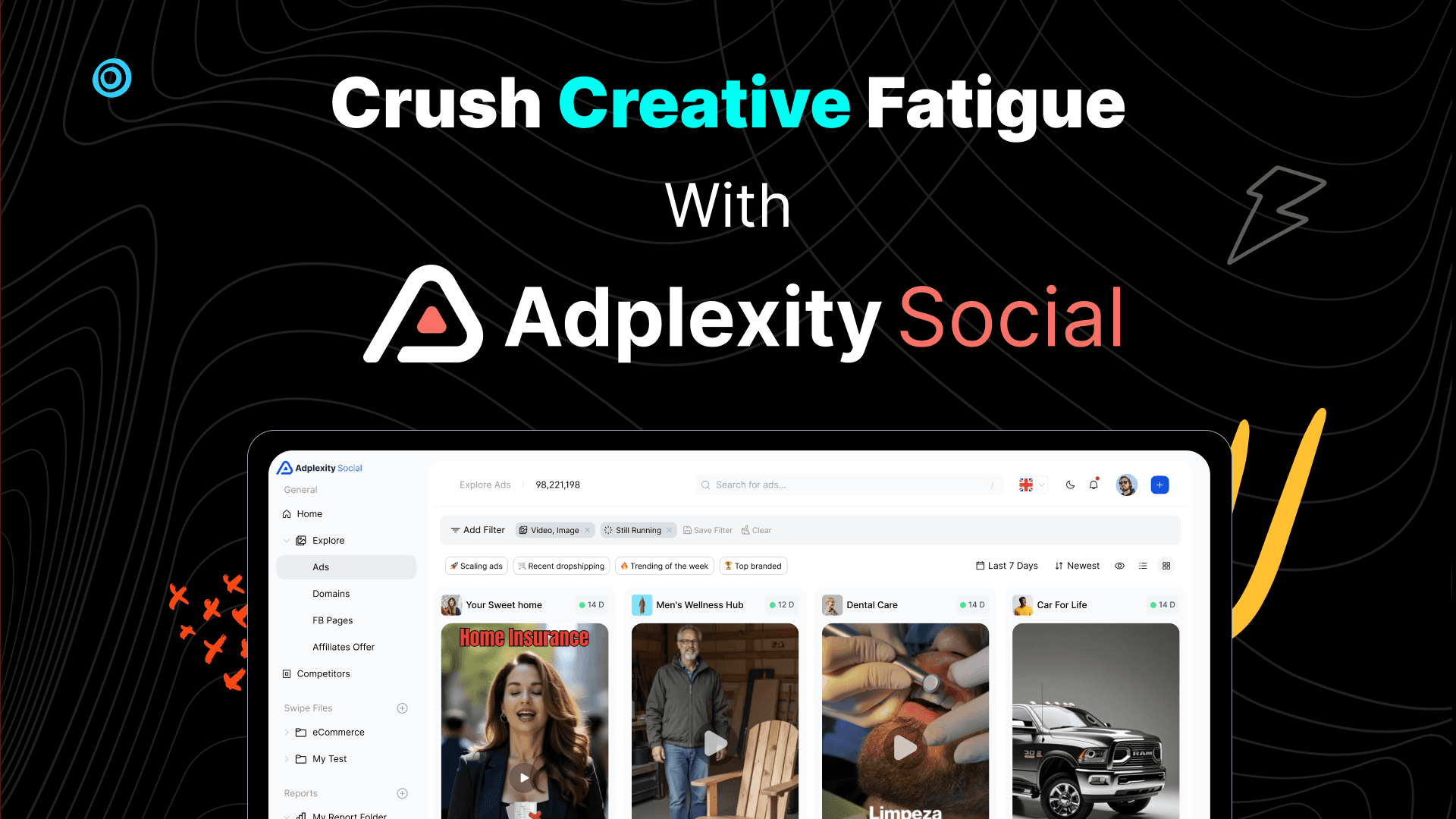
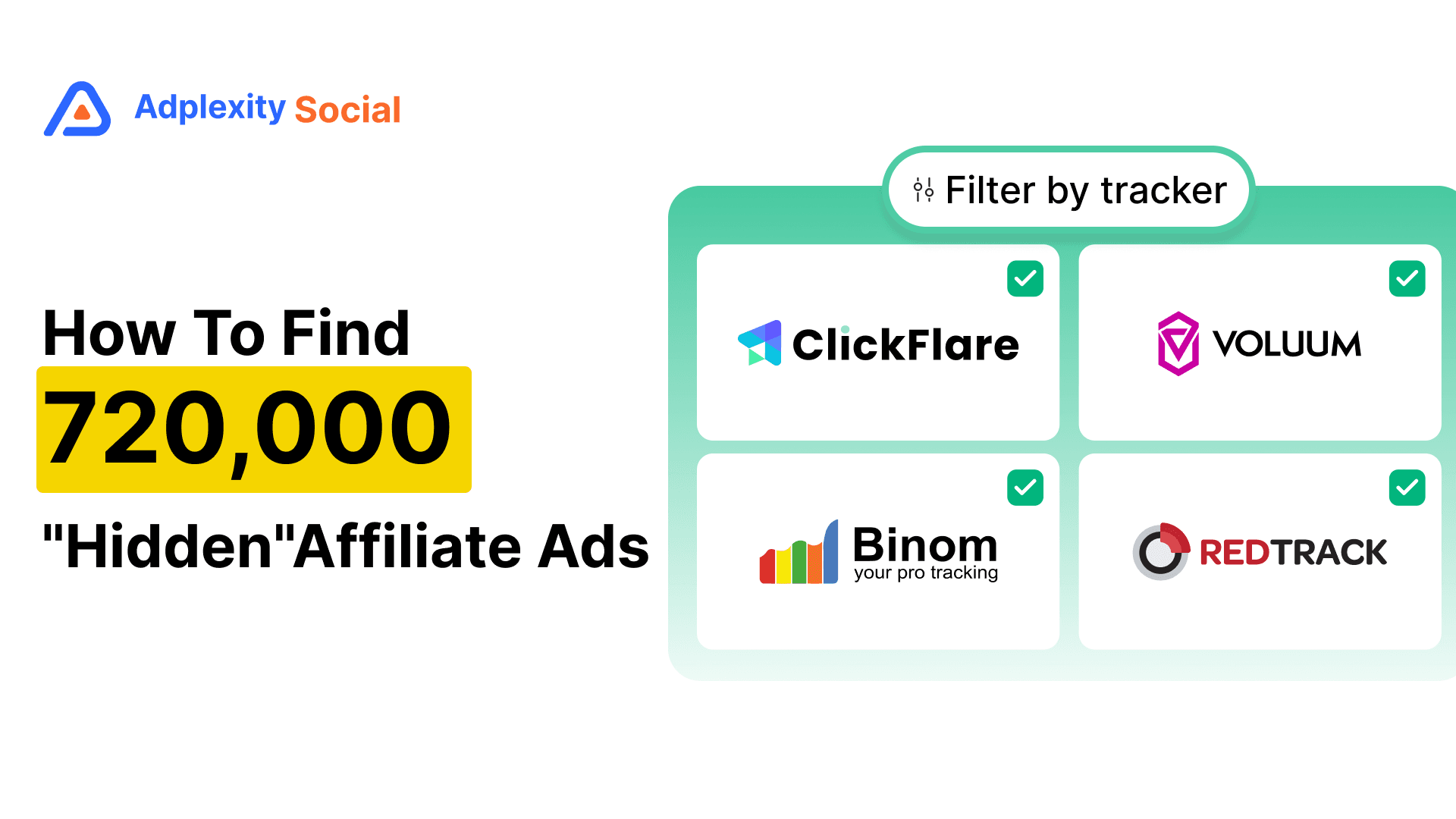
“One of the easiest ways of finding affiliate ads for anyone that doesn't know is to look and use the filter for affiliate trackers. So RedTrack, Binom, Voluum, ClickFlare- trackers that affiliates are gonna use. And I haven't really seen a filter like that.”
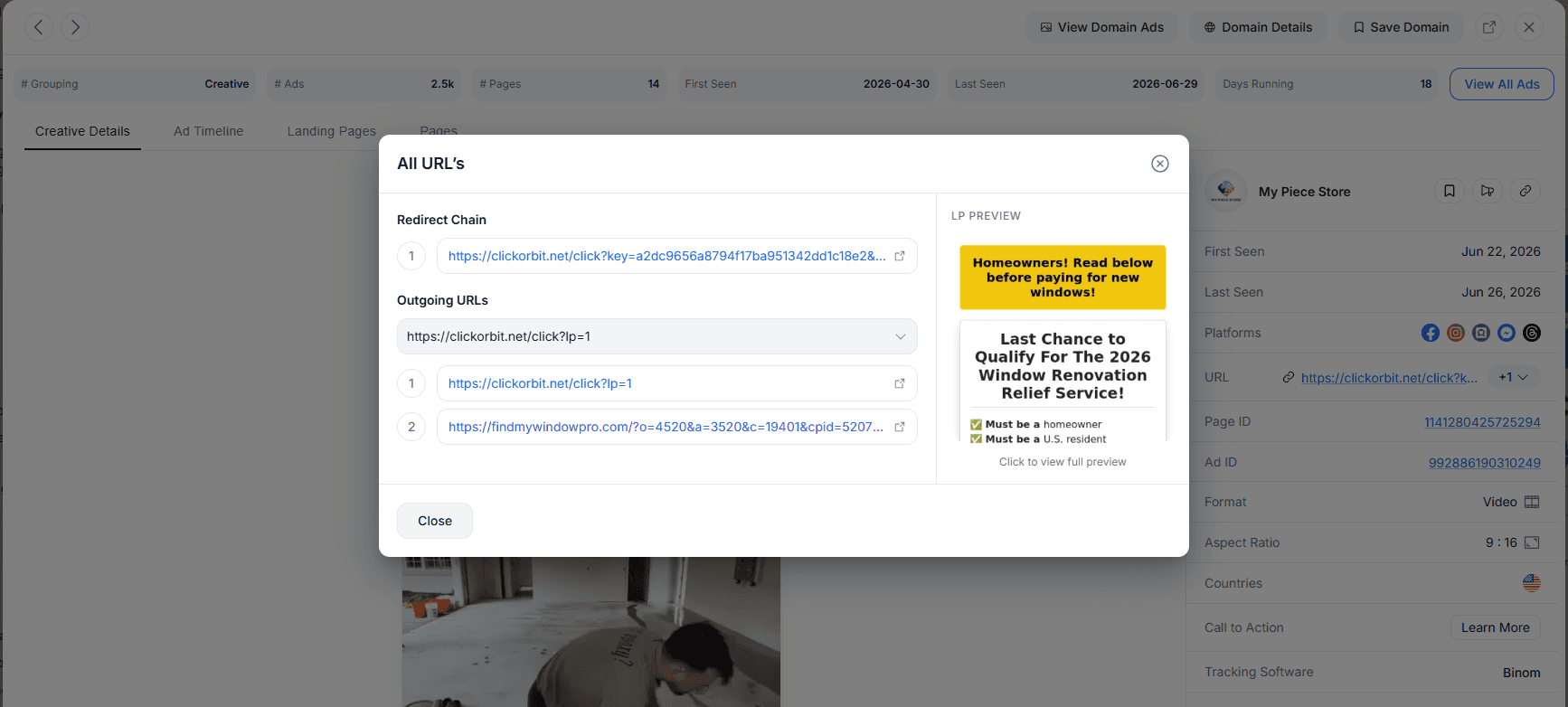
His favorite feature is URL search across redirect chains, which he uses to reverse-engineer offers he suspects are performing well.
“Taking the URL and then feeding that into AdPlexity. I can find ads that are running to an offer that's getting seven million visits a month. I can then backtrack, reverse engineer, find the ads that are sending the most traffic, and then see and break down those ads.”
He also runs a morning research routine through the AdPlexity Social MCP, prompting Claude to pull that day's new ads in his active niches. He keeps the process semi-manual on purpose, preferring to react to what he sees rather than fully automate a decision he thinks should stay judgment-driven day to day.
Sign up at adplexity.io to search the same tracker and redirect data Owen uses to find and vet offers before they get crowded.
Frequently Asked Questions
What is EPC in affiliate marketing?
EPC stands for earnings per click, a metric affiliates use to compare how much revenue an offer generates per click across different traffic sources or networks. Testing EPC across multiple networks selling the same offer reveals which processor and checkout combination converts best.
Why do the same affiliate offers convert differently on different networks?
The offer content can be identical while the backend processor, or mids, differs between networks. Conversion rate differences of two to three times on the exact same offer are possible purely based on which network processed the transaction, not the checkout page design.
What is a dollar nuke in Facebook ads?
A dollar nuke is a testing method where an affiliate duplicates dozens of ad sets at a one dollar daily budget across multiple pages to generate fast early signal. It can produce strong short-term performance but often lacks the consistency needed to scale.
Do VSLs need celebrity deep fakes to convert?
Not necessarily. A VSL can win on story structure alone, such as opening with a nightmare scenario instead of a dream outcome. Deep fakes can perform with less tech-savvy demographics but come with fatigue and trust risk as awareness spreads.
What counts as a higher-risk or restricted vertical on Meta?
Meta's ad policy places extra scrutiny on categories like certain health and wellness claims, supplements, and other verticals prone to exaggerated before-and-after promises. Affiliates running in these categories typically rely on funnel structure and account infrastructure, not the destination page itself, to stay compliant and stable.
What is a good cost to consumer to payout ratio for affiliate offers?
A strong ratio has the payout several times higher than the cost to consumer, such as a ten dollar front end paying sixty to seventy dollars through rebills. A payout lower than the cost to consumer signals an offer that is not worth the media spend.
How can I find winning affiliate ads on Facebook?
Filtering by tracking tool, such as RedTrack, Binom, Voluum, or ClickFlare, surfaces ads run by affiliates rather than in-house brand teams. Searching by landing page URL or redirect chain, rather than keyword, also reveals which ads are driving the most traffic to a specific offer.
Do I need a paid ad spy tool to find these offers?
Meta's Ads Library can be used for free with more manual effort. A dedicated ad intelligence tool speeds up the process significantly, particularly for filtering by tracking tool and searching by URL or redirect chain rather than scrolling manually.
Discover Winning Meta Ads
Similar Blogs