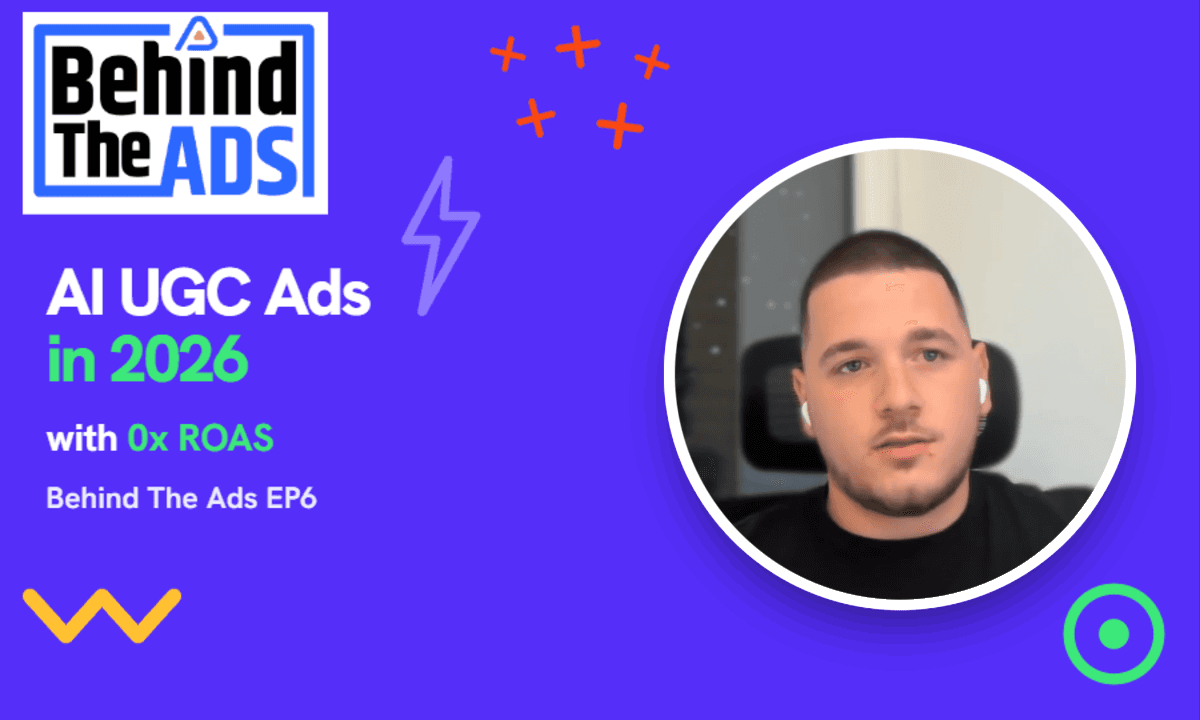
From Click Arbitrage to Owning the Asset: Joey Babineau on Affiliate Marketing in 2026
Share:

One of Joey Babineau's campaigns has been running for roughly a decade. Over that time he optimized it the way any good media buyer would, swapping landing pages, rewriting ads, tightening the funnel until the conversion rate climbed from about two percent to six and a half.
The ROI went the other way.
That single divergence is the clearest picture anyone has given us of what actually changed in affiliate marketing, and it has almost nothing to do with the thing most people blame. Babineau started in 2002, spent fifteen years learning paid traffic in his spare time around a corporate government job, and went full time in 2015. He has spent more than seven million dollars on Google search alone since 2014, roughly fifty thousand dollars a month, every month, for twelve years. When someone with that much time in the seat says the model is changing, the specifics are worth sitting with.
Key takeaways: Babineau argues that affiliate margins collapsed from the one hundred to three hundred percent ROI era down to twenty or thirty percent, not because affiliates got worse, but because click costs kept rising while offer payouts stayed flat. He has stopped chasing offers through chains of networks, moved to direct buyer relationships, and started building products he owns rather than only monetizing other people's. His most useful warning for anyone using an ad spy tool is that the campaign you are looking at is not the asset. The account data behind it is, and that is the part you cannot copy.
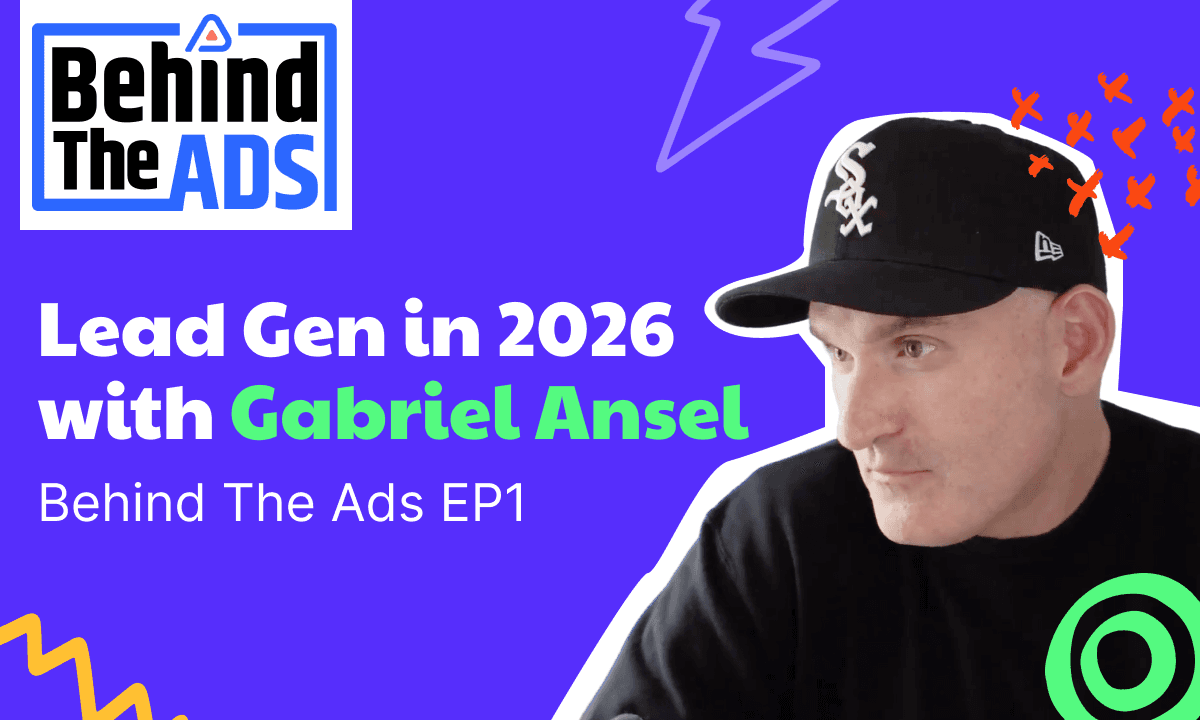
Watch the full episode:
Twenty Years, and a Reshuffle Every Two or Three Years
Babineau does not describe his career as a straight line. He describes it as a series of forced rebuilds.
"It almost seems like every two to three years you're doing a reshuffle. It's really easy to have too many things on the go, especially in this industry, because there's so many opportunities and there's so many affiliate managers out there pumping offers to you."
The list of things that forced a pivot is long enough that he stopped counting. Apple changing iOS tracking. Payment processors pulling back from trial offers. The FTC arriving and pushing everyone from trials to straight sales. Platform rule changes on a rolling basis. "I could name off fifty different things we've had to pivot for in the last decade alone," he said.
His two businesses reflect that. Vault Media, incorporated in 2007 and named after a bank vault, is the agency: lead generation, affiliate campaigns for other companies, direct lead sales to buyers, and a group of owned brands. It has also run a private CPA network since 2011, deliberately small, carrying roughly fifty offers rather than thousands, and only offers he has personally run traffic to. Powerhouse Affiliate sits inside Vault Media as the training brand, focused almost entirely on media buying rather than SEO, because buying traffic is what he actually does.
Why the Margins Collapsed
The early years were the ones everybody remembers. Casino offers on Facebook, six and seven figures of profit in a year, at a time when ad platforms had nothing like today's automated enforcement. Then the diet trial era, with campaigns returning one hundred to three hundred percent ROI.
Babineau is careful about how much of that he will discuss publicly, and for good reason. Those campaigns were legal, but they ran against platform terms, and that era is closed.
"Today the landscape has changed. You'll burn yourself out if you go down that path. Especially if you're working as a sole operator like myself, it's really hard to manage constant ad creation and constant ad account creation without a small team. And then at the same time, you're still gonna burn yourself out. So I've moved into more compliant campaigns."
The trade was explicit. Compliance in exchange for margin.
"Mind you, the profit margin has collapsed from say a hundred percent to two hundred percent down to like twenty, thirty, forty percent ROI. And sometimes you'll have some days where you're not making any ROI. It's just the nature of the beast."
That is the honest version of a question a lot of media buyers are quietly asking. We covered the broader version of it in our breakdown of whether Facebook ads are still profitable, and Babineau's answer is essentially yes, but at a fraction of the old margin and with a completely different operating model behind it.
The Divergence: Conversion Rate Up, ROI Down
This is the part of the conversation worth reading twice.
Babineau recently published the numbers from a long-running campaign built on two keywords that produced somewhere close to fifty thousand dollars. Across the life of that campaign the conversion rate climbed steadily, from roughly two percent to as high as six and a half percent, because that is what affiliates do. They test landing pages, rewrite ads, and grind the funnel.
"But the ROI on that campaign actually was going in the opposite direction, even though the conversion rate's going up. So the divergence, do you know what I mean? It's because the payout stayed the same and the costs just kept getting higher because of the cost per click."
A campaign optimized close to perfection, losing ground anyway. Not because the operator got worse, but because the two numbers he does not control moved against him at the same time.
His read on why is a theory, and he flags it as one. Public ad platforms need to hit growth targets every year, and the lever they control most directly is the base cost of a click.
He offered a concrete example that is hard to argue with. He runs a local search campaign, phrase match, for an electrician in a market where no other electrician is running paid search at all.
"I'm running a campaign where there's zero competitors, okay? And I'm still paying like five to ten dollars a click. Like it doesn't make sense, right? It's a local campaign. I'm doing it for a local company, but it still doesn't make sense where there's zero competitors. So that's the cost base that Google is setting now."
Zero competition, five to ten dollars a click. That is a price floor, not an auction.
The Real Moat Is the Data in the Account
Here is where Babineau said something that every person opening an ad spy tool should hear.
"Even having a Google account that's spent millions is moat in itself, because it has the data. Somebody else comes in and they try and spy, they try and rip a campaign and go and run it and they make nothing, and they're like, what the heck? Like this ad's been running for decades. But no, it's the data in the account."
We think about this constantly, because longevity is the signal our users reach for first. If an ad has been running for a thousand days, it must be printing. That is true, and it is also incomplete. It is printing for the advertiser who has a thousand days of conversion data teaching the algorithm who to show it to. You cannot buy that history and you cannot shortcut it. Copy the creative into a cold account and you are running the same ad with none of the machinery that made it work.
This is why signal quality matters more than signal volume, and it is why our own thinking has moved toward creative velocity rather than pure longevity: whether a creative is being pushed hard right now, across multiple accounts at once, rather than whether it existed for a long time. A creative that powered fifty thousand ads six months ago is history. A creative being duplicated across accounts this week is a live campaign someone is actively scaling. We built creative fatigue and duplicate tracking around the same instinct.
Babineau's reaction to that framing was immediate.
"The velocity thing makes complete sense, because that's usually when you start to see a push of a whole bunch of ads at the same time. All related. Usually it's best to get on that in the early days, be a first mover kind of deal."
What He Stopped Doing
Asked what he has cut in the last year, Babineau named health and wellness first. He had been brand bidding on Google against video sales letter offers, a straightforward click arbitrage play that, in his words, still works and is still visible on any top offer you care to look up.
He walked away from it anyway, because of who else is running it.
"You're also gonna see that most of them are doing it noncompliantly. So they're probably burning accounts now. And that's not my game. I'm doing white hat. I'm trying to sustain that one ad account that I have. It would be devastating for me to lose my Google Ads account over something so stupid."
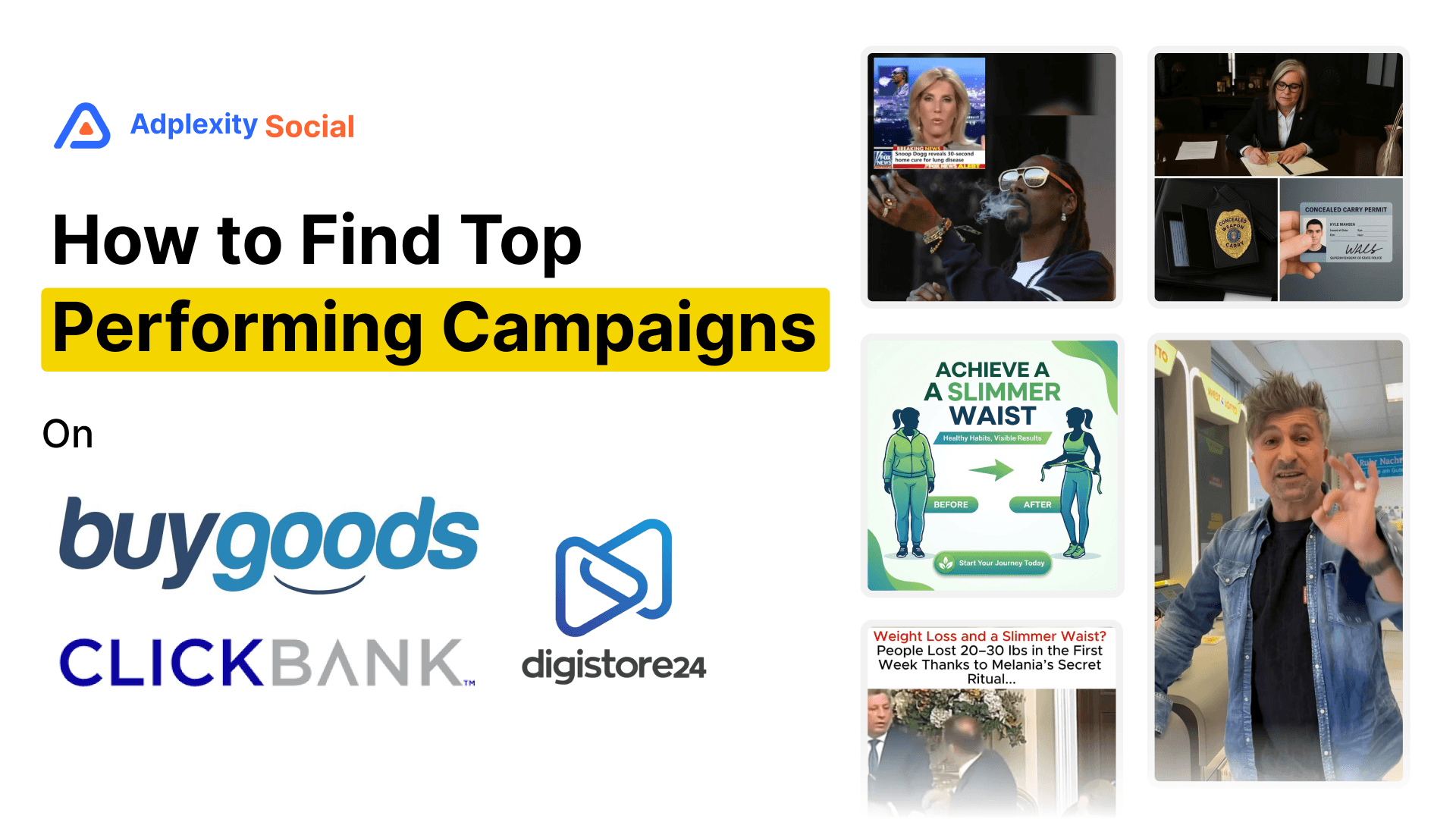
That is the calculation an operator makes once the account itself becomes the asset. If you want to see how those offers surface in the wild, our breakdown of ClickBank, BuyGoods and Digistore24 campaigns maps the same territory.
The second thing he stopped is more structural. The classic affiliate model of running offers through multiple layers of networks is, in his view, finished.
"The old affiliate model where you're running offers through multiple different chains of networks, it doesn't work anymore. So it has to be direct, and that's why it's more important than ever to go to these events and meet people, because that's where you're gonna find the opportunities."
He also stopped the habit that quietly drains most affiliates: chasing whatever offer looks good this week, burning a thousand dollars, then moving to the next one and burning a few thousand more. He cut that years ago and has stayed focused on the same set of campaigns for the last three.
Where the Opportunity Actually Is
Babineau's current work sits in finance and in personal data and security. On the finance side that means an owned brand plus high-ticket affiliate offers behind it, the gold and silver IRA and investment firm category, where the front end acquires a client for free and the monetization happens further back. On the security side it means background checks, exposure checks, and scam protection, categories people genuinely search for and are willing to act on.
What links them is that neither is a crowded, high-cost auction.
"These are niches that aren't your typical diet. They're not your typical auto lead gen. They're kind of a different framework than your typical campaigns. And that's where there's still opportunity for affiliates. My advice is for anybody looking for the arbitrage style campaign that might still exist, it's not gonna be in your highly competitive, high click cost niches anymore. It's gonna be in the obscure angles."
Do Not Build Tools for People Who Build Tools
The most contrarian thing Babineau said has nothing to do with media buying. It is about what to build now that anyone can build software in an afternoon.
His rule: do not build for an audience that could build it themselves.
"A lot of people are focused on building tools for people that we always used as affiliates. That's the wrong way to go. Like building a tracker right now isn't the way to go. It's building something that somebody that doesn't use AI would use."
His own example is a stock analysis tool aimed at new investors, a group with no interest in building anything. He is both the product owner and an affiliate monetizing the back end, which is the shape of the pivot he recommends: own something at the end of the day, and keep using affiliate revenue because it is still the lowest-effort monetization there is.
He was blunt about the limits, including where his own team declined to compete.
"We would never try and build, like, for example, AdPlexity. You guys have moat, you have data, you have a system that is really hard to replicate. So it doesn't make sense for anybody to try and compete there. But you can easily build a keyword tracker or a keyword tool that pulls keyword data from different sources. The mistake is thinking you can build a tool and start selling it mass scale just because you built it, because everybody can build these tools."
The same logic drives what he teaches. Instead of thirty unrelated test campaigns, run thirty tests under one brand, so that even the losers leave something behind.
"Eventually you build moat and data and you start building your own empire of, even if you don't own the customer, you can still own the data."
What Is Left for the Media Buyer
If the platforms now choose the audience, the placement, and increasingly the creative, what is the job? Babineau's answer is that the job moved up a level, from execution to judgment.
"It's easy to say, you know, give me fifty ad headlines about this. But where the skill still needs to be is in our ability to be able to say which of those fifty am I gonna actually make money with. Or you could say, give me fifty different angles, and that's an even better skill."
The reason that matters is arithmetic. At five to ten dollars a click you cannot test fifty angles and let the data decide. You get a handful of real attempts, so the selection has to happen before the spend.
"Being able to say, okay, everyone's pitching the offer this way, and it's probably working, but is there another way that we can pitch this offer that completely changes the audience and their mind frame and what level they are in the sales cycle? That's stuff AI is not good at yet."
On the platforms' automation, he is skeptical of the sales pitch without dismissing the tools. His view is that automation is built to maximize revenue per advertiser and to keep a very wide base of spenders active, rather than purely to make any individual buyer more profitable.
He applies the same test-first logic to Google's newer automation. On the local electrician campaign he switched AI Max off, because it spent and bled. On a personal data campaign, where people ask an AI assistant about dark web exposure or crypto scams and then still want a source to click, he is seeing conversions come through it.
"So you really have to determine, is your niche one of those ones that you're going to use AI to answer the question and still want to click on an ad or not. And that's where I'm seeing the impact."
Why He Still Runs a Training Community
People ask Babineau why he bothers with Powerhouse Affiliate if the campaigns work. His answer is not what you would expect from someone selling courses.
"It's about networking, it's about building a community of people. When people come there, they're not necessarily just getting training. They're getting answers from people that have been doing this for years. And I still learn from people in my coaching calls."
He takes those calls himself rather than handing them to junior coaches, and he does roughly five a month, which he is candid is not a meaningful revenue line. Of the people he spoke with over the past year, about three went on to run offers and make money. He gave an example of a tactic he picked up from a member rather than the other way around: gating a retargeting audience on how many minutes of a video someone actually watched.
The audience is deliberately the newest affiliates, and he is clear-eyed about why.
"The skilled affiliates, the people that are high end major media buyers, are not joining communities. So that's why we've always focused our content around helping the new guy figure it out. And it's always been truth over fancy Lambo."
What Makes a Spy Tool Worth Opening Every Day
Babineau has used AdPlexity for about ten years, starting in native and moving into the social product. We asked him directly what earns a daily open, given that Meta's own Ads Library is free.
"We all know that there's Facebook ads library. Great, cool. You can search in there, but you can't get the real stuff, especially for people like me who want to find affiliate networks, I want to find access to affiliate offers, I wanna find their landing pages, how long these ads have been running, and if there's other related advertisers connected."
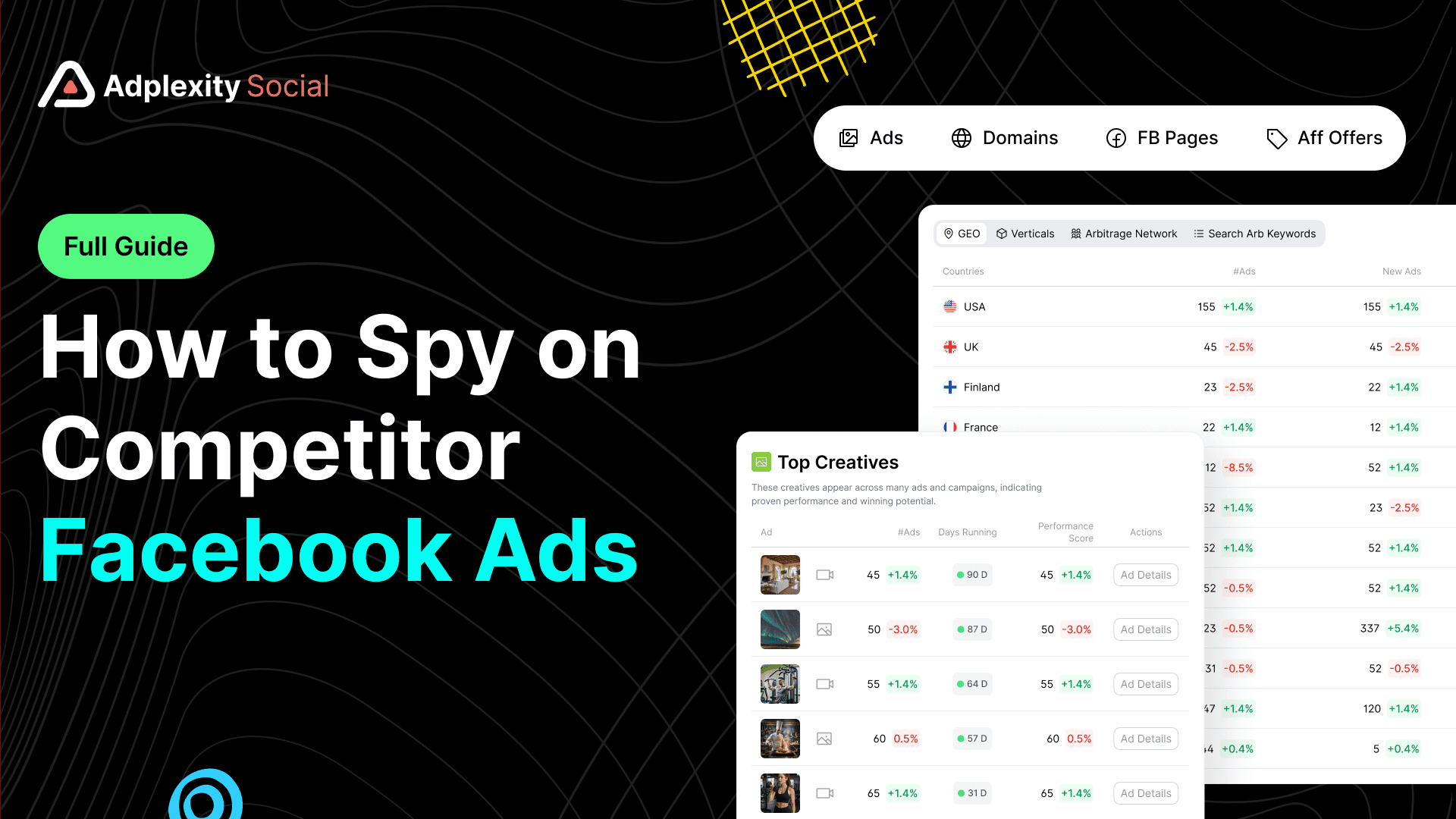
Every item on that list sits after the click rather than on the creative, which is the whole reason we index landing pages, redirect chains, affiliate networks and tech stacks across more than one hundred million ads instead of stopping at the image. Reading the infrastructure behind an ad is how you tell a real campaign from a test, and our guide to the technical fingerprints hidden affiliate ads leave behind walks through the same method manually.
He also flagged where he wants this going, which happens to be where we have been building.
"The fact that you guys built in the ability to connect now to AI, I saw that. That was pretty cool. Because soon we'll just be able to say to Claude, hey, give me twenty five different angles, but I want you to show me ads that have been running for the last five months."
That is a fair description of what the AdPlexity Social API and MCP already make possible.
What Separates the Operator Who Profits From the One Who Copies
We ended on the question that matters most for anyone using a tool like ours. If everybody can see the same winning creative, what decides who makes money from it?
"Finding the ad is one thing, of course, but what separates the winners from the losers is doing all of the research that you need to do beforehand. And also the targeting is something that you need to know. You have to have the understanding that the reason why that guy's been running it for three months or five years is because he has data. If you don't understand the value of data and conversion tracking and all the technical things involved in that, building audiences, setting your campaign budget the right way, these are all things that you have to think about, even outside of the creative itself."
He was direct about the failure mode.
"A lot of people, especially even intermediate people who are lazy, they think they can just grab the ad, go run the ad, set the ad budget to whatever and fire away. But that's just one tiny little piece."
And there is a platform-level reason the copy-paste approach keeps getting worse: Meta is far better at detecting duplication than it used to be, and it has no incentive to reward a hundred advertisers running an identical ad.
The tool tells you where to look and what is being spent behind. What you do in the ninety minutes after that is still the job.
Sign up at adplexity.io to see the landing pages, affiliate networks and duplicate activity behind the ads Babineau looks for, and to run the same research he has been doing for ten years.
Frequently Asked Questions
Is affiliate marketing still profitable in 2026?
Yes, but at a very different margin. Operators who ran one hundred to three hundred percent ROI in the trial-offer era now describe twenty to forty percent as a normal range, with losing days mixed in. The profitable operators have generally moved toward compliant campaigns, direct advertiser relationships, and owning some part of the funnel rather than renting all of it.
Why are affiliate margins shrinking?
The two numbers most affiliates do not control moved in opposite directions. Cost per click has risen steadily on the major platforms while offer payouts have largely stayed flat, so a campaign can improve its conversion rate substantially and still lose ROI over the same period. Rising click costs are visible even in local markets with no competing advertisers.
Why does copying a winning ad usually fail?
Because the creative is the visible part of an asset that is mostly invisible. An ad running for years is supported by an account with years of conversion data teaching the platform who to show it to. Running the same creative from a cold account reproduces the image and none of the learning behind it, which is why ripped campaigns so often return nothing.
What is AI Max in Google Ads, and should affiliates use it?
AI Max is Google's newer automation layer for search campaigns, which broadens matching and creative generation on the platform's side. Whether it works appears to be niche-dependent rather than universal. It can bleed budget in straightforward local service campaigns while producing conversions in categories where people research a question with an AI assistant and then still want a source to click. Test it per campaign instead of switching it on everywhere.
Is AI search reducing traffic for affiliate campaigns?
On the paid side the effect is uneven and depends heavily on the category. Questions people take to an AI assistant do not always end the journey there, particularly in areas such as personal security or financial research where users want to verify a claim against a real source, and those categories still produce ad clicks. Categories where the assistant fully answers the question are the ones at risk.
What niches still work for affiliates in 2026?
The advice from long-running operators is to avoid the crowded, high click cost categories entirely. Finance built around high-ticket back-end offers, and personal data and security offers such as background checks and scam protection, are examples of categories with real demand and less auction pressure than diet or standard auto lead generation.
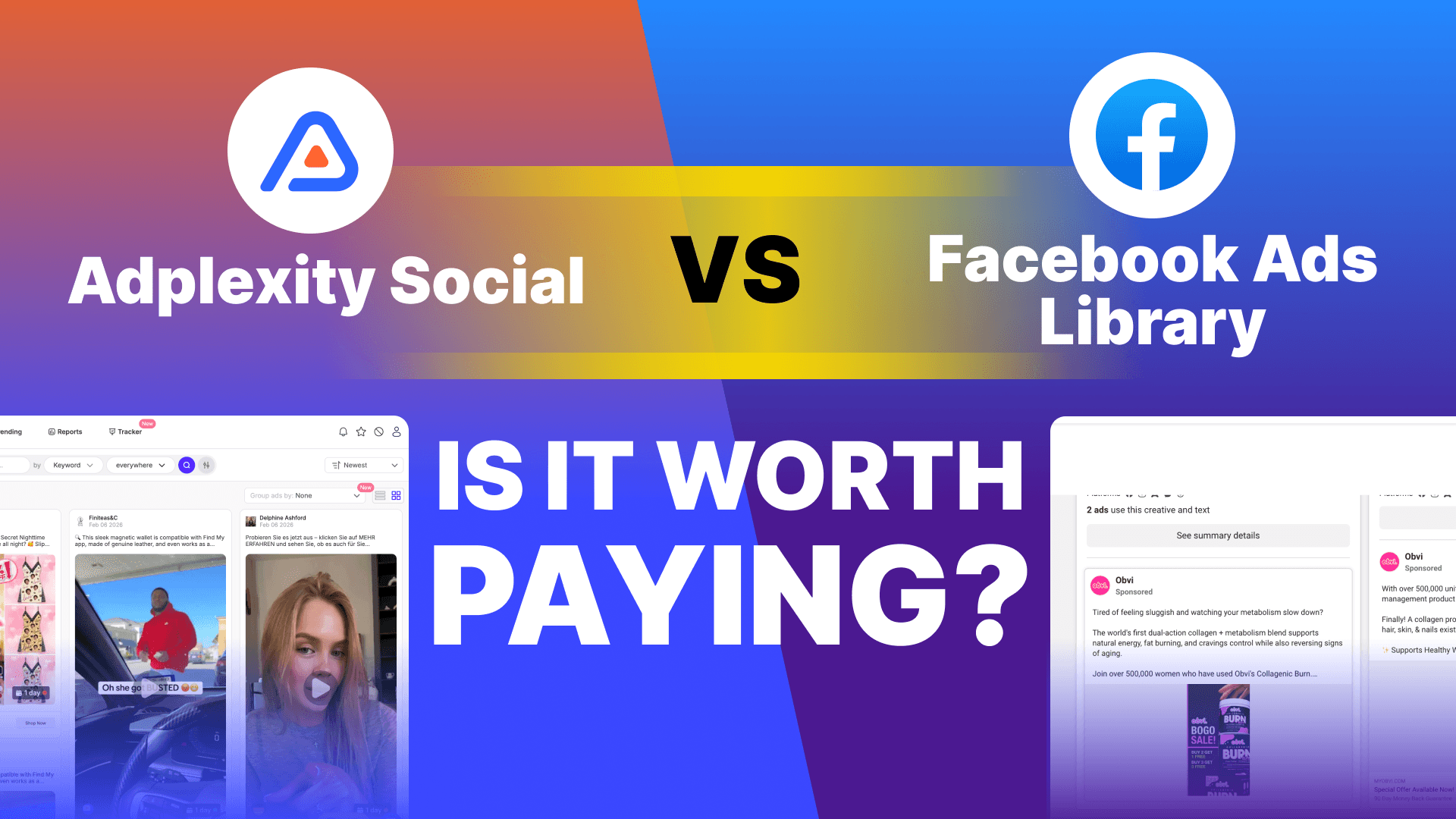
Do I need a paid ad spy tool, or is the Facebook Ads Library enough?
The Ads Library is free and shows you creatives, so it is a reasonable starting point. What it does not show is the infrastructure behind an ad: which affiliate network and offer sit behind the funnel, what the landing page and redirect chain look like, how long the ad has actually been running, and which other advertisers are connected to it. Those are the signals that separate a live scaled campaign from a test.
Discover Winning Meta Ads
Similar Blogs