From Click to Funnel: Andrii Reznichenko on Native Advertising in 2026
Share:

Andrii Reznichenko has a simple test for buyers arriving from Meta or TikTok with a winning funnel in hand. He lets them run it on native exactly as it is, tells them it probably will not work, and watches what happens next.
It usually does not work. Not because native is broken, and not because the buyer picked the wrong offer. It fails because on social the creative does the qualifying, and on native the funnel does. Swap platforms without rebuilding the funnel and you have removed the one thing doing the job.
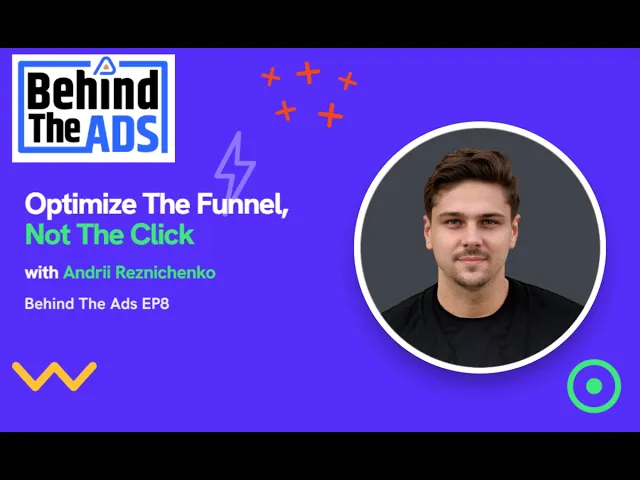
Reznichenko is the Head of account management team at Adskeeper, a native advertising platform running traffic across nutra, finance, casino and utilities verticals, competing directly with names like Outbrain, Taboola and MGID. He has spent more than thirteen years in online business, most of it inside native ad formats, and talks to advertisers about their campaigns for a living. That gives him a view most buyers never get: not one account's data, but the pattern across thousands of them.
Key takeaways: Reznichenko ranks nutra, specifically weight loss, skincare and sexual health, as the strongest vertical on native right now, with utilities and VPN offers as the one he considers genuinely underrated. He lays out concrete entry budgets by tier, from five hundred dollars in Tier 2 and Tier 3 markets to several thousand in the United States, and names Latin America as his favorite region to test in. His central argument is that native optimization was never about the click. It is about the whole funnel, which is why a creative that wins on Facebook usually needs to be rebuilt, not reused, before it works on native.
Watch the full episode:
What Adskeeper Actually Is
Reznichenko keeps the pitch short when asked to describe the platform in two sentences.
“Adskeeper is a native online advertising platform. We focus mainly on native ads, and this is our strongest format right now.”
The company also runs push traffic and is exploring pop under, but native is where the volume lives. Advertisers, media buyers and affiliates buy traffic for offers and services. Publishers and website owners monetize their own traffic on the other side of the same marketplace. Native is not a niche corner of the industry to him. It is a category with real incumbents and real volume moving through it.
What Is Winning On Native Right Now
Ask Reznichenko what is moving and he does not hedge.
“I would say that firstly comes nutra. In Adskeeper, it has historically happened that nutra is very strong. So for me, what I see from the bigger scale as a team lead of account managers, the most popular right now is nutra.”
Within nutra, the subverticals have stayed consistent for years, but the mix inside them has not.
“Right now we see that weight loss, skincare, even sexual health products are the most popular again in our traffic, in our niche.”
Behind nutra comes personal finance, crypto offers and money making content, then casino and utilities or VPNs. That ordering matches where most affiliate marketers already concentrate their spend, which Reznichenko treats as expected rather than interesting.
The same weight loss category is running hard on Meta right now too, and skincare shows a similar pattern on the social side, covered in our breakdown of what is winning in skincare Facebook ads. The vertical itself does not change much by platform. What changes, as Reznichenko explains later, is how the offer has to be presented to convert.
Telehealth, GLP-1 And The US Market
Weight loss on Meta right now is dominated by the telehealth and GLP-1 trend, so we asked Reznichenko directly whether that same demand shows up on native, or whether the mechanics of a telehealth offer keep it off a network built mostly around Tier 2 and Tier 3 volume.
“We do have the US also as a Tier 1 country in our traffic sources, and I would say it is a strong one. We see nutra there, also the strongest category right now, and the weight loss itself.”
Trials, not just straight sales, are still a meaningful part of that US traffic.
“In the US mainly we still see the trials are very popular. Users still do the conversions there, and arbitrage guys catch these conversions. Straight sell is less popular but still exists.”
The vertical itself has not moved. What has moved, over the same stretch that GLP-1 went mainstream, is how much the pre-lander has to do before it asks for the conversion, a shift covered in more detail below.
The Underrated Vertical
Asked which vertical carries the most unclaimed opportunity, Reznichenko does not point to something exotic.
“I would probably say utilities, soft VPNs, cleaners, some cleanup apps. This is something that still has the room for improvement and to scale, and not always as desirable among the buyers as nutra itself.”
His theory for why buyers underweight it is straightforward. Nutra closes a problem everybody already recognizes in themselves. Utilities does not carry that same universal pull, so fewer buyers chase it, even though the traffic and the room to scale are both there. The caveat he adds is regulatory rather than creative: know the rules for the vertical in each network before you scale it, because utilities campaigns can run more aggressively on some networks than others.
Best Regions And Entry Budgets
Reznichenko treats Tier 2 as the sensible starting point for most new advertisers, not because Tier 1 is off limits, but because Tier 2 gives you room to be wrong twice before you find the winner.
“My favorite region I would say this would be LatAm. In Adskeeper we do have traffic from Argentina, from Brazil, from Chile, from Peru. These are the great volume countries that you can start with.”
He also names Vietnam, Thailand and Indonesia as strong Asian options for buyers testing new angles. On budget, the advice is specific enough to act on the same day.
“If it is Tier 2, Tier 3, you could start from five hundred or a thousand dollars, and that would be enough to run initial tests and see the first results. If we are talking about a Tier 1 country, US, UK, Canada, probably you should have more budget, two K, three, four K, to test your funnels, see the results, and do the optimization. Not simply to see the stats or the first clicks, but do the optimization basically.”
The distinction matters. Five hundred dollars in a Tier 2 market buys you a real first read. The same five hundred dollars in the US buys you almost nothing, because Tier 1 traffic is expensive enough that you need budget left over for optimization, not just for the first clicks.
Moving From Meta And TikTok To Native
This is the part of the conversation that Reznichenko keeps circling back to, because it is the mistake he sees most often.
“When you come in from social, you have to understand that these are different platforms, and the psychology of users is different. Social is mainly the place where the user checks the feed, and advertising simply interrupts that attention. But native is the advertising where the user is reading the content, checking the news or something, and after the article, new content is suggested to the user. So the user seeks more content, more information, after they read the story.”
That difference in intent changes what the creative is allowed to promise. A social ad interrupts and has one job: stop the scroll. A native ad sits beside content the user already chose to read, and the click is a request for more information, not a purchase decision.
“While in social you have to be quick, you have to sell straight away and get the conversion as fast as possible. That is the biggest mindset shift here.”
TikTok specifically, in his view, sits further from native than Meta does. He frames it almost generationally: native skews toward a more millennial audience, while TikTok's approach and demographic lean younger and faster. Buyers coming from TikTok have further to travel than buyers coming from Facebook.
The cost side of this shift is worth pulling in from elsewhere in our own research. Whether Facebook ads are still profitable is a live question for a lot of buyers right now, and native is one answer to it, but only for buyers willing to make the mindset shift Reznichenko describes rather than porting a social funnel over unchanged.
Why Native Is Funnel Optimization, Not Click Optimization
Here is the line that ties the whole conversation together.
“In native, you are not optimizing one click. You optimize the whole funnel, the whole story that you are promoting.”
The reasoning behind it is almost mechanical. On Meta, the algorithm reads the creative, the copy and the targeting signals, and does a large share of the qualifying work for you. On native, that machinery does not exist in the same form.
“In native, you have less of that variable, because it is an image with a small headline.”
Reznichenko describes the moment a user actually chooses your ad as a small, specific act of interest.
“Imagine you have this creative among six other creatives on the page, and the user picked yours and clicked on it. That says the user is interested in this theme, and you have to expand that information to them. This is the difference.”
A click on native is not a sale signal. It is a request for more information, and the pre-lander's job is to deliver that information credibly before asking for the conversion. That is why, in his experience, native funnels have shifted toward advertorial content that provides real value before the sales page, rather than the shorter, faster-to-convert paths that work on social.
“In your funnels, when you try to attract the client and before the conversion, before the selling page, you have to provide more info. This is how it works right now, because users on the internet became more educated than they were before.”
Creative Fatigue And Adskeeper's Auto-Refresh
Fatigue is not unique to social, and Reznichenko is direct that native has the same clock running.
“In native, you also have creative fatigue. That is the fact. The main indicator of the fatigue is the CTR of your creative, because the creative is the first step of your whole funnel.”
The threshold he watches for is specific enough to copy into your own reporting.
“The main indicator is when CTR drops a few days in a row by ten or more percent each day. When you see that, this is the thing that you have to monitor and change the creative.”
Adskeeper has built automation around that exact signal, and Reznichenko describes it plainly rather than as a pitch.
“We have this functionality when AI can automatically monitor your CTRs through the days. When AI sees the decrease in the CTRs a few days in a row, it automatically creates new pictures and titles for this creative to be replaced.”
We think about the same signal from the opposite direction. Watching for fatigue on your own creative is half the job; watching for a competitor's creative decaying, or a fresh one being duplicated across accounts, is the other half. We built creative fatigue and duplicate tracking into AdPlexity Social around that same instinct, just aimed outward instead of inward.
Working With A Dedicated Account Manager
Reznichenko leads the team that handles this relationship, so the description is closer to a job description than a sales pitch.
“If you deposit five hundred dollars in the system, you get the account manager automatically. This is a real human, talking to you on messengers, trying to be there all the working hours. This is not support in the sense of a ticket system or a bot. This is real human, and what we do is help with ideas, suggestions and insights for each advertiser in their vertical, how to start, how to scale and how to optimize campaigns.”
The distinction he draws is between support and consulting. A ticket system answers questions after something breaks. An account manager who already knows the trends across every advertiser on the platform can tell you what is shifting in a geo before you find out the hard way, without ever sharing another client's specific creative or funnel.
His Take On AdPlexity Social
Reznichenko has used AdPlexity since he was a media buyer himself, five or six years before this conversation, and now recommends it to his own account managers.
“I really like your tab that is named trending, where you share the top offers, top landing pages. Just to check and understand what is popular right now on the market.”
His rule for how to use that kind of research is one we tell every new user ourselves.
“The main idea here is not to copy the creatives. It will not work. Inspire the approach, inspire the whole idea of what is currently working, and do your own interpretation of that funnel.”
That is the same principle he applies to native funnels generally, just pointed at research instead of execution. See what is working, understand why, then build your own version rather than a copy.
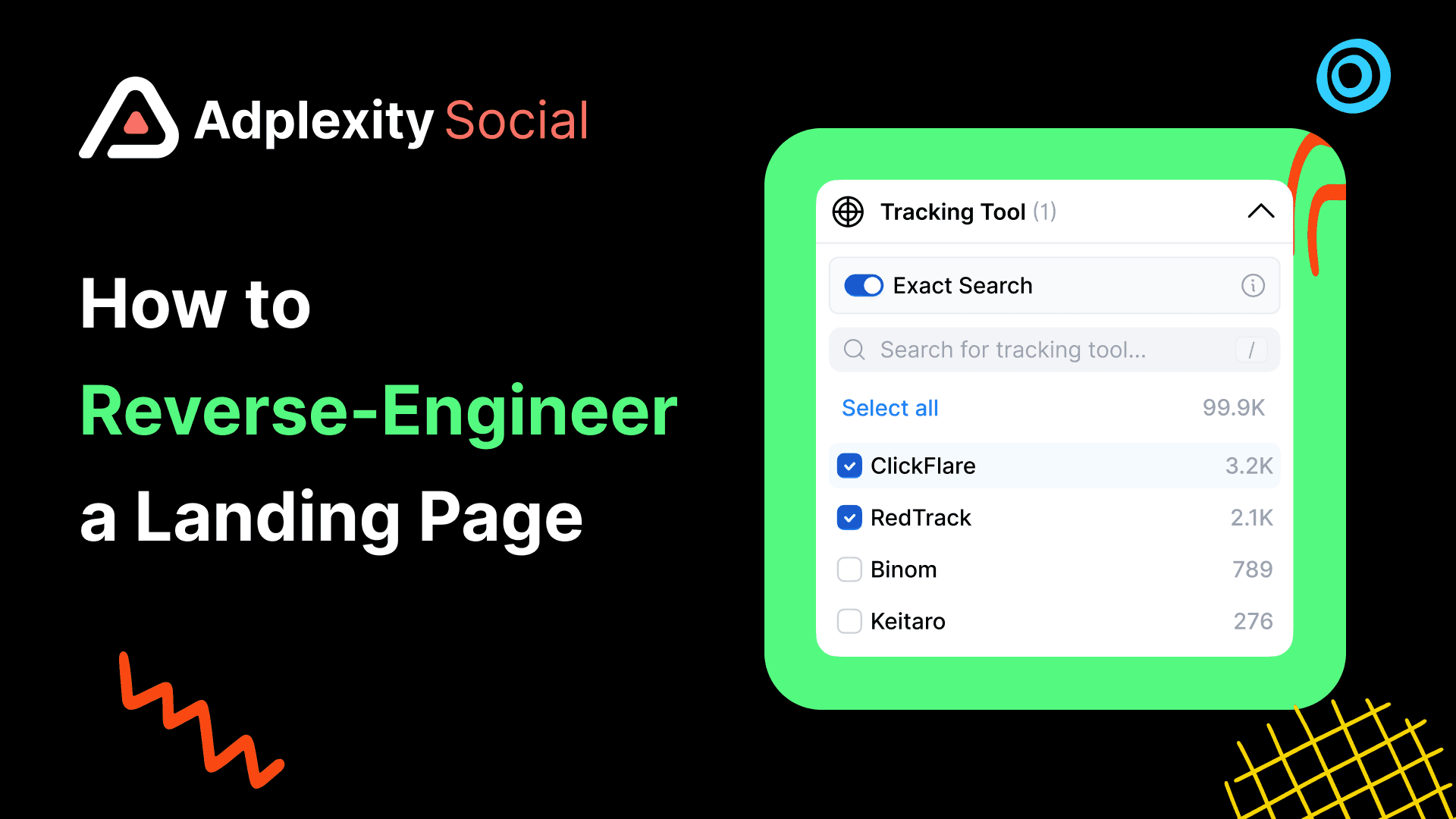
It is also the same principle behind how we built AdPlexity Social. A winning ad is not just an image and a headline. It is a landing page, a redirect chain, an affiliate network and a tech stack sitting behind the click, which is exactly the layer Reznichenko is describing when he says native optimization is about the funnel, not the click. We index that layer across more than one hundred million Meta ads, with fifteen million new ads added every month, so you are looking at the funnel behind an ad, not just the creative in front of it. Sign up at adplexity.io to see it for yourself.
If native is the platform you are actually buying on, the same research applies one level over. AdPlexity Native covers the networks Reznichenko names directly, Outbrain, Taboola and MGID among them, so you can study the landing pages and funnels behind native ads the same way this episode suggests you should.
Frequently Asked Questions
What are the top verticals in native advertising in 2026?
Nutra leads by a wide margin, with weight loss, skincare and sexual health as the strongest subverticals. Personal finance and crypto offers follow, then casino and utilities or VPN offers. This ordering has stayed fairly consistent over the past several years, even as the specific offers and creative approaches inside each vertical have changed.
What is the most underrated vertical on native ad networks?
Utilities, including soft VPNs and cleanup apps, comes up repeatedly as the vertical with the most unclaimed room to scale. It does not carry the same universal appeal as nutra, so fewer buyers chase it, but the traffic volume and growth room are both there for advertisers willing to learn the vertical's regulatory requirements network by network.
How is native advertising different from Facebook and TikTok ads?
Social platforms interrupt a feed the user is scrolling, so the ad's job is to stop that scroll and sell fast. Native ads sit next to content the user chose to read, so a click signals interest in more information rather than a purchase decision. That difference means native funnels generally need more editorial, informational pre-landers before the offer page, where social funnels can move straight to the sell.
What budget do I need to test a new offer on a native ad network?
Five hundred to a thousand dollars is enough for an initial test in Tier 2 or Tier 3 markets. Tier 1 countries such as the US, UK and Canada typically require two thousand to four thousand dollars, because that budget needs to cover real optimization after the first clicks, not just the initial test itself.
How do you spot creative fatigue on native ads?
Watch click through rate over consecutive days. A drop of roughly ten percent or more per day, sustained for several days in a row, is the signal that a creative is fatiguing and needs to be replaced. The same signal applies on social, though the rotation cadence and the tools used to catch it differ by platform.
Does the GLP-1 weight loss trend show up in native advertising?
Yes. Adskeeper runs the US as a Tier 1 traffic source, and weight loss, including GLP-1-driven offers, is the strongest category on that traffic. Trials are still popular in the US specifically, alongside straight sell offers, and the funnel behind both has shifted toward more informational, editorial pre-landers over the same period the trend went mainstream.
Is Adskeeper a good alternative to Outbrain or Taboola?
Adskeeper positions itself as a direct competitor to Outbrain, Taboola and MGID, focused primarily on native ad formats with push and pop under as secondary offerings. Whether it is the right fit depends on your vertical and geo mix, since native networks differ in publisher inventory and regional strength, and the only way to know is to test a small budget against your specific offer.
Do I need a paid ad spy tool for native advertising research?
A spy tool is most useful once you already have a funnel worth defending or a competitor's approach worth understanding at the landing page level, since the creative alone rarely explains why a native campaign converts. For Meta specifically, AdPlexity Social indexes the landing pages, redirect chains and affiliate networks behind an ad, not just the image and headline, which is the layer that actually determines whether a funnel is worth studying. For native inventory itself, across networks like Outbrain, Taboola and MGID, AdPlexity Native covers the same research on the native side.
Discover Winning Meta Ads
Similar Blogs