Industry size, commission rates, traffic sources and what affiliates really earn in 2026, with a full-time affiliate's take on every number. A guest post by Jitendra Vaswani.
Industry size, commission rates, traffic sources and what affiliates really earn in 2026, with a full-time affiliate's take on every number. A guest post by Jitendra Vaswani.
Key takeaways. US affiliate spending is forecast at about $13.8 billion in 2026, and brands report around $15 back for every $1 they put into affiliate programs. SaaS pays the highest commission rates (20% to 70%), but eLearning, travel and beauty earn more per month on volume. Most affiliates still earn under $10K a year, and those with three or more years of experience earn about 9.45 times more than beginners. SEO remains the most used traffic source, while Google updates and AI search push affiliates toward assets they own.
I have done affiliate marketing full time for 10 years. I still bet on it. Google updates have hit me. Ad costs have climbed. Platforms keep changing the rules. I stayed anyway.
This guide covers the affiliate marketing statistics for 2026 that matter: industry size, affiliate commission rates, affiliate marketing income, traffic sources and the top networks. I add my own take from running blogs and buying traffic with SEO, Google Ads and Facebook Ads.
I promote SaaS, hosting and software, so my view leans that way. Projected figures are marked as estimates, with an asterisk in the tables.
How Big Is the Affiliate Marketing Industry in 2026?
The global affiliate marketing industry was valued at $18.5 billion in 2024 and is projected to reach $31.7 billion by 2031 (estimated), according to Hostinger's roundup. That is roughly 8% growth a year.
The US is the biggest single market. eMarketer's September 2025 forecast puts US affiliate spending at $13.81 billion in 2026 (estimated), up 11.3% from $12.42 billion in 2025. That beats the 6.7% growth of US retail ecommerce. An earlier eMarketer forecast had 2026 at $13.20 billion, so expect to see both numbers quoted online. The newer one is the one to use.
eMarketer also expects about $241 billion (estimated) in US ecommerce sales in 2026 to involve an affiliate touchpoint somewhere along the way. That is sales the channel touches, not sales affiliates close on their own.
Year
US Affiliate Spending
Growth vs Previous Year
2023
$9.56 billion
13.7%
2024*
$10.72 billion
12.2%
2025*
$11.99 billion
11.9%
2026*
$13.20 billion
10.1%
2027*
$14.47 billion
9.6%
2028*
$15.80 billion
9.2%
Years marked * are estimates. This table is eMarketer's earlier 2024 forecast; the September 2025 update raised 2025 and 2026.
Notice the pattern. Growth percentages are shrinking, but the dollars keep rising. Between 2023 and 2028, spending is expected to grow about 65%.
My take for new affiliates: Growth is good news, but it also means more competition. When I started, you could rank a mediocre review and earn. That window is closed. The money is still growing, so there is room. But you need a real angle, real testing and patience.
Why Do Brands Keep Paying Affiliates?
Brands love affiliate marketing because they only pay for results. About 81% of brands use affiliate programs, and about 84% of publishers run them too.
Top brands pull 5% to 25% of their online sales through this channel. About 16% of ecommerce sales in the US and Canada come from affiliate marketing.
On the publisher side, 31% of web publishers say affiliate is their top revenue source. That matches what I see in my own business. Affiliate income pays the bills. Ads on the same pages pay much less.
The ROI stat bears repeating. Brands average $15 back for every $1 spent. That is why program managers keep raising budgets.
How Marketers Rate Their Affiliate Programs
Share of Marketers
Highly successful
33%
Successful
42%
Somewhat successful
20%
Not successful
3%
Not at all successful
2%
Three in four marketers call their programs successful or better. Only 5% say it failed. I have rarely seen a channel with those odds.
Which Affiliate Niches Pay the Highest Commission Rates?
Niche choice changes your income more than almost anything else. Here is what the data shows for affiliate commission rates and average monthly revenue, compiled from Authority Hacker, AffiliateWP and Hostinger.
Niche
Typical Commission Range
Average Monthly Revenue
SaaS
20% to 70%
$5,967
Personal finance and investment
20% to 40%
$9,296
Health and wellness
10% to 50%
$7,194
eLearning
15% to 30%
$15,551
Travel
10% to 15%
$13,847
Beauty
10% to 30%
$12,475
Gadgets and electronics
5% to 20%
$7,418
Home improvement
2% to 10%
$5,095
Pet care
2% to 20%
$920
Sustainable products
2% to 10%
$555
Why SaaS pays the best commissions. SaaS companies earn recurring revenue. One customer can pay for years. That high lifetime value lets brands share big slices with affiliates. Most programs offer 20% to 70% (a few start as low as 10%), and some pay on every renewal.
Growth stage SaaS companies also reinvest close to 47% of revenue into marketing. That budget has to go somewhere, and affiliates are one of the best places for it.
Now the honest part. SaaS pays the best commission rates, but not the highest average monthly revenue. eLearning, travel and beauty average more per month in this data. The reason is volume. Those niches have bigger audiences and faster buying cycles.
My experience: I stick with SaaS, hosting and software for one reason. Recurring commissions stack. A sale from 18 months ago can still pay me today. That is worth more to me than one big payout. A travel booking pays once and disappears. A software subscription can pay for years.
Where Does Affiliate Traffic Come From?
SEO is the top source. Social media and content follow close behind. Here is how marketers split, as compiled by Affiliate Statistics.
Traffic Source
Share of Affiliate Marketers Using It
SEO
69%
Social media
67%
Content
65%
Email marketing
42%
PPC
34%
Marketers can use more than one source, so the total passes 100%.
Over 50% of affiliate traffic comes from mobile devices. Check your site on a phone before anything else. Slow pages and messy buttons cost you clicks.
When marketers name one primary source, 35.5% pick organic social and another 22.8% pick email. Marketers with over six years of experience rely 26.7% less on organic social than newer ones. Veterans lean on assets they own.
SEO is also under pressure. Wirecutter lost well over 60% of its Google visibility between May and August 2025, and close to 7 in 10 publishers worry Google's changes will hurt them. Publishers are adding Reddit, Discord and email to cover the gap.
SEO, Google Ads and Facebook Ads: My Real Experience
SEO gives me the best long term ROI. A ranking article costs money once. Then it sends buyers for months or years. The downside is risk. One update can cut your traffic overnight.
Google Ads is my testing tool. It tells me fast whether an offer converts. I can learn in days what SEO takes months to show. But costs climb, and margins get thin on low payout offers.
Facebook Ads is my scaling tool. It works when I have a proven offer and a warm audience. Cold traffic to a raw affiliate link rarely pays. Retargeting does.
My experience: My best setup is a loop. I test offers with paid traffic. I write SEO content for the winners. Then I use Facebook retargeting on visitors who did not buy. Paid traffic proves the offer. SEO makes it profitable.
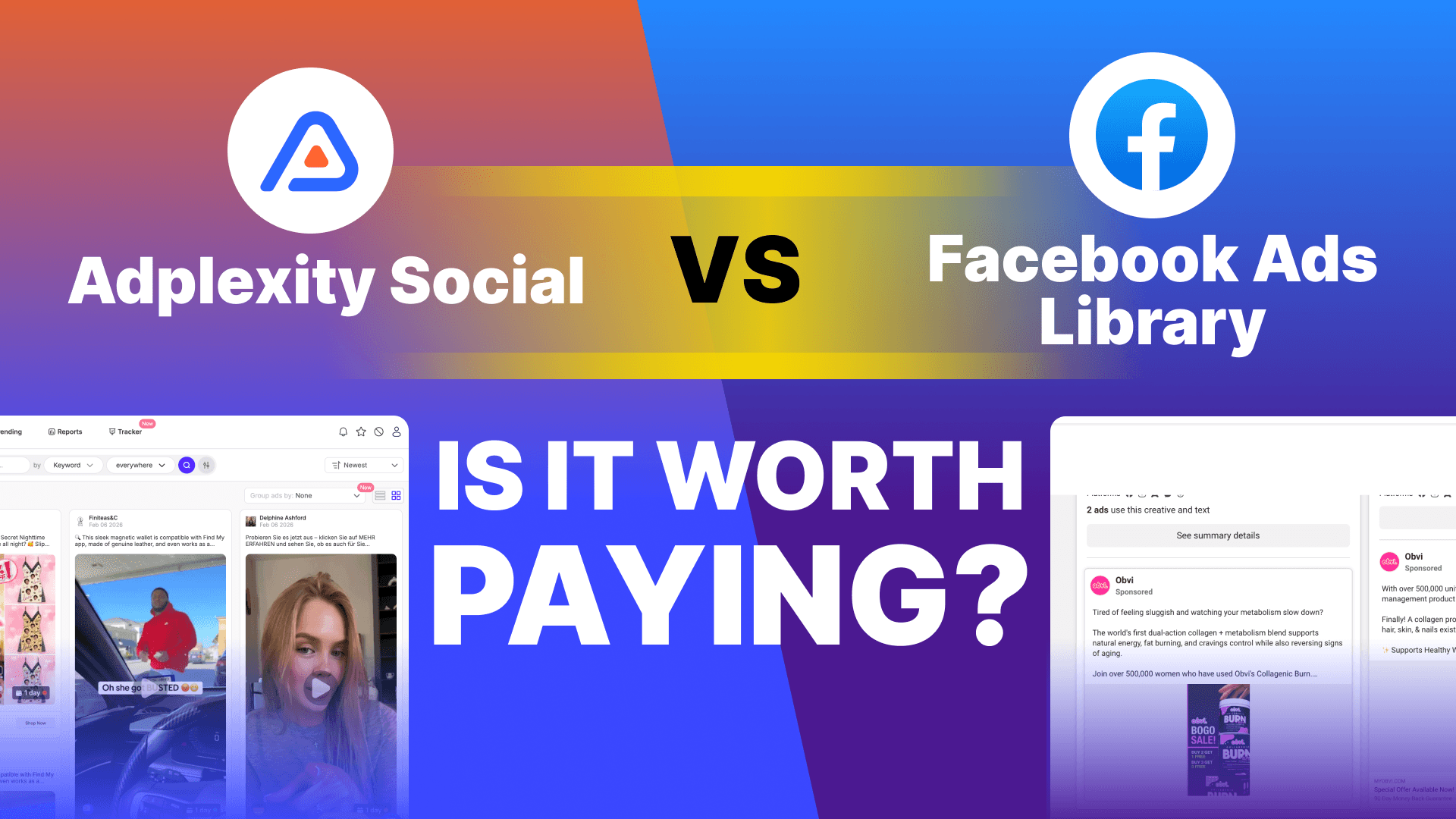
A note from the AdPlexity Social team: before you pay to test an offer on Meta, you can see who is already paying for it. AdPlexity Social indexes Meta ads across every placement together with the landing pages, redirect chains and affiliate networks behind them, so you can check how long an offer has run and how many Pages keep buying its traffic. Our guide on how to validate an affiliate offer before you spend on it walks through the checks, and the 2026 rules on affiliate links in Facebook Ads covers what Meta allows.
Which Platforms and Content Formats Are Growing?
Facebook is the most used social platform among marketers. Here is the full list from HubSpot's 2023 State of Marketing Report. It covers marketers in general, not only affiliates, so treat it as a guide.
Social Platform
Share of Marketers Using It
Facebook
64%
Instagram
58%
YouTube
57%
X (Twitter)
43%
TikTok
42%
LinkedIn
33%
Snapchat
25%
On ROI, 22% of marketers say Facebook delivers the best returns. YouTube, Instagram and TikTok each get 16%. That fits my Facebook Ads experience.
Short form video keeps growing. More than 56% of marketers increased their TikTok investment, and 90% of marketers using short form video plan to increase or maintain their spend.
Creators are gaining share too. On Awin's network, creator revenue share rose from 15.9% to 19.5% in a year. Buyers often need three to four creator exposures before they purchase.
AI Content Is Now Normal
About 79.3% of affiliate marketers use AI for content creation. Nearly 4 in 5 of us use it. If you avoid AI, you are working slower than your rivals.
My take on AI without penalties: Google does not punish AI. It punishes thin, repeated, mass produced pages. I use AI for outlines, research and first drafts. Then I add what AI cannot: my own tests, screenshots, pricing checks and opinions. If a page could be written by anyone, I do not publish it.
How Much Do Affiliate Marketers Make?
This is the section most people skip to. I get it. Here are the real numbers first.
Annual Affiliate Income
Share of Affiliate Marketers
Below $10K
57.55%
$10K to $50K
16.21%
$50K to $100K
5.15%
$100K to $150K
7.40%
Over $150K
3.78%
Undisclosed
9.37%
So 57.55% earn under $10K a year. About 11.18% earn over $100K, and only 3.78% pass $150K. The top is small, but real.
Experience matters a lot. Affiliates with over three years of experience earn 9.45 times more than beginners. The average marketer in the survey has about 2.8 years of experience.
Be careful with case studies online. Published stories show five and six figure results. Survey data tells a quieter story. Survivorship bias is real.
Honest advice on timing: Plan for 12 to 24 months before income feels real. Year one is learning and building. Year two is when content ages and rankings stick. Year three is when things compound. If you need rent money next month, this is not your plan. Keep your job while you build.
What Are the Biggest Affiliate Marketing Challenges?
Everyone hits walls. Here is what affiliate marketers say stands in their way, from Authority Hacker's survey as compiled by Affiliate Statistics.
Challenge
Share of Affiliate Marketers
Getting traffic
45.3%
Inadequate support from affiliate managers
26.9%
Search algorithm updates
25.1%
Have considered giving up
31.3%
Traffic is the top problem at 45.3%. Algorithm updates hit 25.1%, and of those hurt, 47.4% changed their content strategy. Fraud sits on top of all of this: in Awin's research, 63% name affiliate fraud as a concern.
And 31.3% have thought about quitting. That includes people earning six figures. I have been one of them. Nobody tells you that part.
My experience: I have watched Google updates cut my traffic hard. It feels awful. My first reaction was panic. My second was to look at what the update rewarded. Each time, the answer was the same: better content, clearer expertise and less dependence on one source. I recovered by fixing pages and adding email and paid traffic. I stopped betting everything on Google.
Which Affiliate Networks Have the Biggest Market Share?
Amazon Associates is far ahead of everyone else, according to Datanyze.
Affiliate Program
Market Share (2024 to 2025)
Amazon Associates
46.64%
Rakuten Affiliate Network
7.70%
Awin
6.88%
ShareASale
6.27%
CJ Affiliate
6.03%
Others
More than 26%
A quick warning on ShareASale. Awin moved every ShareASale account onto its own platform in August 2025 and closed ShareASale on October 6, 2025. The share above reflects the period before that move, so expect Awin's share to rise in newer data.
Amazon is easy to join, but commissions are low. For serious income, I prefer direct SaaS programs and networks with higher payouts.
Where Is Affiliate Marketing Going After 2026?
AI search is the big shift. Chatbots now do the comparison and deal hunting we built businesses on. When a user gets an answer inside a chatbot, no tracked click happens, and attribution breaks.
But there is a twist. eMarketer found that almost 70% of the sites cited in ChatGPT's mentions of eyewear brand Zenni came from affiliate content. AI still needs trusted reviews, and affiliates make them.
Here is my prediction. Thin affiliate sites will die. Trusted reviewers, creators and niche experts will win. Brands will pay for being the source AI trusts. Commissions will shift toward flat fees, recurring deals and hybrid models.
My advice is simple. Build an audience you own. Test products yourself. Show proof. Spread your traffic across SEO, email, video and paid. The people who do that will still be earning in 2030.
Frequently Asked Questions
What are the most important affiliate marketing statistics for 2026?
US affiliate spending is forecast at about $13.81 billion in 2026, up 11.3% on 2025. About 81% of brands run affiliate programs, brands report an average $15 return for every $1 spent, and 57.55% of affiliates earn under $10K a year.
What are typical affiliate commission rates?
They vary by niche. SaaS pays 20% to 70%, health and wellness 10% to 50%, and personal finance 20% to 40%. Travel pays 10% to 15%, and home improvement just 2% to 10%.
How much do most affiliate marketers make?
Most earn under $10K a year. About 11.18% earn over $100K, and 3.78% earn over $150K. Affiliates with over three years of experience earn 9.45 times more than beginners.
What are the best affiliate traffic sources in 2026?
SEO leads at 69% of affiliate marketers, followed by social media at 67% and content at 65%. Email is at 42% and PPC at 34%, and mobile now delivers over 50% of affiliate traffic.
Does Google penalize AI-written affiliate content?
No, not for using AI on its own. Google targets thin, repeated, mass produced pages. AI-assisted content that adds your own tests, screenshots and opinions is fine.
About the Author
Jitendra Vaswani has worked in SEO and affiliate marketing full time for over 10 years. He owns Affiliate Booster, which publishes the yearly State of Affiliate Marketing Report, and founded the digital marketing agency Digiexe and the PR agency VenueLabs. Follow Jitendra on Instagram, Facebook and LinkedIn.
Table of Contents
Quickly navigate through the key sections of this article.