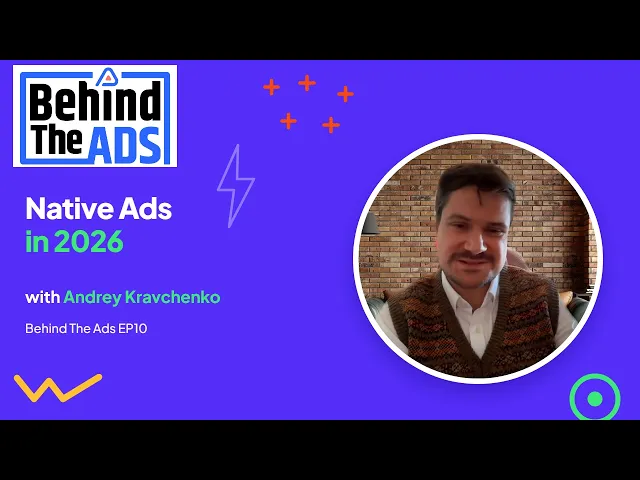
Andrey Kravchenko of Xevio says he can tell in two to three seconds whether a product will scale on native. Here is his checklist, his advertorial rules and his four-level research routine.
Andrey Kravchenko of Xevio says he can tell in two to three seconds whether a product will scale on native. Here is his checklist, his advertorial rules and his four-level research routine.
Key takeaways. Andrey Kravchenko, co-founder of the native ads agency Xevio and the Native Hub community, says Meta buyers should add native for two reasons: it spreads the risk of living on one platform, and it creates intent that shows up as sales somewhere else. He decides in two to three seconds whether a product will scale on native, starting with a rule that B2B is an instant no and ending with the math on price. In his view a good advertorial is a well-researched one with a story and one of three persuasion pathways, and AI copy gives itself away by being too polished. His team researches on four levels, and AdPlexity is the second one.
Watch the video here:
Who Is Andrey Kravchenko, and What Does Xevio Do?
If you buy on Meta and wonder whether native deserves a test budget, this is the recap of Behind The Ads episode 10 for anyone who would rather read it than watch about 48 minutes.
Andrey is co-founder and head of business development at Xevio and Native Hub. Xevio is an agency focused on native ads, and Native Hub is the community that came a few months later, which he is careful to call "not the agency." Before all that he was a sales director at Taboola for five and a half years, and Xevio was built with a few other former Taboolers and Outbrainers. It has six co-founders, which he calls a very unorthodox way of doing it.
"We support large D2C and lead generation brands with their aspiration to actually run on native."
His co-founder Nadim Kuttab pitched him the idea in early 2023 as a bridge: advertisers have money but not the structures, while traffic sources have excellent product knowledge but are not media buyers.
What Did Five and a Half Years at Taboola Teach Him About Learning?
Access to data is not the same as learning from it. At Taboola Andrey could see a lot of client data, which he calls the boring part, because knowing a client's CPCs and CPAs does not tell you whether you understand their monetization or their funnels.
"The single biggest source of learning and knowing something new is your clients. So build relationships with your clients and learn from them."
The warning runs both ways. He has met clients who thought they knew everything and reps who were borderline arrogant about it, and he says there is always something to learn from the other side.
Why Should a Meta Buyer Add Native?
Guido asked for the biggest opportunity that social advertisers miss by staying off native, and the first answer was diversification. By Andrey's round numbers, Facebook reaches about three billion people and native combined about two billion, which he calls comparable. Building your whole business on one platform's word is a choice, he says. For another operator's view on what is working in native, including the mistake social buyers make, see Andrii Reznichenko on episode 8.
The second reason is that native is an amplification channel, because it creates intent. It started as a branding solution, the top of the funnel for brands that wanted to be seen everywhere, and then search and content arbitrage, affiliates and big brands arrived. Today it also generates sales, and Andrey does not oversell it.
"Generally Facebook is the most lucrative one. But it gets very close."
Where it does not get close, he says, it amplifies your other channels. That claim is easier to believe because he opens by granting that Facebook usually wins.
Who Gets the Credit for a Native Sale?
Andrey describes native as a three-step funnel: problem, agitate, solution. The ad is the problem, the advertorial is the agitate step, and the sales page (a Shopify page, if you like) is the solution.
Now picture a reader who stops at step two. They like the product but not today. Two days later, inside your lookback window, they go on Amazon and buy it there. Without proper attribution you would conclude that Amazon is an amazing channel.
"But who is responsible for generating the intent in the first place?"
A smart marketer, he says, always tracks these things and measures the impact that other traffic sources have on the main ones. For a buyer who judges a native test by last-click sales alone, the point is that the channel that opens the sale may not be the one that closes it.
How Does He Decide in Two to Three Seconds Whether a Product Will Scale on Native?
Andrey's mentor at Taboola used to show him a bunch of pages and ask whether each one would work. He asked for a minute. She gave him five seconds, and when he said that was not enough, she told him it was "two seconds more than you need." Today he says it takes him two to three seconds. The founders turned that instinct into a quiz with several criteria, and the first is whether the product is B2B or B2C.
"So B2B is an instant no."
He admits some Taboola and Outbrain reps would disagree, but he has never managed to scale a B2B product. If you want to spend one or two thousand a day, great, he says, but his team is interested in a bit more. The second check is policy: if he sees crypto, he is already thinking of a month or two of chatting with policy to get approved.
The third is whether the product solves a problem and can be sold right now with a good story, and here he reaches for a matrix. One axis is how badly you need the product right now, and the other is the price point.
"So you always want to be in the top right corner, which is expensive but extremely important."
Depending on the economy, you can sell an unnecessary product, but only cheaply, unless the economy is booming. The last two seconds go to the math: a $500 product will not work on native, because nobody buys a washing machine on the first click. He adds that he gets it wrong too, and has said no to brands that went on to succeed without his team.
What Separates a Good Advertorial From a Bad One?
Guido asked for the main difference, and the short version came first.
"A good advertorial is a well-researched advertorial."
The first half is story. A good one is rooted in storytelling with a conflict and a resolution, and a bad one is like watching a boring film. When it feels too made up or too perfect, Andrey says you can instantly tell AI wrote it, because the copy is so polished that it lacks the human element.
"AI is good for mass production, but you know, there still needs to be a human who would add a few touches to it."
He adds "at least for now," and wonders whether AI will become imperfect again, at which point we will all be "paying premium for imperfections."
The second half is science. A typical advertorial, he says, has to appeal through one of three pathways, and his examples are illustrations, not claims about any product. Logos is the science behind it: a doctor, some numbers. Ethos is other people's opinion, such as testimonials, listicles and comparisons. The third is the emotional appeal (the classical word is pathos, though Andrey does not use it): a personal story from someone who struggled with their hearing and found a fix, aimed at the millions of people who share that struggle. He once gave a presentation for a Greek audience, forgot that they spoke Greek, and offered to explain what logos means. Their answer was "we know."
How Does a Native Agency Split Its Spend by Network and Market?
Guido asked for ballpark numbers, and Andrey answered from memory, so read every figure below as his estimate. The US is by far number one for Xevio, at maybe 60 to 70 percent of what they do. The DACH market, where they started, is a solid number two at about 30 to 35 percent, followed by English-speaking markets such as Australia, Canada and the UK.
On networks, Taboola started as the only partner and is still the biggest, at about $40 to 43 million a year, with around 65 to 70 percent of it direct to consumer and the rest lead generation. Outbrain is a solid number two, at around $20 to 25 million for all the clients. NewsBreak has a story attached.
"They just kept chasing and chasing us and eventually we gave it a try and you know, after three years it became our number three."
He puts NewsBreak at between $12 and 14 million. Then come MGID, MediaGo, Yahoo and a bit of RevContent, with no figures given. Do they always start a new campaign on Taboola? No. They built the business around it, then diversified, and testing many platforms taught them which are stronger where. For Germany it is probably Outbrain and Taboola, for Italy probably MGID, and for Eastern Europe MGID or Taboola.
Facebook is a different story. Xevio does not do much there. With so many Facebook and Google agencies doing a fantastic job, Andrey would rather set up a referral process than compete: they send him clients, and he sends them his.
How Much of Native Is Algorithm Now, and What Can AI Do?
More than it used to be. When Andrey started in early 2018 you ran CPC campaigns and manually optimized hundreds of publishers, which was especially painful for search arbitrage buyers with thousands of campaigns at fifty dollars a day. Then came SmartBid, a second-price option, and later tCPA and Max conversions. He still would not say it runs on autopilot. What AI changes is production: a landing page used to take one or two days of copywriting, design, hosting and testing.
"It takes like 40 seconds, so it becomes a quantitative business versus qualitative."
How Did Native Hub Go From a Course to an AI Assistant?
Native Hub began as a business decision. A service business only scales if you hire, and neither Andrey nor Nadim wanted to run a hundred-something company. The answer to how to stop saying no to people who want to work with you was a self-service subscription, which he describes as basically a Netflix for marketers.
The plan was a thousand subscribers. Then he did the math on who would want to learn native: count the people, then the marketers, then those in English-speaking countries, performance marketing, native, those who succeeded, and those who want to keep learning. You end up with about 250 marketers, and retention was pretty low.
What saved it was a side effect. They recorded and transcribed their consulting sessions, and did not realize at first that they were collecting data. The Slack community around the sessions became a talent pool. In late 2025 they connected the recordings to an AI model to build a virtual assistant that he says is the only one trained to answer native ads questions.
"Native Hub is no longer a library. It's a mechanism that allows us to meet people, consult them, collect the data, feed it to the AI and support more people."
What Does His Four-Level Research Routine Look Like, and Where Does AdPlexity Fit?
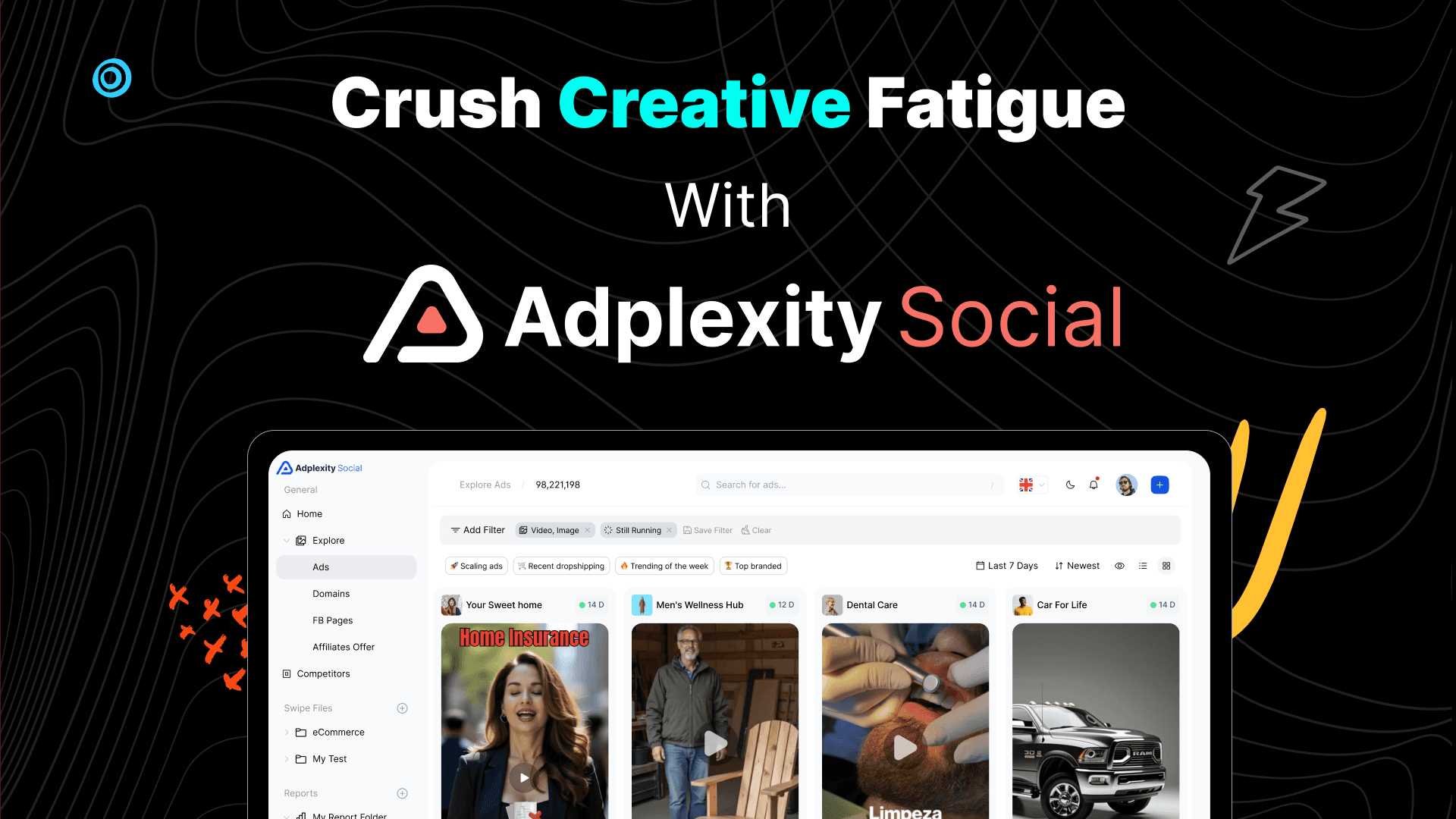
Andrey calls it a three to four step approach that breaks down into four parts. His example is a Coca-Cola type client, meaning a fizzy drink brand. Level one is broad online research with tools such as Similarweb or Ahrefs. Level two is AdPlexity Native, and he does not hide it.
"It's no secret we've been using AdPlexity for a long time and we're probably using it as we speak."
He says it is plugged into the team's own solution, and the workflow is to source from AdPlexity, source what is available online and build from there. If you want the same second step for Meta ads, our guide to reverse-engineering a competitor's landing page funnel shows how to read the page behind an ad.
Level three is the team's own data from previous clients. His hypothetical: they hold a hundred landing pages for fizzy drink advertorials, and the strongest is written in French. Will it appeal the same way to an audience in the United States? He does not know, so he weighs testing the translation against a slightly weaker page that was written in English for the US. Level four is policy data from help centers, which he calls not always reliable but helpful. You can follow it to the last word and still get rejections, he says. Unlike on Facebook you do not get banned, and your account manager will tell you the exact reason.
He closes on a point that rhymes with his advertorial rule. A founder he follows on LinkedIn turned out to automate his posting with AI, and Andrey found that disappointing.
"I still want to be the brain behind it."
If you want to run level two on your own offers, sign up for AdPlexity Native at native.adplexity.com and study the ads and landing pages in your niche before you write a line of copy. Andrey says LinkedIn is the main place to find him.
Frequently Asked Questions
Why should a Meta advertiser try native ads?
Andrey gives two reasons. The first is diversification: by his round numbers Facebook reaches about three billion people and native combined about two billion. The second is intent, since native creates demand that can close on other channels. He still says Facebook is generally the most lucrative channel, and that native gets very close.
How do you know if a product will scale on native?
Andrey runs through a short checklist. B2B is an instant no, crypto means a month or two with policy, and the product has to solve a problem and be sellable now with a good story. Then he places it on a matrix of urgency against price and finishes with the math, since a $500 product will not work on the first click. It is one operator's rule of thumb, and he says he still gets calls wrong.
Is native a bad fit for B2B products?
In Andrey's experience, yes. He says he has never managed to scale a B2B product on native, and that some Taboola and Outbrain reps would disagree with him.
What makes a good native advertorial?
Andrey says a good advertorial is a well-researched one. It tells a story with a conflict and a resolution, avoids copy that feels too polished, and appeals through one of three pathways: logos (the science), ethos (other people's opinions, such as testimonials or comparisons) or the emotional appeal.
What is the three-step funnel in native advertising?
It is problem, agitate, solution: the ad, the advertorial and the sales page. Andrey warns that a reader who stops at the advertorial may buy elsewhere later, such as on Amazon, so you need to track what your native traffic does for your other channels.
Do I need a paid tool to research native ads?
Andrey describes four levels, and no single tool covers all of them. Level one is broad online research with tools such as Similarweb or Ahrefs, level two is AdPlexity, level three is your own data from past campaigns and level four is the policy information at each traffic source's help center.
Table of Contents
Quickly navigate through the key sections of this article.